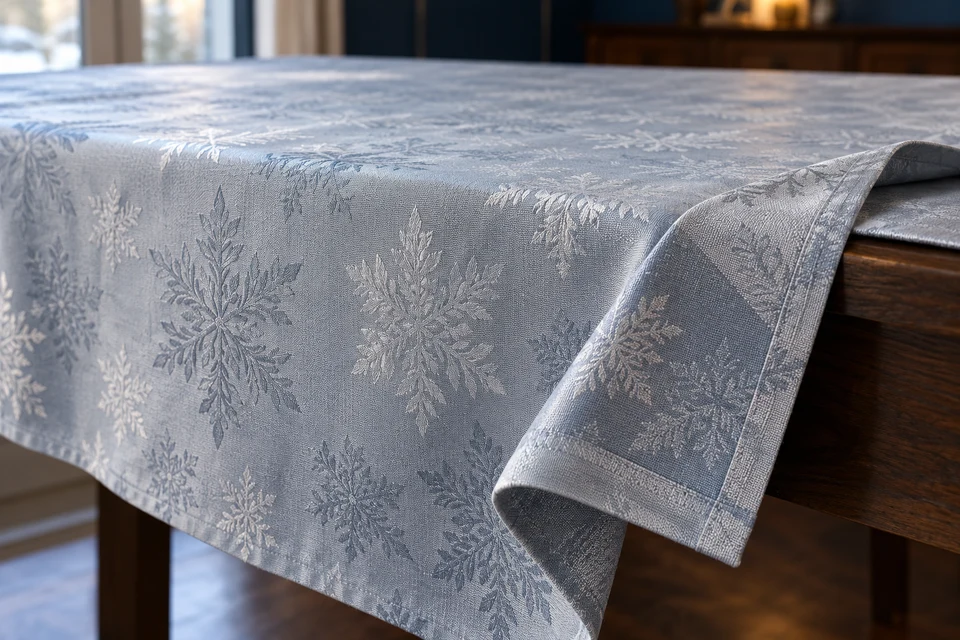
Snowflake damask can create a restrained Christmas tablecloth whose motif appears through the interaction of weave and light. That makes its buying reference different from a printed snowflake design. A photograph with strong side lighting may make the pattern prominent, while another angle makes it nearly disappear. Before selecting a range, agree which face is intended for use and how much visual contrast the buyer expects in the venue. The physical fabric and finished sample should anchor that decision.
Confirm that the offered pattern is woven
A tonal appearance does not identify the construction
Ask the supplier to describe the fabric construction and identify how the snowflake is formed. Keep the fiber composition, yarn information and finishing proposal separate from the design name. A printed tonal imitation may be a valid alternative, but it is not the same specification as a woven damask. Request both face and reverse samples before comparing quotations or writing product descriptions.
Use the material specification record to link the named fabric to its physical reference. Do not infer luxury grade, origin or performance from the word damask alone. If alternatives are presented, identify each route clearly and compare the actual samples rather than choosing from photographs taken under different lighting.
- Record how the motif is formed and identify the actual fabric.
- Keep woven and printed alternatives separately named in the offer.
Select the intended face before approving the hem
A visually attractive reverse is not automatically a second use face
Lay the two sides of the sample beside one another and compare motif and ground. Decide which relationship is intended for the table surface. Mark that choice in the sample record without adding a visible mark to the finished cloth. If the buyer wants the product presented as reversible, review the entire construction from both sides rather than assuming that a woven reverse makes it ready for that claim.
The face-and-back identification guide helps maintain the choice through cutting and sewing. Add the hem turn, seam treatment and any labels to the review. A face change after production can expose a construction detail that was deliberately placed underneath, so it should be treated as a specification revision rather than an informal styling preference.
- Identify the intended use face in the approved sample record.
- Review all construction details before describing a product as reversible.
Review motif contrast under representative dining light
The pattern should be judged where it will actually be seen
Place a sufficiently large sample on a table and inspect it from seated and standing positions. Compare the venue's normal daylight and evening illumination where both matter to the program. Record whether the buyer wants a quiet near-solid effect or a clearly recognizable snowflake. Neither preference can be captured reliably by one heavily edited close photograph with an unspecified light source.
Use the camera evidence plan when reviewers are not on site. Include a wider table view and describe the light direction. Keep image adjustments modest and consistent. If teams disagree about the contrast, circulate the physical sample rather than adjusting the photograph until it appears to resolve a material question.
- Compare normal seated and standing viewpoints.
- Retain the light conditions beside the accepted contrast reference.
Judge snowflake scale on the complete tablecloth
Repeat size interacts with tableware and the hanging drop
Show the complete repeat on the proposed table size with representative place settings. Note which motifs remain visible between plates and which fall into the drop. Decide whether the layout needs a centered motif, a balanced repeat or unrestricted cutting. A small swatch may show an elegant snowflake but cannot establish how the repeat reads across a crowded table or at the hem.
The woven tablecloth scale review provides a useful comparison method, although this motif is tonal rather than a check. Add the snowflake's orientation and any border requirement to the drawing. If several finished sizes are offered, approve their cutting assumptions individually instead of promising that every size will end with identical motif fragments.
- Decide whether motif centering is required or cutting may vary.
- Review tabletop visibility and hanging-drop appearance together.
Release the finished cloth against a retained physical reference
Care, packing and commercial claims need their own evidence
Inspect the sewn hem and any joins on the selected face, then review the sample after the agreed care and packing trials. Observe whether creases or surface changes alter the intended motif contrast. Record the trial conditions and the actual sample identity. Do not turn an appearance approval into an unsupported statement about stain resistance, easy care, durability or suitability for every hospitality setting.
Use the repeat-order specification process to retain the fabric, use face, layout and finish together. Confirm material minimums and the sampling timetable for the chosen woven design. The generated editorial picture illustrates the contrast concept; it is not a weave specification, laboratory result or stock photograph of supplied goods. Obtain current production and delivery confirmation before planning a Christmas launch.
- Link post-care and post-pack appearance to the actual finished sample.
- Keep the fabric reference, face choice and commercial description consistent.
Ask FY Bedding for face-and-reverse snowflake damask samples and a sewn tablecloth in your intended size. Review the contrast in representative dining light, then confirm the use face, repeat layout and evidence needed for the final product description.