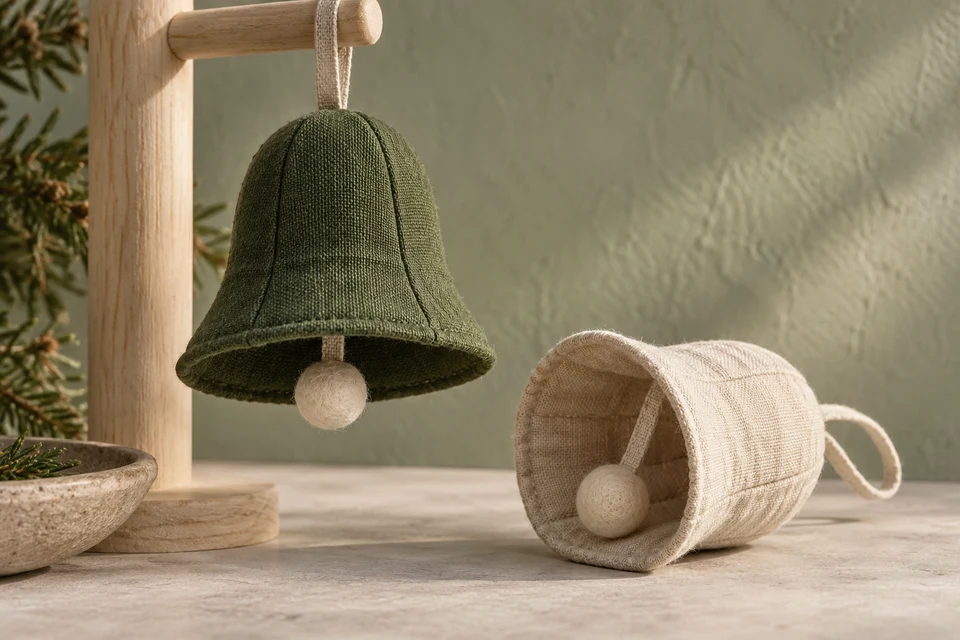
A fabric bell can communicate its shape without producing sound, but its hollow opening and decorative clapper still need a precise brief. Buyers should not let the familiar name imply metal hardware, a working sound mechanism or a child-oriented product. First decide whether the offer is a soft decorative silhouette with an attached textile clapper, then approve the dome, rim and suspension as one assembled object. Each component should be identifiable in the quotation and retained sample.
Describe the bell profile in two views
Dome height and rim width control different impressions
Draw a front view and a side section showing the crown, outward curve and open lower rim. Identify where dimensions are taken and whether the sample hangs freely or rests on a surface during measurement. Two ornaments with the same height may have very different openings and visual weight. Decide whether a slightly irregular soft outline is intentional or whether the buyer expects a more controlled supported dome.
Include the section in the technical brief. Ask the maker how the shape is produced and which layers or internal components contribute to it. A stuffed bell-shaped object and a hollow textile shell are not interchangeable proposals. Keep the opening visible in the reference photographs so a supplier cannot satisfy the outside silhouette while leaving the intended interior undefined.
- Show the open rim as well as the exterior outline.
- State hollow shell versus filled decorative body.
Define the clapper as an independent component
Position is a design decision, not evidence of sound
Specify the material, shape and intended visible position of the clapper. Show whether it stays inside the dome, reaches the rim or projects below it. If it is a textile-covered ball, identify what is inside and how it connects. Ask the supplier to explain the proposed construction rather than assuming a soft-looking surface means every component is textile or that the object contains no additional support.
The component list should distinguish the clapper, its connecting element and the outer hanger. Describe the ornament as decorative unless an actual sound function has been specified and supported. A familiar bell appearance does not establish an audible feature. If the retail concept later requires sound, treat that as a revised product with new component and evidence requirements, not a wording change.
- Identify the clapper connection separately from the hanger.
- Keep sound claims outside a decorative-only proposal.
Review the rim and inner face at customer distance
An open shell exposes construction that photographs can hide
Inspect the lower edge all the way around, then look inside from the viewing angle likely in a shop or home. Check the proposed lining, joining seams and any attachment visible near the crown. Decide which seams are intentionally exposed and which require a cleaner finish. A front photograph taken above the rim can conceal these details, so it should not be the only approval image.
Use the edge-finish review as a record framework, adapting it to the actual bell construction rather than copying quilt dimensions. Observe whether the rim curls or becomes uneven when suspended. Do not pull it into a circle for the photograph if that is not its ordinary state. Request a complete revised sample after changing the lining or edge treatment.
- Inspect the inside and full circumference.
- Record the natural suspended rim shape without reshaping.
Hang the complete assembly before choosing quantities
The clapper should be observed together with the dome
Suspend the ornament from the intended support and observe its front, side and underside. Note whether the clapper rests against one wall, twists the dome or sits in the accepted central position. Distinguish an intentional asymmetrical design from a connection issue. Review any movement only within an agreed, appropriate evaluation; improvised swinging or pulling is not a substitute for a product-specific test plan.
The evaluation brief should identify intended use, components and the evidence requested from responsible specialists. Keep the ornament's decorative scope and any relevant installation limits clear. Do not infer child suitability or attachment strength from softness. If a supplier substitutes a different cord or heavier clapper, reopen the complete hanging review because the balance may change even when the dome fabric remains identical.
- Observe the dome and clapper in one suspended sample.
- Reapprove after a connector or component-weight change.
Choose a pack that preserves the approved opening
Nested shells and complete assemblies behave differently
Ask whether the proposed pack nests bell shells, separates finished ornaments or folds them flat. Check that this arrangement is compatible with the attached clappers and hangers. Open the actual trial pack and inspect the rim and connecting elements before arranging the ornaments. A pack designed for an empty shell may tangle or crush a completed assembly, so the delivery trial must contain the item actually sold.
Use the pack completeness guide to verify quantities and component inclusion. Specify color and size mixes and ask which minimums apply to each construction. Any assembly requested from the customer belongs in the offer and instructions. Confirm the feasible sampling, production and transport sequence separately from the desired Christmas display date; no schedule is implied by the simplicity of the silhouette.
- Trial the pack with the full supplied assembly.
- Declare any customer assembly and exact mixed-pack counts.
Send FY Bedding the bell profile, open-rim reference and intended clapper position. Request a component-defined hanging sample and pack-opening trial. Approve the actual decorative assembly without adding unsupported sound, safety or seasonal delivery claims.