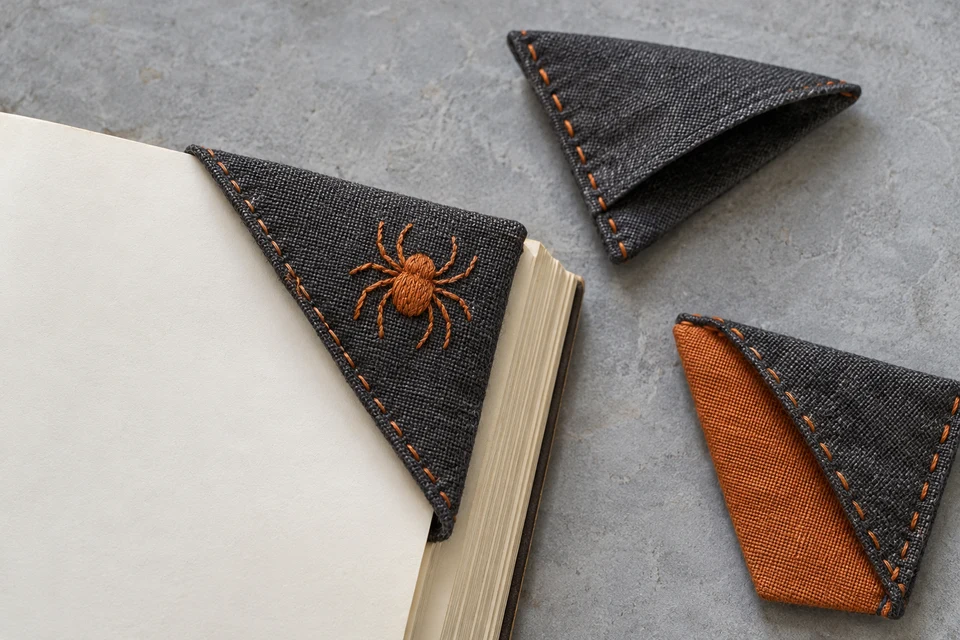
A corner bookmark is a small textile sleeve with a deliberate open edge, not simply a padded triangle decorated with a spider. The buyer needs to know which page corner enters, how deeply it sits and which seams remain against the paper. For a Halloween gift assortment, a sharp silhouette and recognizable motif matter only if the opening remains usable. This brief concerns the textile accessory; books, paper condition and any product-use claims require their own defined scope.
Mark the open edge on both faces
Three sewn edges would create a different object
Draw the finished triangle with the intended entry edge visibly identified. Show which edges are joined, where the fold lies and whether the sleeve uses two fabric layers or another proposed arrangement. Record insertion depth separately from the outside leg lengths. The technical pack should let another person identify the opening without relying on a lifestyle photograph or a product nickname.
Ask for a physical sample that can be opened gently and examined from inside. Check that turning or decorative stitching has not unintentionally closed part of the entry. If a lining is proposed, identify how its edge is contained. A loose thread or bulky seam allowance near the opening can change the page-entry experience even though the outside triangle still matches the drawing.
- Show the intended entry and the two joined edges.
- Measure usable insertion depth, not only outside dimensions.
Choose a defined page reference
Paper thickness and corner shape affect the trial
Select the book or paper samples used for development and describe their relevant thickness and finish without generalizing to every publication. Try the sleeve on a single page and on the agreed small page group if both uses are intended. Observe whether the textile slides into position normally or needs the corner to be forced. Keep the actual trial reference with the sample approval record.
Review the closed book as well as the open page. A thick textile join may create a local ridge that is not obvious while the page lies flat. Ask the buyer's product owner to decide the acceptable interaction with the chosen paper. Do not turn a casual fitting demonstration into a universal non-marking or archival-safe claim. The evidence planning approach can keep any intended claim separate from this practical fit observation.
- Identify the actual paper used for the review.
- Observe both insertion and the closed-book condition.
Place the Halloween motif in the finished orientation
The usable face may be smaller than the cut panel
Mark the spider or other approved motif relative to the finished opening, not merely the unsewn square of fabric. Check which direction reads upright on the chosen page corner and whether the motif crosses a fold or disappears beneath the paper. Keep decorative stitching away from the entry unless its effect on the opening is deliberately accepted. Flat artwork should not be the only release reference.
Use the artwork control record to distinguish the intended orientation for each variant. A mirrored triangle can require a different motif position even when its outside dimensions match. For a multi-design pack, approve one usable sample of each construction that changes the entry or seam arrangement rather than assuming a new embroidered shape is always a purely cosmetic substitution.
- Review the motif on the finished, fitted triangle.
- Keep corner orientation explicit across the assortment.
Inspect the point and inside seam bulk
A neat face can hide a crowded turning point
Compare the finished point with the approved shape without pulling it into a sharper tip. Inspect the reverse, inside joins and edge thickness. Ask how exposed cut edges are handled in the proposed material, and retain that construction in the seam record. A felt version and a turned woven version should not inherit one another's acceptance example merely because both look triangular.
Look for changes in usable opening after the maker revises the point. Reducing seam bulk can alter finished dimensions or shift the decorated face. Refit the revised sample on the same page reference and record what changed. Keep any care or cleaning instruction within the agreed material evidence; a small accessory still needs an identified fiber and finish rather than a generic washable description.
- Examine the inside turning point and opening thickness.
- Repeat the same page trial after construction revisions.
Count complete, correctly oriented gift sets
Pack the textile without implying that books are included
State the number of bookmarks and the design mix in each selling pack. If left- and right-corner versions are offered, make their identities understandable to packing staff. Use the assortment verification method to reconcile complete sets with the order. Keep paper demonstration inserts and actual supplied accessories separately identified so an attractive pack does not misstate the contents.
Quote the same fabric layers, motif method and pack count with each supplier. Ask whether embroidery setup, material color or gift packaging creates a separate minimum. Request sample costs and production milestones after the usable triangle is confirmed. Before release, open a packed set and check that the corners and entry edges remain presentable without ironing or reshaping that the customer was never told to perform.
- Verify each design and corner orientation in the pack.
- Confirm contents and sample scope before pricing comparisons.
Share the page reference, finished triangle drawing and Halloween motif with FY Bedding. Request an open-edge sample and a packed assortment review so the same product is usable, correctly oriented and clearly described at retail.