A pumpkin appearing when a hand brushes a cushion is not one fixed print. The buyer is approving two deliberate image states, the transition between them and a finished object that people will handle. A flat artwork file cannot settle those questions. For a Halloween retail program, first decide whether the effect is the main selling feature or a small decorative panel, then build a physical approval sequence around that choice.
Describe both finished views
Give each state its own reference
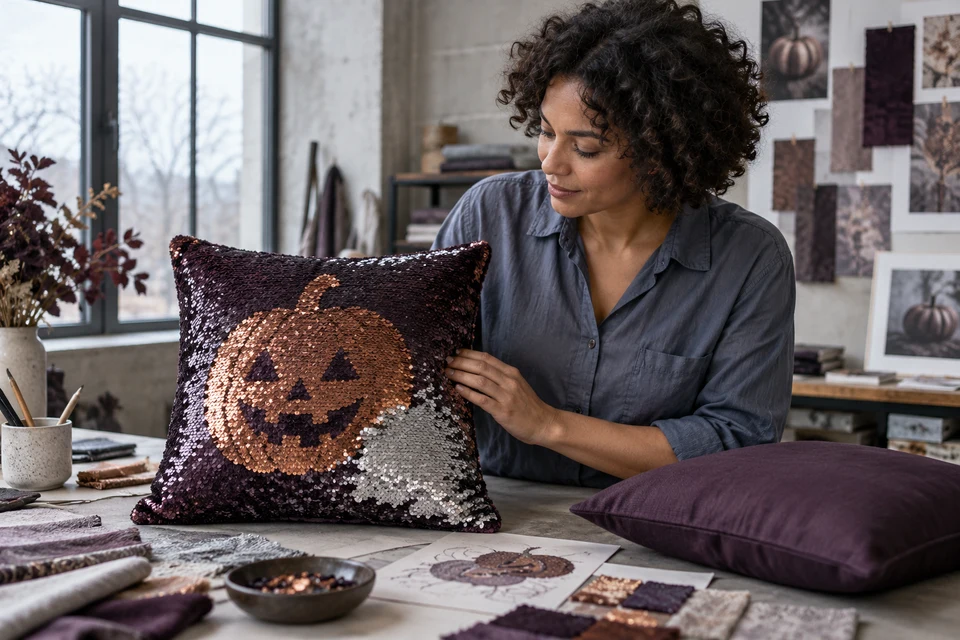
Name the first and second image states in the brief instead of calling the surface reversible and leaving the second view undefined. One side might show a copper pumpkin on plum; the other might be a plain silver field. Record which areas change, which remain ordinary cloth and where the picture ends. The textile specification pack should contain both drawings at the intended finished size.
Keep the cushion reverse separate from the reverse side of each sequin. These are different components and should have different reference codes. Ask the supplier to explain the proposed construction, including how the decorated panel joins the plain border. Do not assume that a two-color stock panel can reproduce a detailed two-picture concept without a new physical sample.
- Label image state A, image state B and the cushion back separately.
- Show the finished decoration boundary, not just an overall square.
Inspect the in-between appearance
Partly brushed areas belong in the review
Agree a simple observation sequence with the supplier: prepare each complete state, brush a defined area in the opposite direction, then return it. Photograph the same cushion at each stage under the same light. This is an appearance comparison, not a durability or safety test. Look at whether small pumpkin features remain understandable and whether the partly changed field looks intentional enough for the proposed retail presentation.
Handle the actual sample rather than assessing only a short edited video. Record areas that resist the intended movement, catch visibly or fail to return to the agreed view. Discuss an appropriate evaluation plan for the proposed use through the product testing brief; there is no universal pass count supplied by a promotional demonstration.
- Review fully changed and partly changed states in the same session.
- Keep physical observations separate from unsupported lifetime claims.
Protect the picture at seams and closures
The assembled cushion is the approval unit
A successful loose panel can become a disappointing cushion if the pumpkin outline disappears into a seam. Mark the visible-face area, sewing allowance and any plain border on the same drawing. Review the proposed insert and filled shape because the face curves when assembled. Ask where the closure will sit and whether its operation interferes with the decorated edge or the intended handling area.
Order a finished sample alongside the panel reference. Use the size-set approval process to distinguish panel dimensions from the finished cover dimensions. Compare all offered sizes rather than stretching one approved image mechanically. Retain the chosen reverse fabric and closure construction with the approved face so substitutions cannot silently change the completed product.
- Check the whole motif on the filled sample from ordinary viewing distance.
- Record the insert used for approval and whether it is included in supply.
Present the effect without overstating it
Customer imagery should show what was approved
Plan one image for each approved state and a clearly identified transition view. Do not use a composite that makes every sequin look perfectly aligned when the physical sample cannot reproduce it. The retail photography review should compare the assets directly with the retained sample, including ordinary changes of reflection.
Describe the product as the actual decorative cushion or cover being supplied. Do not present it as a toy or a child-suitable item merely because its Halloween motif is playful. Any age-specific offer, attachment assurance, care instruction or performance statement needs its own appropriate assessment. A generated editorial illustration can explain the sourcing topic but is not the inspection photograph or proof of a finished product.
- Keep illustrative visuals distinct from approved product photography.
- Confirm intended user and use before writing suitability language.
Quote the effect as a controlled component
Avoid comparing unlike panel options
Request quotation lines that identify panel size, image states, border construction, plain reverse, closure and insert scope. Ask what minimums apply to custom imagery rather than assuming the stock-color minimum also covers a new pumpkin scene. The quotation driver checklist helps separate artwork, sample development and bulk quantities without inventing a unit price.
Set a change-control point for decoration components and construction. If the supplier proposes a different panel source or different image scale, reopen the relevant approval instead of relying on the original video. Confirm sample timing and the actual production plan before discussing a seasonal shipment commitment. Keep the approved physical cushion, image-state references and inspection instructions together for the receiving team.
- Compare quotations against the same two-state and insert scope.
- List which component changes require another finished sample.
Send FY Bedding the two desired image states, intended user, finished size and reverse-fabric brief. Ask for a scoped development proposal and a finished sample; approve the effect, construction and evidence separately before a bulk decision.