A Halloween duvet can look convincing in daylight yet leave the buyer and supplier imagining very different night-time effects. Before selecting a glowing ghost or moon print, define what the customer is meant to see, under which conditions, and for how long. Treat daylight decoration and after-dark appearance as separate approval tasks. A generated room image illustrates a design direction; it cannot establish brightness, duration, wash performance or suitability for a particular user.
Write two appearance briefs
Daylight artwork is not the dark-room promise
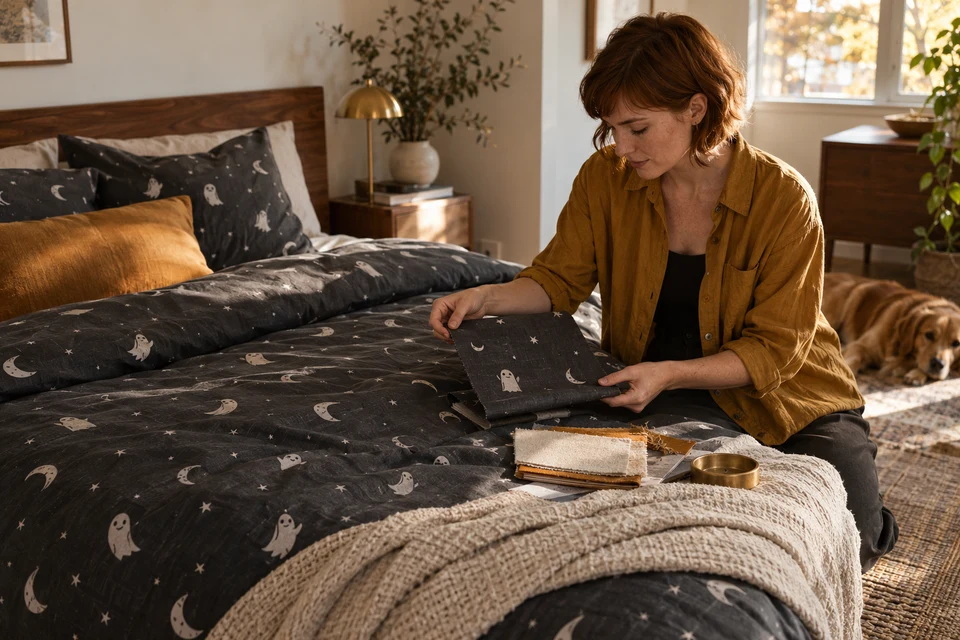
Record the daylight background shade, printed motif scale and position on the made bed. Then create a separate sheet for the proposed after-dark appearance. A pale ghost that reads clearly on charcoal cotton in daylight may not represent the contrast intended in a dark bedroom. Ask which parts of the artwork contain the proposed effect and which are ordinary print. Use the print strike-off workflow for the daylight reference rather than approving everything from one promotional photograph.
The Avient luminescent-ink sheet describes a textile glow effect and explicitly requires confirmation of ink, fabric and application suitability. It is product-specific material guidance, not proof for a finished duvet. Do not transfer its stated performance, substrate scope or compliance language to an unidentified supplier formulation. Obtain the actual material identity and application proposal before deciding which finished samples to commission.
- Identify the exact motifs intended to show an effect.
- Keep daytime color approval separate from night-time evaluation.
Agree the viewing sequence before sampling
A result without conditions is difficult to compare
Ask the supplier to propose a reproducible observation sequence: light source, distance, exposure period, ambient room conditions and times at which observations will be recorded. Resolve these details before reviewing samples so that a brighter photograph cannot silently replace a weaker physical reference. The buyer should approve the sequence and its relevance to ordinary customer use; this article does not supply a universal brightness threshold or charging recipe.
Arrange paired observations with an untreated or ordinary-print reference where helpful. Record the camera exposure separately from what a person actually sees. If quantitative claims are proposed, request an appropriate method and competent evaluation through the product testing plan. Keep development observations and formal claim evidence in different folders.
- Record both illumination and observation conditions.
- Do not compare images captured at undisclosed camera settings.
Test the proposed construction, not only a swatch
Print coverage changes the product-development question
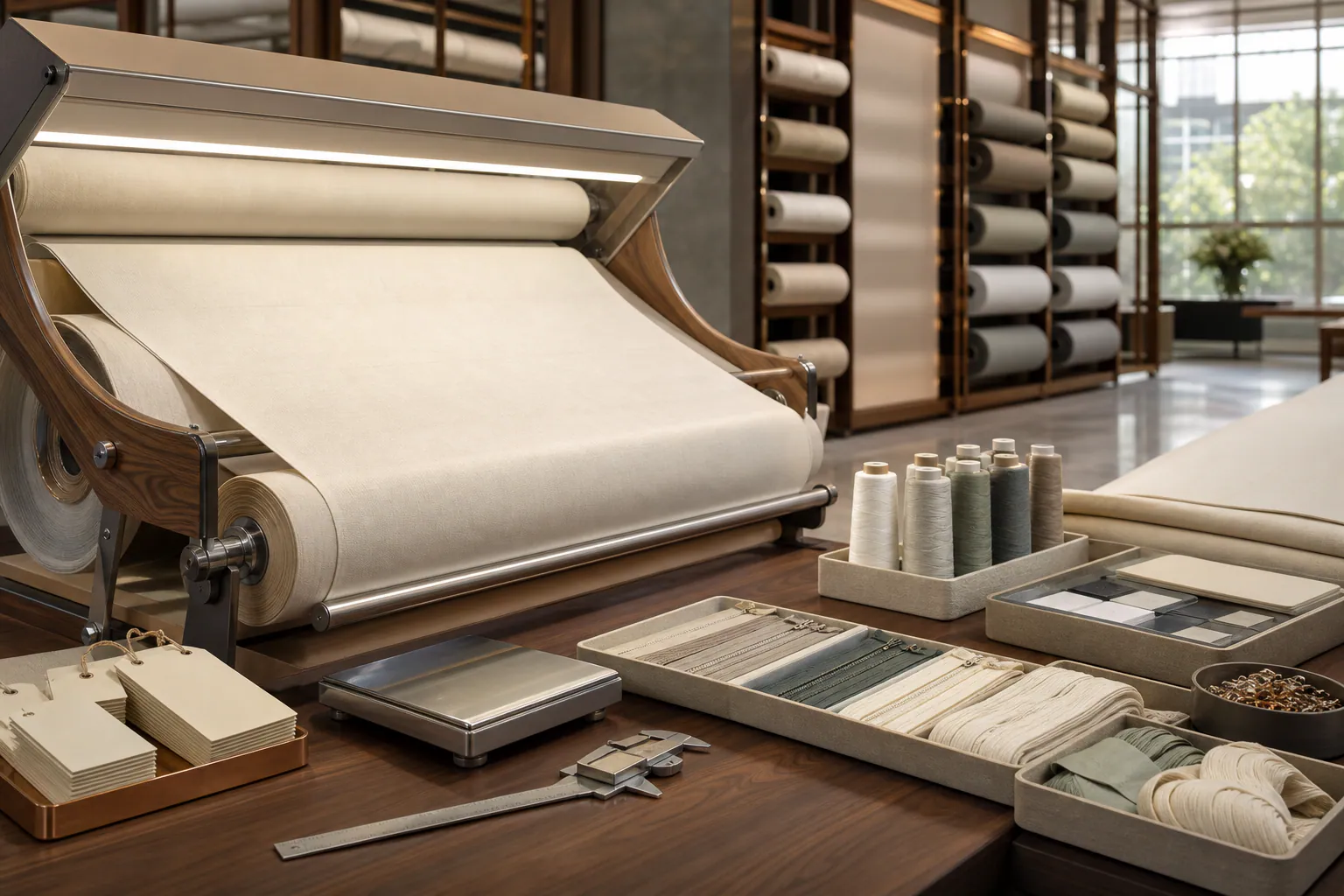
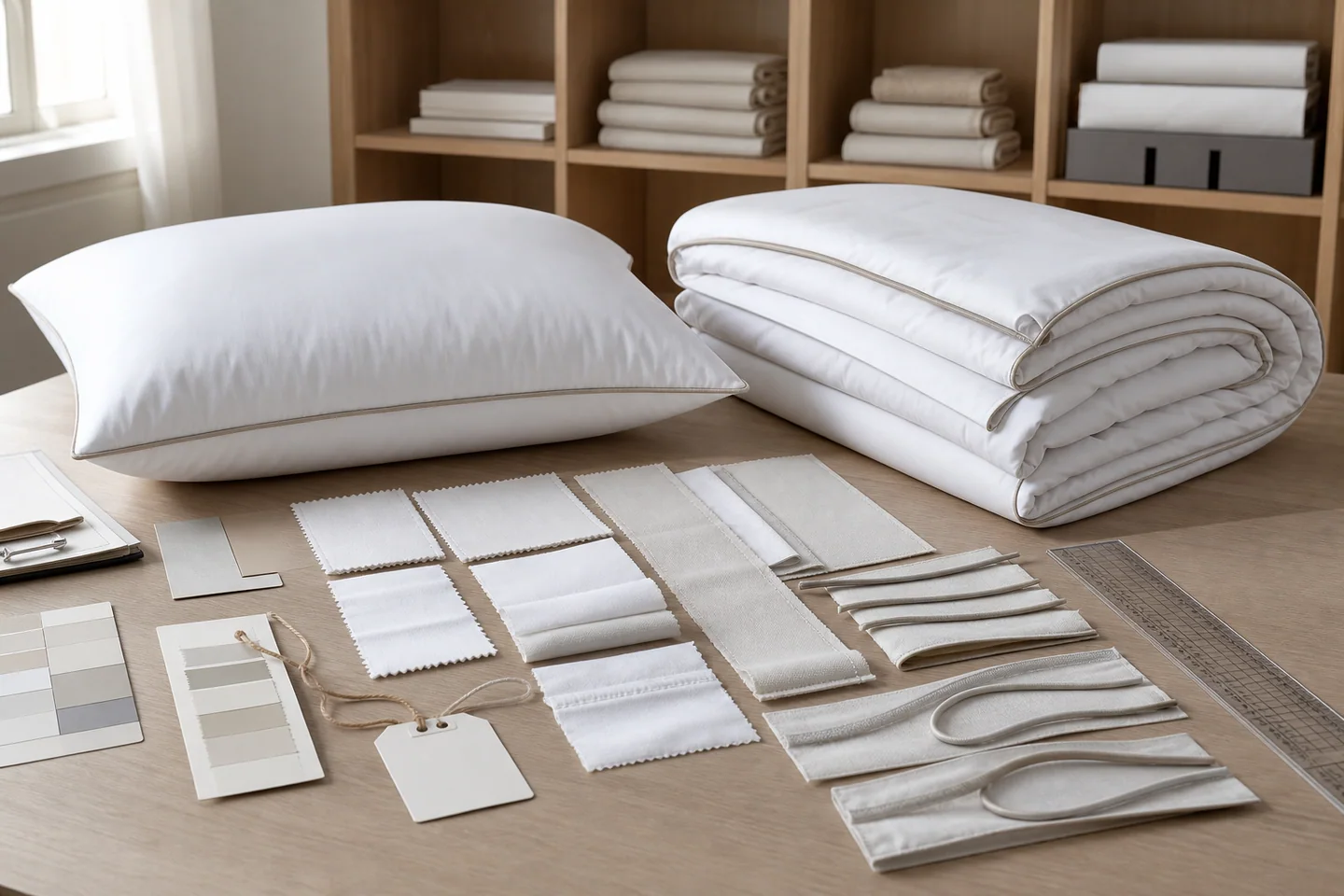
A small printed square cannot show how an extensive motif field behaves across a duvet fold or feels against the hand. Request a representative panel and then a finished construction with the proposed shell, decoration and finishing route. Describe where the effect sits relative to seams, closures and the area normally turned back on the bed. Include the pillowcase if it will carry the same retail claim, rather than assuming its result follows from the duvet.
Use the finished size-set review to connect the effect to each offered format. Compare the appearance after the proposed care process, retaining the pre-care reference. Agree how any changed feel, motif edge or visible residue will be recorded. Do not label a product skin-safe, child-safe or durable from visual inspection alone.
- Review the largest decorated panel offered in the range.
- Link every performance statement to the tested finished scope.
Make the retail demonstration repeatable
Show the buyer experience rather than a camera trick
Plan how a customer will understand the feature without expecting continuous illumination. A daytime photograph can show the design, while any dark-room photograph needs a documented capture basis. Avoid compositing an exaggerated green aura around ordinary printed fabric. Review the physical sample and the proposed listing together with the retail photography approval team before releasing marketplace assets.
The same discipline applies to a retail demonstration or sample showroom. Describe preparation and viewing limits in plain language that has been checked against the evidence. If the claimed effect cannot be reproduced in the intended setting, change the offer or withhold the claim rather than relying on a dramatic marketing image. An attractive Halloween pattern can still be sold on its visible design without unsupported night-time promises.
- Separate illustrative visuals from recorded demonstrations.
- Approve the explanation a customer will receive with the product.
Quote a controlled development route
Material changes must reopen the effect review
Request separate quotation lines for artwork development, representative panels, finished samples and the agreed evaluation work. Ask how decoration coverage, substrate choice and colorway affect minimum quantities and scheduling; do not assume a plain-print quotation covers the special effect. Use the quotation driver checklist to make these differences visible without inventing a target price.
Freeze the approved material and process references with the purchase order. A change of ink, underlayer, shell fabric or finishing route should trigger a defined review of the effect and related claims. Keep the seasonal selling window in the discussion, but only publish delivery dates once the actual production and transport plan is confirmed. If evidence remains open, release a development brief rather than a bulk-performance promise.
- Separate sampling and evidence costs from bulk-unit prices.
- Record which substitutions require renewed approval.
Approve one linked package containing daylight artwork, the actual material proposal, the agreed observation sequence, representative finished samples and claim-specific evidence. Ask FY Bedding to review that scope before a bulk quotation; a glowing concept image is not the acceptance standard.
Method references: Avient ES3101 luminescent ink technical sheet: material-specific reference, not finished-bedding evidence.