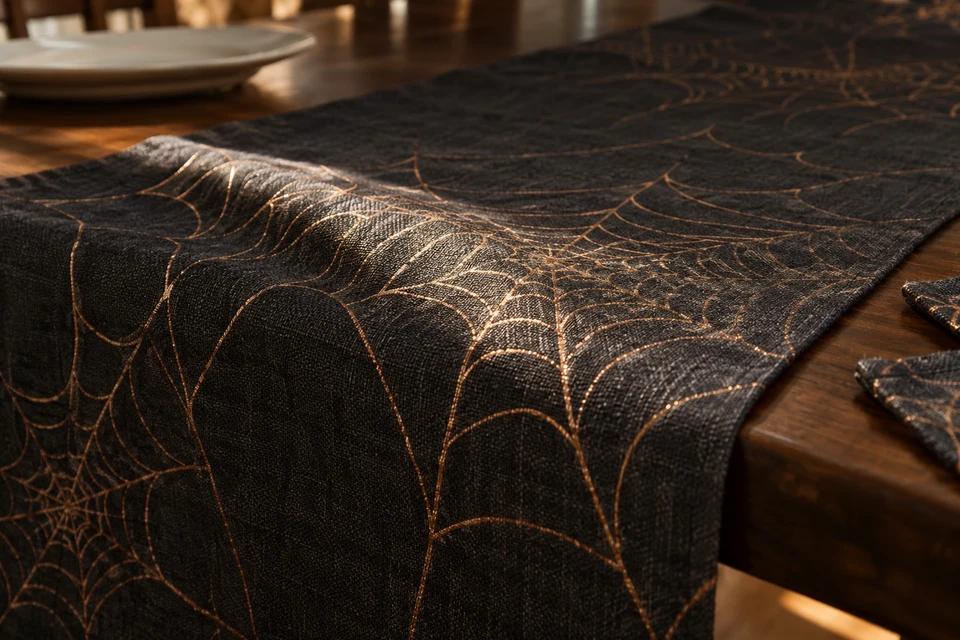
Metallic spiderweb lines can disappear at one angle and dominate at another. A Halloween runner buyer therefore needs more than a flat artwork proof or an overall length. The procurement question is whether the decorated cloth produces the intended appearance across the table, through folds and after the agreed handling. Begin with the actual proposed surface process and evaluate a representative runner, not a photograph of a different metallic fabric.
Identify what creates the metallic surface
Foil, metallic yarn and ordinary pigment are different offers
Ask the supplier to name the decoration route, base fabric and bonding or finishing components. A photograph of copper-colored lines does not establish that the product uses metallic transfer foil. Woven metallic yarn, printed metallic effect and applied transfer decoration should not be treated as interchangeable merely because a catalogue thumbnail looks similar. Record a physical reference for the chosen route within the product specification pack.
KURZ describes textile transfer decoration as a process involving heat, pressure and textile adhesive. That general explanation helps identify the questions to ask; it does not establish the process or certification of this runner. Request the actual supplier's material records and intended substrate combination. Keep any material-maker claims separate from the evidence required for the finished decorated article.
- Name the proposed process and every relevant substrate.
- Compare quotations only after the decoration route is clear.
Review the web at more than one angle
Thin branches and broad intersections need different attention
Lay a representative decorated panel flat and view it from both long sides of the table. Then introduce the fold and drape expected in the actual presentation. Look for the fine web branches, thick junctions and transitions into undecorated cloth. Decide which missing or irregular areas are intentional artwork and which would be considered an unacceptable interruption. Do not turn every change of reflection into a defect without first defining the desired visual effect.
Retain photographs from the agreed positions together with the physical panel. The strike-off approval record should identify line scale and coverage, while the finished runner confirms what those lines look like when the textile moves. A single high-gloss photograph is insufficient for a buyer who expects the web to remain readable under softer dining-room light.
- Inspect fine branches and heavy intersections separately.
- Keep viewing position and lighting consistent between samples.
Put the fold into the approval sample
The retail package becomes part of the surface review
Specify the intended folding layout before approving a final pack. A decorative line crossing a sharp fold deserves a different observation from a line on a flat display panel. Open the proposed pack using the buyer's ordinary unpacking sequence, then compare the visible surface immediately and again after the agreed preparation. Record any allowed preparation openly; do not quietly press or steam a sample into a condition customers cannot reasonably reproduce.
Use the pack-pressure and crease review for packaging contacts, then assess the metallic pattern itself. A larger carton or different fold may preserve a presentation but change logistics cost. Evaluate the finished pack and commercial implications together rather than hiding the packaging change inside a unit-price revision.
- Mark where folds cross important web lines.
- Approve the pack and its unpacking condition as one reference.
Keep appearance approval separate from durability claims
Request evidence for the offered care route
A convincing metallic finish on a new runner does not establish its performance after care or repeated handling. Ask what care instructions are proposed and why they are appropriate for this exact construction. Include both metallic and undecorated areas in the inspection record. If the surface changes after the agreed trial, describe the change without inventing a pass criterion after seeing the result.
Build the required evidence through the testing plan, with sample identity and applicable method recorded. Do not copy a transfer-material certificate onto the finished runner's sales page. Heat resistance, food-contact suitability and protective performance are separate questions; a decorative metallic look supplies no answer to them. This runner is discussed as table decoration, not a heat-protective mat.
- Agree acceptance descriptions before the care trial.
- Keep protective and food-contact claims outside an unevidenced offer.
Release a comparable seasonal quotation
Coverage and presentation can change the commercial basis
Ask for quotations against the same artwork coverage, base fabric, finished format and packaging. Request the supplier's actual minimum quantities for the proposed route rather than applying a generic Halloween order minimum. If a lower-cost option reduces web coverage or uses ordinary pigment, list it as an alternate design, not as a silent equivalent. The quotation comparison guide can hold these scope differences.
Attach the approved panel, finished runner and pack references to the release decision. Agree which later changes require another appearance review, including decoration source, fabric texture and fold layout. Confirm the development calendar with the supplier before committing a seasonal launch. Keeping an honest alternate without the metallic effect may be more useful than promising a surface finish that has not yet been approved.
- Quote the base route and any alternate separately.
- Retain both the flat panel and the unpacked finished reference.
Before ordering, compare the proposed runner in flat, draped and unpacked conditions. Send FY Bedding the intended artwork, setting and care requirements so the development scope can be reviewed without assuming metallic appearance proves durability.
Method references: KURZ textile finishing: general transfer-process reference only.