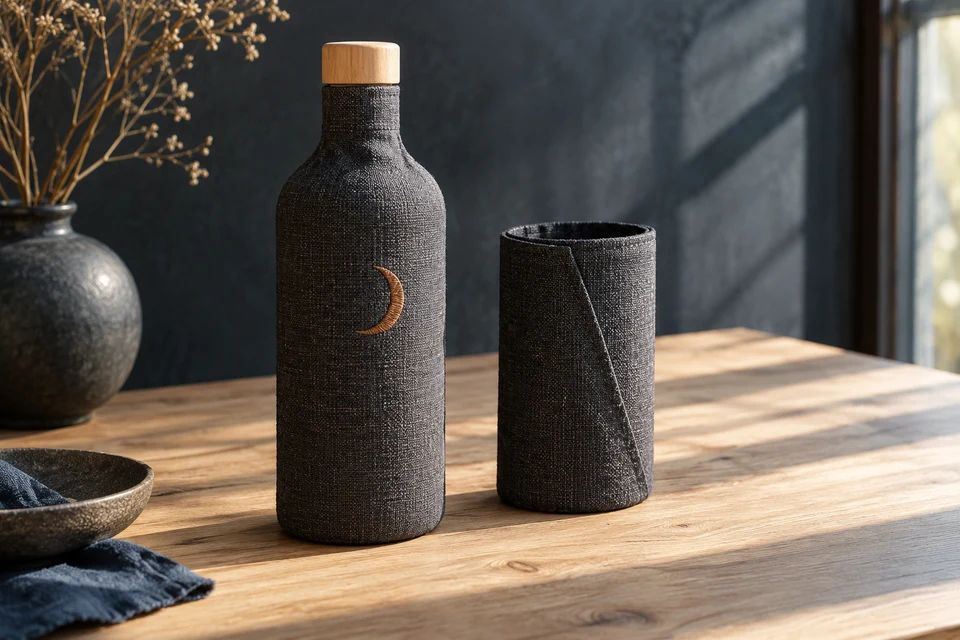
A Halloween potion-bottle concept can be a textile decoration around a closed display container. The word potion describes the visual theme, not a substance, sealing function or product claim. For procurement, the central question is whether the wrap follows the specified bottle's body and shoulder without obstructing the closure. Keep the container, contents and decorative textile as separately identified parts of the brief, and never infer compatibility from a generic bottle-shaped photograph.
Freeze the container reference
Body diameter alone does not describe the shoulder
Obtain the actual display bottle or a controlled drawing that identifies the body, shoulder transition, neck and closure. Record the measurement positions used for development rather than quoting one circumference for the whole container. Add the reference to the technical pack, including whether the bottle is supplied with the textile or is only a fitting aid. Keep changes to the reference container traceable.
If several bottle shapes are proposed, identify each as a separate fitting combination. A wrap developed for a straight cylinder may behave differently around a rounded shoulder even if both bodies have similar diameters. Ask for a physical fitting sample for the intended combinations. Do not describe the wrap as universal or assume that a different cap height will leave the same access to the closure.
- Record body, shoulder, neck and closure geometry.
- Keep each proposed container combination identifiable.
Define how the textile follows the shoulder
A tapered wrap needs an intentional construction
Ask the maker to explain the proposed shaping method and show the finished wrap without the bottle. A shaped seam, dart or other arrangement should be documented as actually offered, not guessed from the fitted photograph. Review how the upper edge settles below the neck and whether excess fabric gathers in the intended way. Keep the seam location away from the principal motif unless the design explicitly includes it.
Inspect the shoulder in front, side and rear views. Use the seam record to describe sewn shaping where relevant. If the construction changes to simplify production, refit the complete sample on the same container. A flat strip that approximates the body circumference is not automatically equivalent to the approved shoulder-shaped wrap, even when it uses the same fabric and decoration.
- Document the actual shaping method and upper-edge position.
- Refit after any change to darts, joins or taper.
Leave the real closure accessible
The decorative textile must not be mistaken for a seal
Show the intended clearance between the wrap and the bottle closure. Review any planned opening or handling procedure with the responsible product owner using the actual container. Keep the textile clear of areas that the agreed procedure requires, and record what the sample review observed. Do not claim that the wrap preserves contents, prevents leakage or replaces a tamper-evident feature; those functions are outside a decorative fitting review.
Clarify whether the article is for a closed display only or another specifically assessed use. The buyer resource checklist can separate textile information from container and contents responsibilities. If the use changes, revisit the product requirements and evidence rather than carrying over the decorative sample approval. A themed image should never imply that an unidentified liquid or cosmetic product has been evaluated.
- Record the closure clearance for the agreed container.
- Keep sealing, contents and tamper evidence outside unverified textile claims.
Position the front motif and rear join
The fitted wrap has a defined display direction
Place the crescent or other Halloween motif relative to the installed shoulder and base, not only to the flat pattern edge. Check that the rear overlap remains in its intended position when the wrap is fitted normally. Use the artwork control record to tie motif placement to the approved container and pattern. Record the reverse view as well as the attractive front.
Observe whether the wrap rotates or changes its visible overlap during the agreed handling review. Any requested material or color-transfer evaluation belongs in a product evidence plan with a defined method and contact surface. Do not convert a static fit check into a non-slip or protective claim. Recheck the motif position if a closure, lining or material revision changes the installed circumference.
- Approve front artwork and rear overlap on the real container.
- Keep handling observations separate from protective or non-slip claims.
Quote and pack the actual supply
A decorative wrap is not a load-bearing gift bag
State whether the selling unit contains only the wrap or also the identified display bottle. Do not describe a sleeve without a designed carrying arrangement as a transport bag. Agree whether it is packed flat, shaped or installed and review how that presentation affects the shoulder seam and motif. If the customer must fit it, provide an agreed instruction consistent with the actual construction and intended use.
Align container compatibility, material, shaping, decoration and packaging before comparing MOQ and price. Ask which reference shapes need separate patterns or samples and include that work in the development plan. Inspect a packed unit after ordinary unpacking and fitting. Confirm the supplier's actual production and delivery milestones rather than promising Halloween availability from the existence of a sample photograph.
- Make container inclusion and carrying exclusions clear.
- Compare quotations using the same shoulder-shaped construction.
Share the actual display bottle and intended retail use with FY Bedding. Request a shoulder-fitting sample, rear-join view and closure-clearance review before approving the decorative textile wrap.