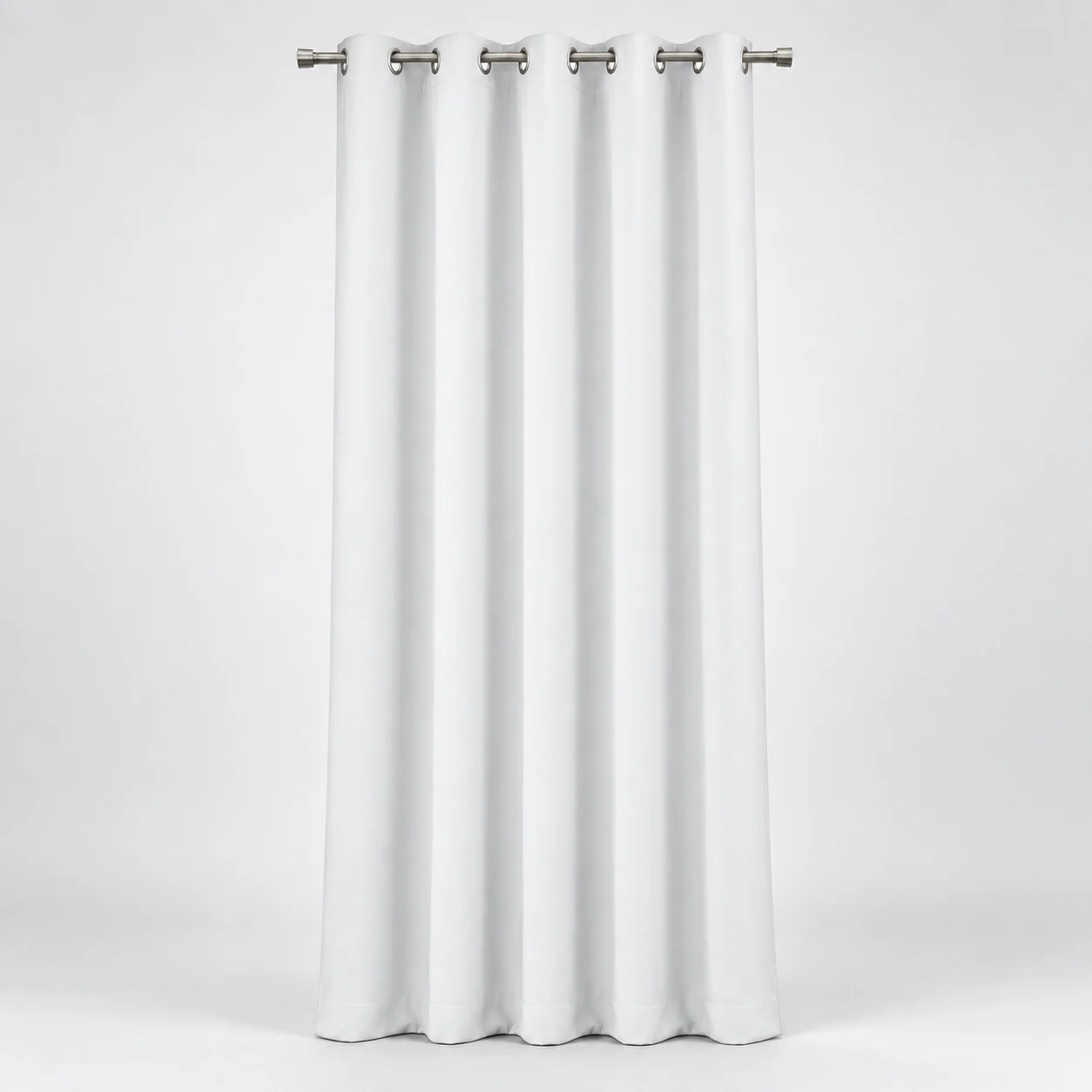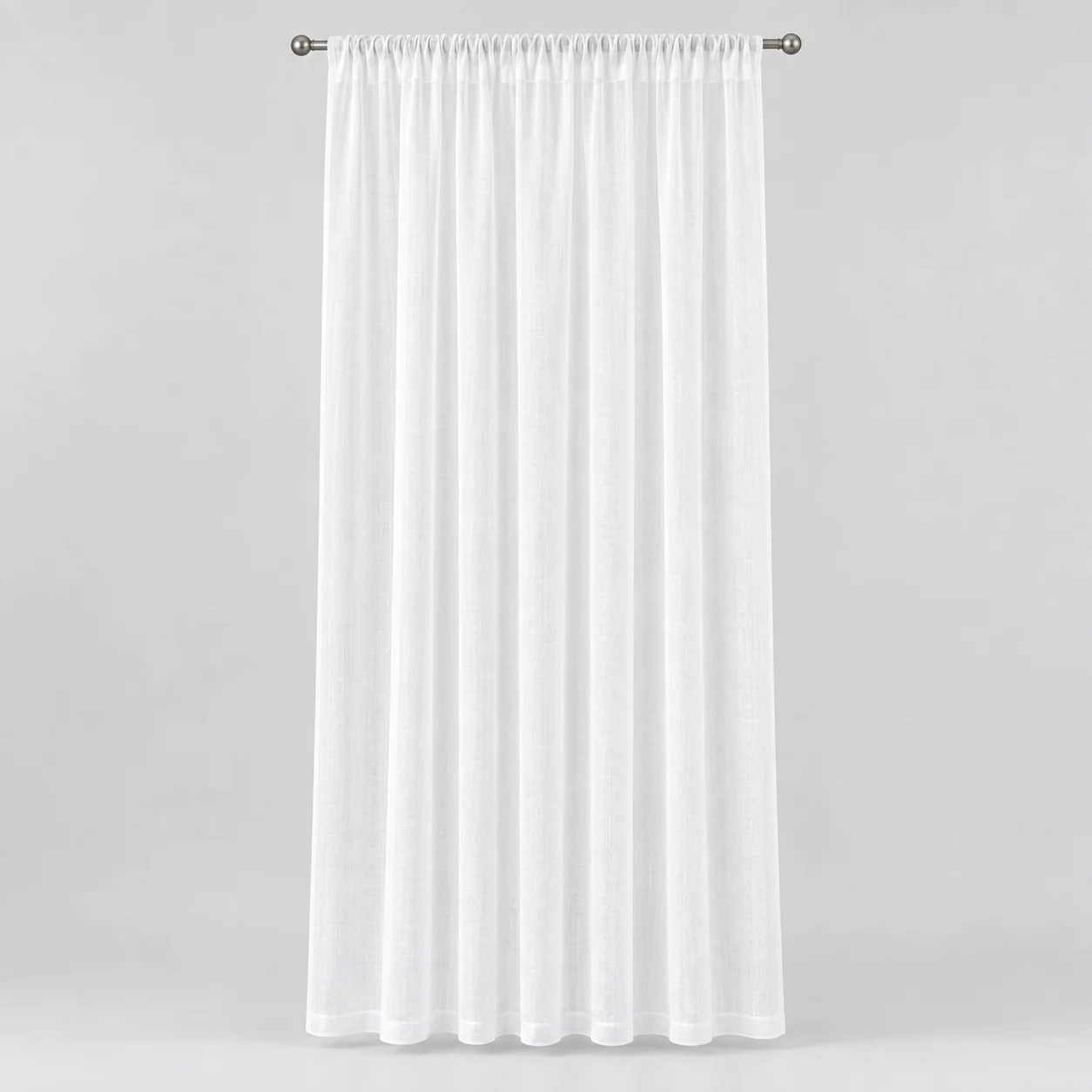
A curtain tieback changes the way fabric is held during the day and presented when released at night. A hotel buyer should approve that contact arrangement on the intended curtain, rather than select a tieback from a decorative swatch alone. This review focuses on observable fabric contact, creasing and the repeatability of the room presentation. Hardware selection, fixing strength, accessible cords and installation safety require the responsible specialist's review; a visual textile trial does not establish their suitability or replace the property's safety requirements.
Identify the contact arrangement
Record what touches the curtain
Describe the offered tieback material, width, lining, seam position and closure configuration. Identify which surfaces touch the curtain and which remain visible. Use the actual curtain face fabric and lining combination, not a lighter substitute that gathers more easily. The specification record should distinguish a complete tieback assembly from a decorative face sample. Ask the supplier to disclose proposed substitutions before the contact trial, because a visually similar backing or edge construction may produce a different assembled result.
Record the approved installation context supplied by the hotel and its installation specialist. Note the intended gathering point and the way the curtain is arranged within the tieback. Keep this separate from the window stackback review, which concerns the space occupied by the curtain. The present decision is about what the tieback does to the gathered textile and how the released textile looks, not whether the whole curtain system clears the window opening.
- Identify face, backing and edge construction.
- Use the intended curtain assembly.
- Record the specialist-approved gathering arrangement.
- Separate fabric contact from installation safety.
Observe gathering without corrective styling
Make the trial repeatable
Ask the room team to demonstrate the normal approved gathering routine on a representative mock-up. Record whether fabric is bunched tightly, distributed into folds or arranged another way, without turning the test into a strength exercise. Use the mock-up room record to preserve the method and room configuration. If an unusually skilled stylist is needed to achieve the photograph, identify that limitation before treating the image as an ordinary housekeeping result.
Compare the contact zone with nearby fabric under the same room lighting. Look for visible edge impressions, displaced folds or areas that appear trapped against a seam or closure. Record observations rather than assigning a universal allowable pressure or declaring the assembly abrasion resistant. A brief presentation trial is not a durability test. Where resistance to repeated contact is a purchasing requirement, ask the technical owner to define suitable evidence and an acceptance method for the actual material combination before release.
- Demonstrate the normal gathering routine.
- Record styling steps and limitations.
- Photograph the contact zone consistently.
- Keep durability claims outside a visual trial.
Review the released curtain
Define when appearance is assessed
Agree the holding period and release sequence as project trial conditions, rather than claiming one duration represents every guest stay. Photograph the curtain before gathering, immediately after release and at the agreed later observation point. Keep light direction and camera position comparable. The inspection image record should connect each view to its sample and observation stage so an attractive later photograph cannot accidentally replace the immediate result in the approval pack.
Identify whether the room team normally adjusts the folds after release and include that action in the record. Do not hide additional steaming, pressing or other treatment behind a final photograph. Any remedial procedure must be permitted by the product's care information and accepted by the operator. A buyer may accept a particular temporary crease, request a different tieback surface or reject an arrangement that needs excessive intervention. The decision should name the observed condition rather than simply describe the curtain as looking premium.
- Agree holding and observation stages.
- Preserve before-and-after views.
- Disclose all corrective handling.
- State the accepted released appearance.
Compare alternatives on a controlled basis
Change one contact feature at a time
If the first arrangement is unsatisfactory, compare identified alternatives without changing the curtain and tieback simultaneously. A different width, backing or edge finish should receive a separate sample reference. The pre-production approval process can hold accepted and rejected versions together with their reasons. Avoid choosing from photographs made under different lighting or after different holding periods, since those differences can obscure the effect of the construction being reviewed.
Repeat the agreed observations for each relevant curtain variant. A tieback accepted on a soft plain weave should not automatically cover a textured or differently lined curtain simply because the color family matches. Define any grouping of variants with the technical owner and record its basis. Where a new material or finish falls outside that grouping, require another contact review. Keep the trial practical by focusing on actual offered combinations rather than generating a large matrix of hypothetical versions that the project does not intend to purchase.
- Give each alternative a separate identity.
- Keep curtain and observation conditions stable.
- Preserve rejection reasons.
- Define the limits of variant grouping.
Release the textile decision with its limits
Give housekeeping an actionable reference
The final record should name the curtain, tieback, approved arrangement, observation conditions and accepted appearance. Include a clear photograph of the normal gathering method and the released result. Link it to the project technical pack so production receives a reproducible instruction rather than a mood-board image. Keep the specialist's hardware and safety decisions in their own controlled records, with responsibility visible rather than implied by the textile approval signature.
Before ordering, ask the room team whether the approved routine is realistic for the intended property operation. If the decision remains conditional on a revised seam or backing, identify the sample that must be reviewed before the affected quantity is released. For repeat orders, compare the current offered construction with the accepted reference and investigate differences. Share the curtain and tieback references with the sourcing team when requesting a quotation, so alternatives can be assessed against the same contact and presentation requirements.
- Release an identified curtain-and-tieback combination.
- Include normal handling and released views.
- Keep unresolved revisions visibly conditional.
- Recheck construction changes on repeat orders.
Approve the tieback's textile contact only when the normal gathering routine, observed release stages and accepted appearance are recorded; retain separate specialist approval for hardware and installation safety.