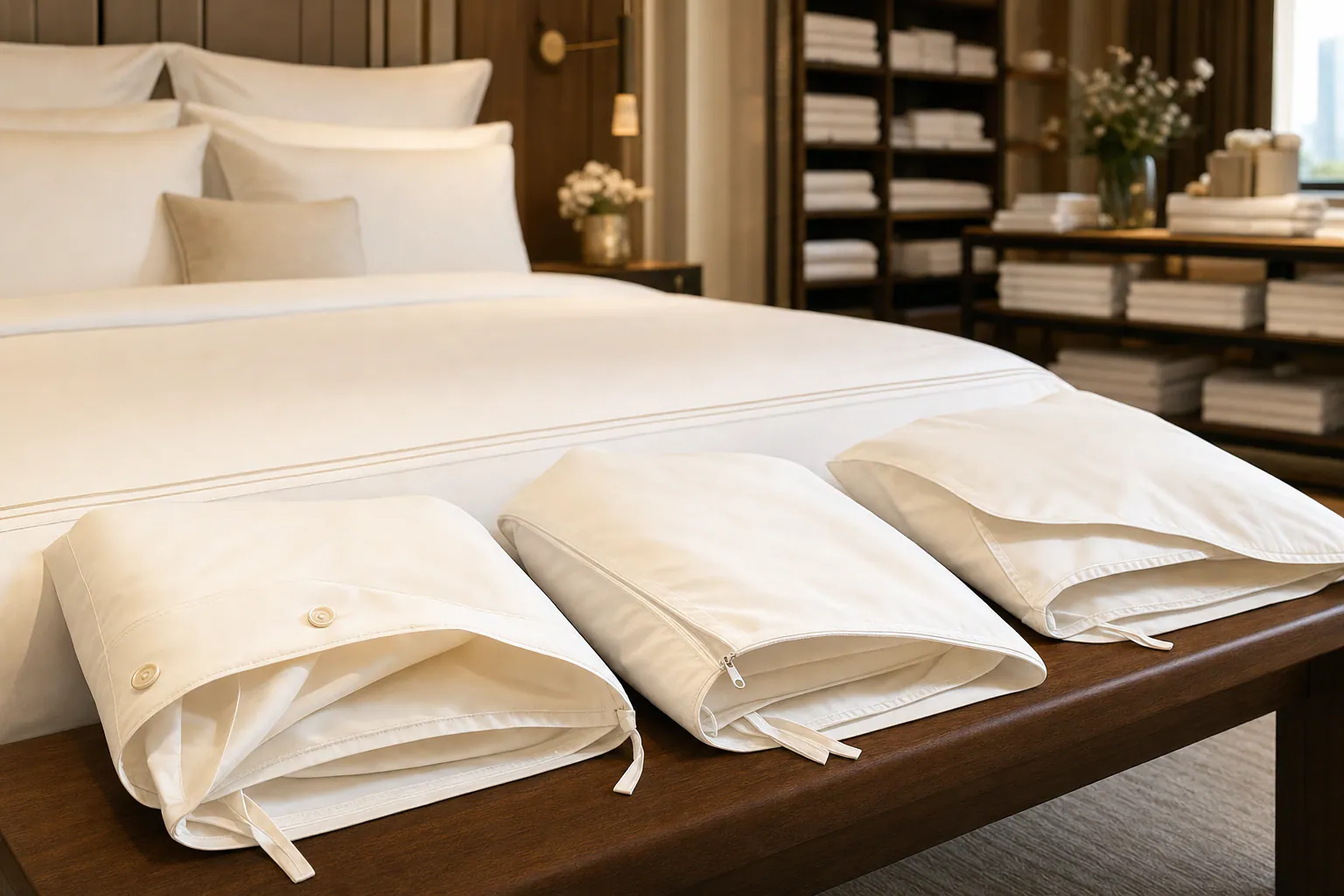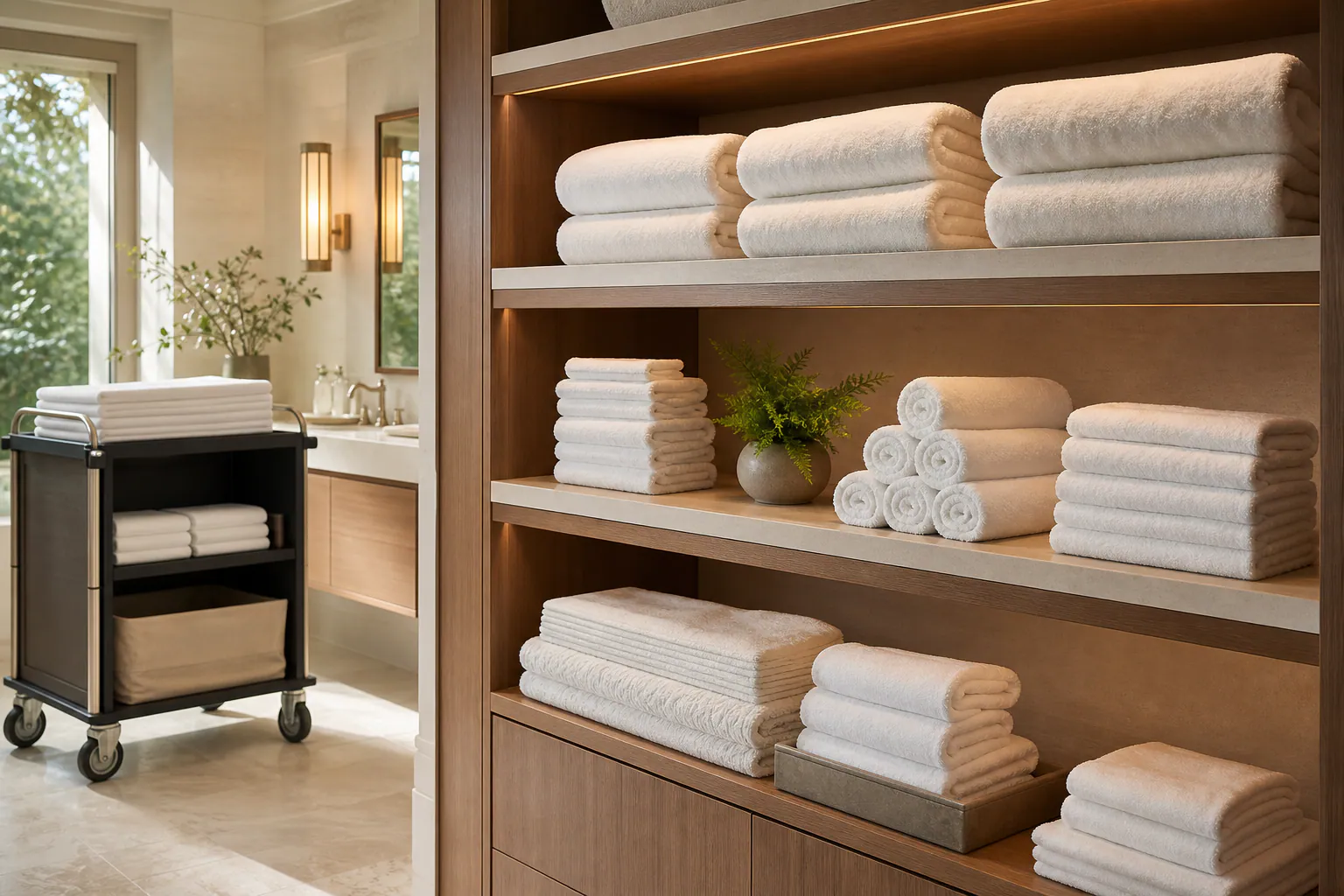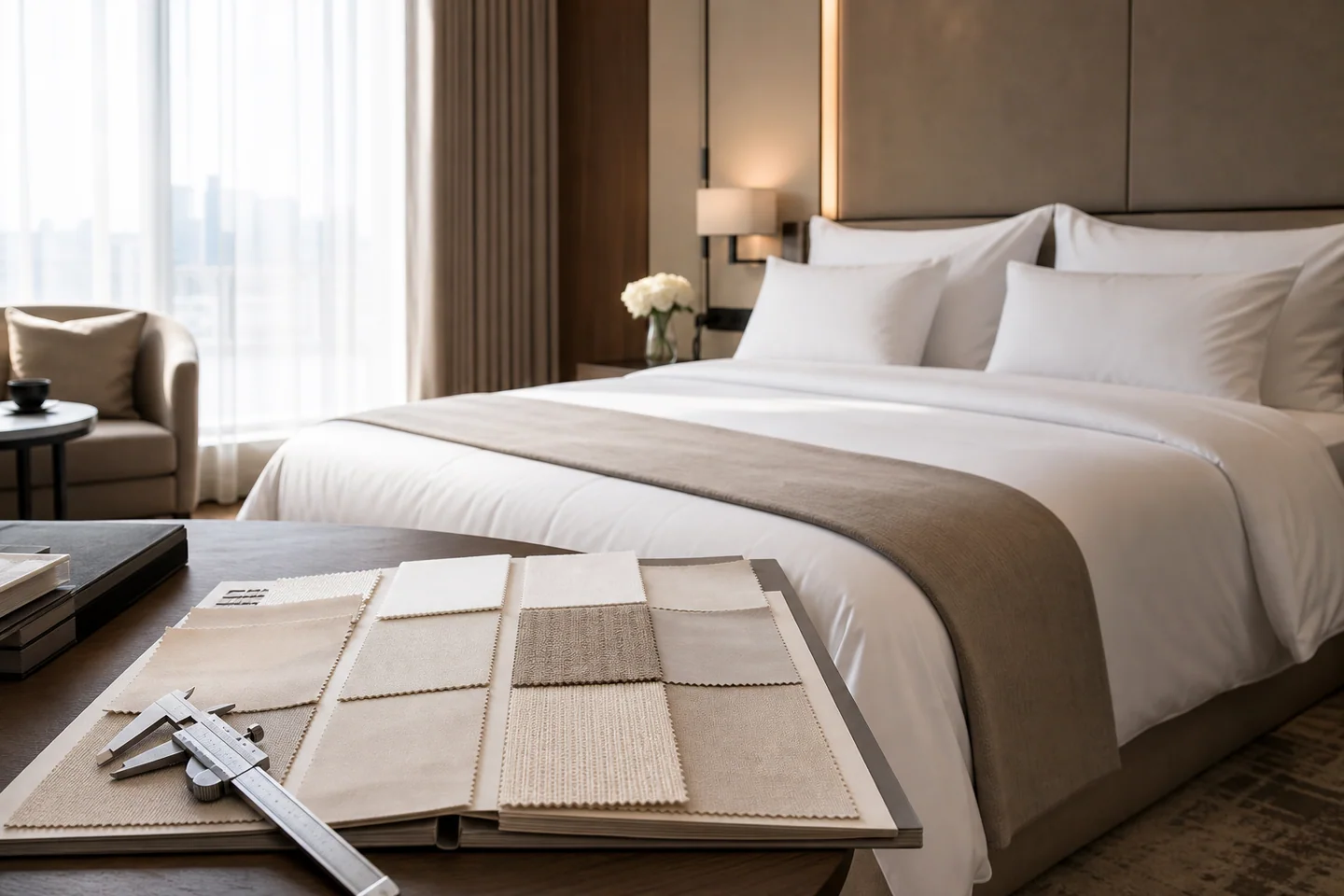
Decorative cushions need a destination when a hotel guest prepares the bed for sleep. An attractive daytime arrangement can create an awkward night-time experience if cushions occupy the desk, block a drawer or end up on the floor. Procurement should review the complete removal, temporary storage and return routine in the proposed room. This is an operational presentation trial, not an assessment of sleep-pillow performance or a claim that a storage location meets a hygiene standard without the property's separate review.
Count the items that leave the bed
Start with the room configuration
List each decorative cushion by cover, insert, dimensions and quantity in the proposed bed arrangement. Distinguish decorative accessories from pillows intended for sleeping and from items that remain on the bed overnight. The room mock-up record should show the actual bed variant and furniture layout. A storage decision made with one cushion should not silently authorize a room presentation that contains several larger accessories or a different combination of shapes.
Ask the operator who normally removes the items: the guest, a turn-down team or another designated role. Record the intended routine without assuming every property offers the same service. Include any room variants with different storage furniture. The textile technical pack should identify the accessories, while the room record identifies their overnight destination. Linking the two prevents a late design change from adding cushions without anyone checking where the extra volume will go during actual use.
- Count all removable decorative items.
- Separate decorative and sleeping functions.
- Identify the normal removal role.
- Include different room and furniture variants.
Test the designated storage space
Use complete cushions rather than flat covers
Place the actual assembled cushions in the proposed clean storage location using the intended routine. Check whether shelves, compartments or approved containers accommodate them without forcing closures or interfering with surrounding furniture. The cover-and-insert fit record establishes the cushion itself; overnight storage must be reviewed with that accepted assembly. A flat fabric cover cannot demonstrate the space occupied by the filled accessory or the effort needed to remove it again.
Observe whether guests can still access the intended room facilities after the cushions are stored. Ask the property team to identify any restrictions involving personal belongings, cleaning supplies or other items kept nearby. Do not declare a location hygienic merely because it photographs well or sits above the floor. The operator must approve the location and cleaning arrangement for its own operation. Record any unresolved conflict as a room-design issue rather than asking housekeeping to improvise a different destination during each stay.
- Trial the complete accepted assemblies.
- Avoid forcing furniture or closures.
- Preserve access to room facilities.
- Obtain the operator's storage-location decision.
Observe removal and return
Identify handling that changes the result
Run the sequence from the dressed bed to storage and back with the staff member responsible for the routine. Record awkward handling, dragging against surfaces or difficulty retrieving the last item from a compartment. Use a consistent sequence so alternative arrangements can be compared fairly. The sample approval record should identify the cushion version used and any changes proposed after the trial, rather than treating the furniture photograph as approval of every textile variant.
Review the returned bed presentation under normal room lighting. Note whether the cushion needs ordinary adjustment or a more involved intervention to recover the agreed appearance. This short trial does not establish long-term recovery or resistance to repeated compression. If the operator requires those characteristics, arrange an appropriate separate evaluation with the technical team. Keep the observed night-time routine and the longer-term product evidence distinct so a successful single demonstration is not presented as proof of service-life performance.
- Demonstrate both removal and retrieval.
- Record contact and handling difficulties.
- Compare the returned bed presentation.
- Separate short trials from durability evidence.
Compare design options with the operator
Resolve space before ordering volume
Where the storage trial fails, consider the project-approved alternatives: fewer decorative items, a different accepted cushion size or a revised storage location. Do not change insert dimensions simply to make an accessory fit a shelf without rechecking the assembled appearance. Record the effect of each option on the room concept and daily routine. The buying specification should carry the selected quantity and configuration so a supplier quotation does not retain a superseded decorative arrangement.
Review any proposed cover or trim change with the design owner before treating it as a solution. A projecting trim, unusual shape or stiff corner may require a different storage orientation, but the accepted method should be demonstrated rather than inferred. Keep rejected options and their reasons in the room file. This allows later purchasing or replacement decisions to understand why a seemingly smaller or cheaper alternative was not selected, without relying on the memory of the person who attended the initial trial.
- Compare approved quantity and size alternatives.
- Recheck assembly after textile changes.
- Record the selected storage orientation.
- Preserve rejected options and reasons.
Release a room-level instruction
Make replenishment follow the same arrangement
The final approval should connect the room type, cushion references, quantity, designated overnight location and normal return presentation. Include useful photographs without guest belongings or identifiable guest information. Store those views alongside the approved physical references. Written identity matters because a photograph of several neutral cushions may not reveal which insert, closure or size was accepted, especially when similar accessories are ordered for different room categories within the same property.
Ask the operator to confirm ownership of the instruction after opening or refurbishment. When furniture, cushion quantity or accessory dimensions change, identify which room variants need another storage trial. Replacement purchasing should use the released combination rather than mix unrelated covers and inserts based on color alone. Share the complete room brief when discussing sourcing options, including the overnight destination, so proposed textiles support the whole guest-room routine instead of only the daytime photography arrangement used to launch the project.
- Connect room, cushion and storage references.
- Keep photographs free of guest information.
- Assign responsibility for later changes.
- Reassess affected rooms after revisions.
Release decorative cushions only after the operator accepts a practical overnight destination and a repeatable return routine using the actual room layout and complete cushion assemblies.