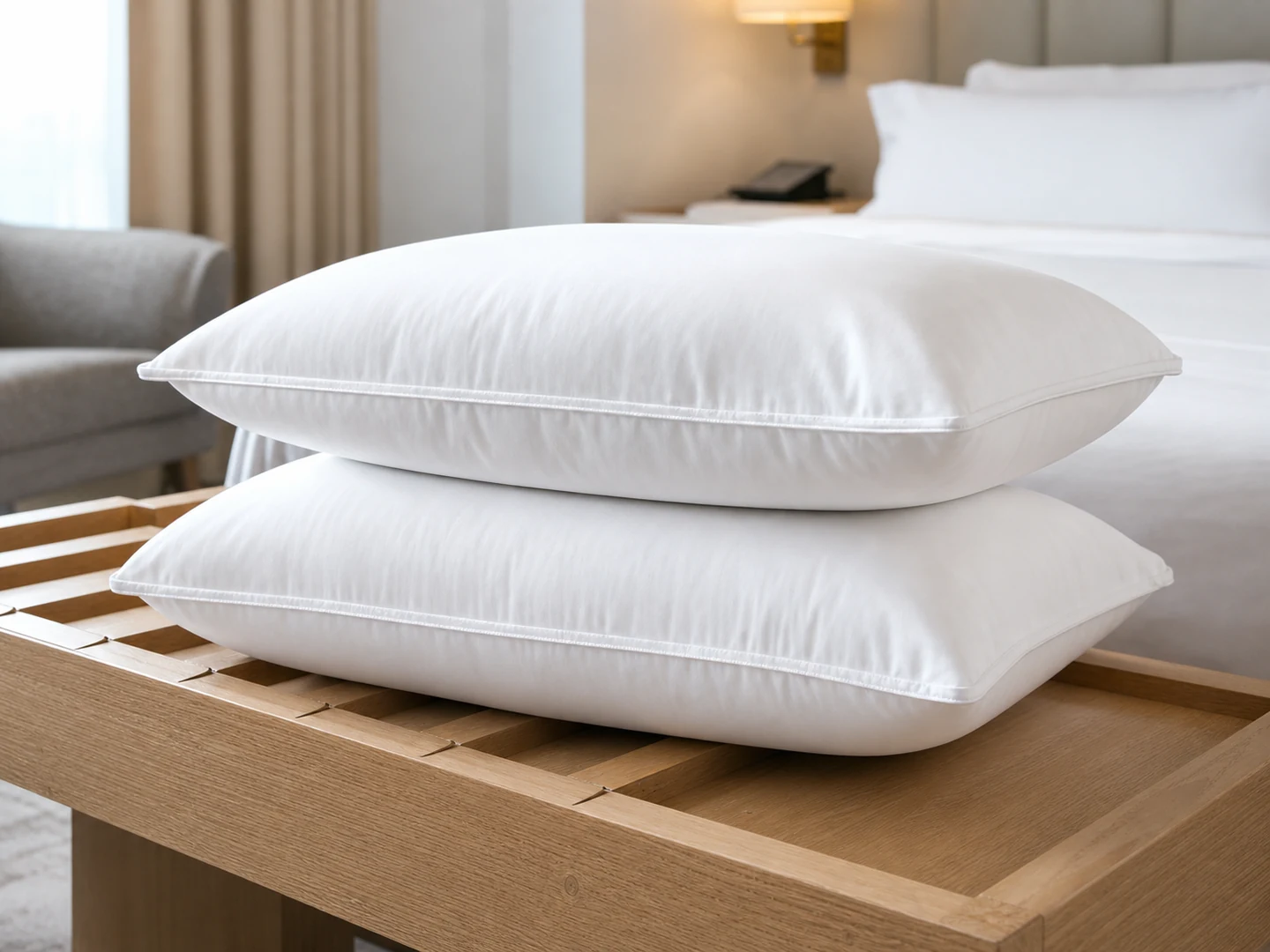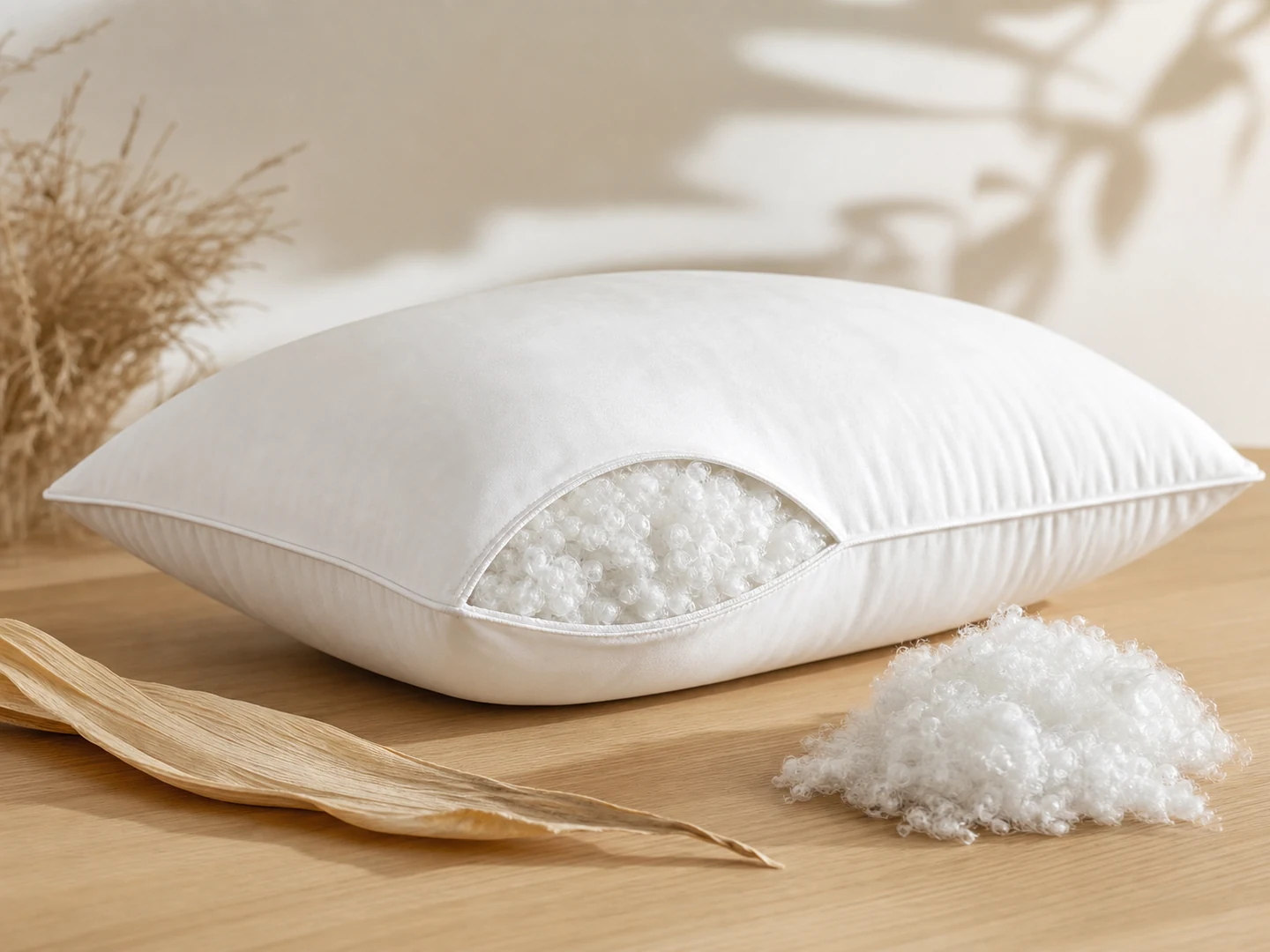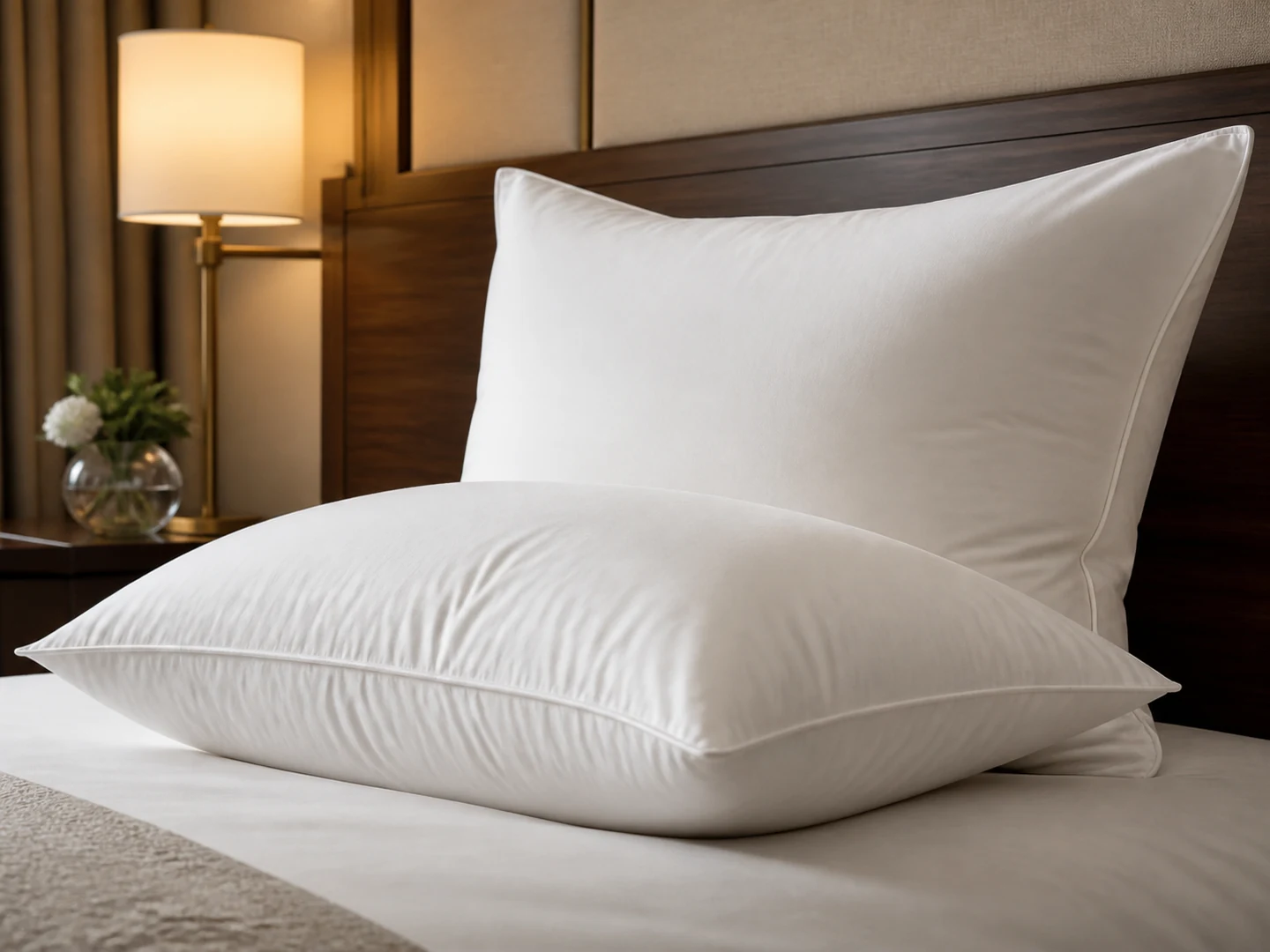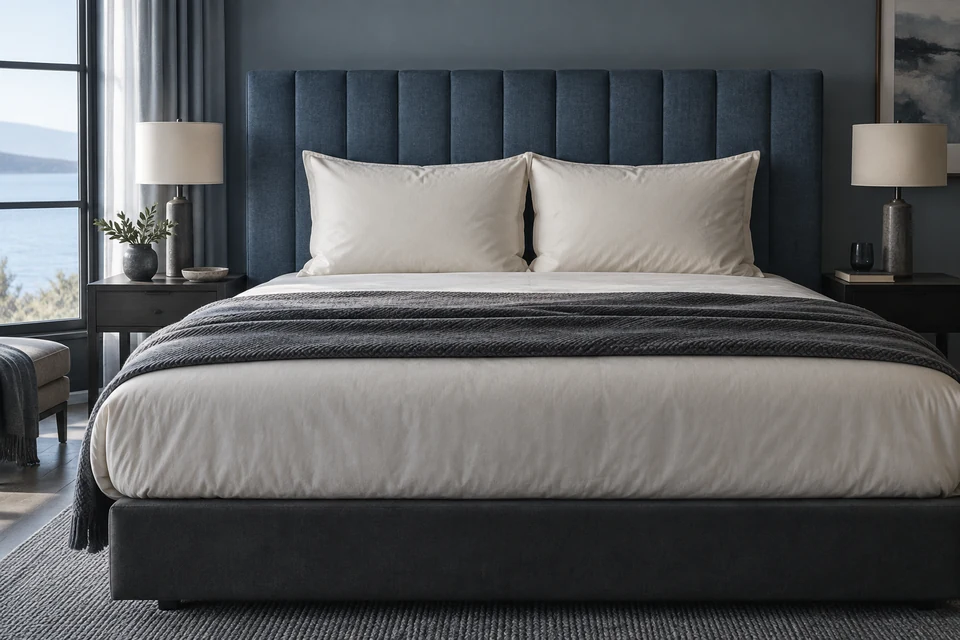
Two individually acceptable pillows can create an uneven presentation when placed together on a hotel bed. The difference may involve the pillow, protector, case, preparation or placement rather than a single failed product specification. Buyers should review the intended pair as an assembled room arrangement while preserving the identity of each component. This is a presentation decision, not a substitute for firmness, fill-weight or recovery evidence on the individual pillow.
Define the intended pair
Do not assume the two positions are identical
Record whether the room design calls for two matching pillows or an intentional combination of different types. Identify the size, filling reference, firmness option and role of each pillow in the arrangement. A property with a pillow menu may deliberately use different products, so visual equality should not be imposed without confirming the design brief. The pillow-menu plan should explain the intended selection before the pair is assessed.
Keep the room position and display direction in the record. A front pillow and a rear support pillow may not be meant to present the same visible contour. Use the individual pillow matrix to identify the components, then describe the paired appearance separately. This avoids turning a room-display preference into an undocumented change to the firmness or filling specification that originally controlled the purchase decision. Keep the replacement instruction explicit: identify whether either approved pillow can occupy either position, or whether the room requires two separately identified roles when stock is replenished.
- Identify the role of each pillow in the room design.
- State whether matching or deliberate contrast is intended.
- Record individual product references before pairing.
- Keep display preferences separate from filling specifications.
Assemble the real components
Cases and protectors belong in the trial
Prepare the pair using the intended protectors and pillowcases, with the sample condition recorded. A loose pillow comparison on a table does not show the full assembled result. If one case differs in size or preparation, the comparison may be misleading even when the pillows themselves match their references. The protector specification and the case reference should therefore remain part of the pairing record rather than background assumptions.
Use the same authorized preparation routine for both sides unless the design explicitly requires otherwise. Record prior storage, unpacking or care history that may matter to interpretation. The storage and retrieval trial addresses a separate operational condition; do not import its results into the pair review without identifying the samples. A pillow taken directly from crowded storage and an untouched reference are not automatically comparable starting points.
- Use the intended protectors and pillowcases.
- Identify differences in component size or preparation.
- Record the starting condition of both pillows.
- Avoid comparing samples with unexplained handling histories.
Observe the made-bed arrangement
Use repeatable viewpoints
Place the pair on the intended bed and record the support surface, headboard relationship and orientation. Compare the visible top line, corner fullness, overall balance and exposed case fabric from ordinary guest-view positions. Keep a wider room image as well as a closer paired view. A photograph framed to show only the most favorable angle should not become the sole reference when the room is normally approached from another direction.
Describe the observation in practical terms before assigning a cause. If one pillow appears lower, determine whether placement or a different component explains the result before changing the purchase specification. The mock-up approval record can capture the arrangement and any adjustment tried. Do not infer fill-weight or support differences from the visible top line alone; those questions require their own appropriate product evidence.
- Record the bed and support arrangement.
- Compare ordinary guest-view positions consistently.
- Describe imbalance before diagnosing its cause.
- Keep wider and closer views of the same pair.
Recreate the result
Avoid a one-off display arrangement
Ask housekeeping to recreate the preferred presentation using the documented routine and identified components. If the result depends on repeated hidden adjustments by the original reviewer, record that limitation. The objective is a usable room standard, not a perfect photograph that ordinary service cannot reproduce. Include retrieval and placement steps relevant to the property while keeping the exercise distinct from a laboratory claim about long-term pillow resilience.
If the team proposes pairing selected pieces from a larger delivery, clarify the intended sorting rule and its practical consequences. Do not silently introduce a requirement to find matching partners for every pillow without assessing the operational burden and product acceptance implications. A proposed change should be reviewed by the authorized purchasing and housekeeping owners, with any relevant quantity or replacement-stock assumptions kept visible rather than embedded informally in a display instruction.
- Have another staff member recreate the arrangement.
- Identify adjustments that are essential to the result.
- Review any proposed pairing or sorting rule explicitly.
- Keep replacement-stock consequences in the discussion.
Approve a bounded reference
Preserve individual product controls
The final record should identify the intended pairing, complete component references, preparation condition and acceptable presentation. State whether the approval covers a specific room setup or other documented configurations. Keep the original individual pillow requirements active; paired appearance does not prove that fill, support or construction requirements have been met. Where a visual concern leads to a product revision, route that revision through the normal sample approval process.
For a hotel opening or replenishment program, send the intended bed layout and pillow combinations to FY through the hospitality sourcing enquiry. Ask for a complete assembled-sample discussion rather than an assurance that every pillow will look identical in every room. A traceable paired reference helps the buyer communicate the desired presentation while leaving performance claims and unreviewed variations outside the scope of the visual approval.
- Identify the full approved pair and room arrangement.
- Retain individual pillow acceptance requirements.
- Record limitations and unreviewed configurations.
- Reapprove relevant component changes through the normal process.
Approve the complete pillow pair in the intended bed arrangement without using visual symmetry as a substitute for individual product identity or performance evidence.