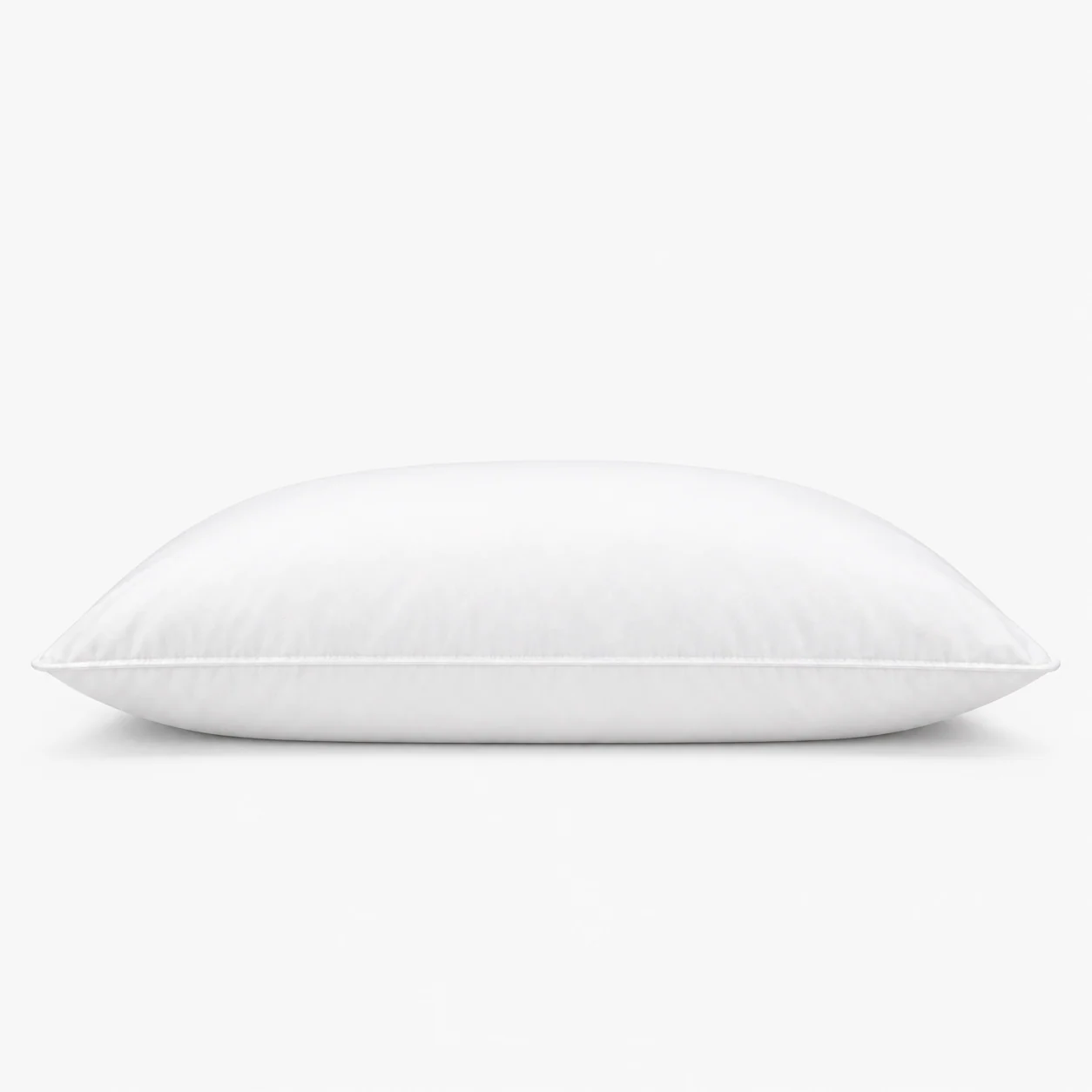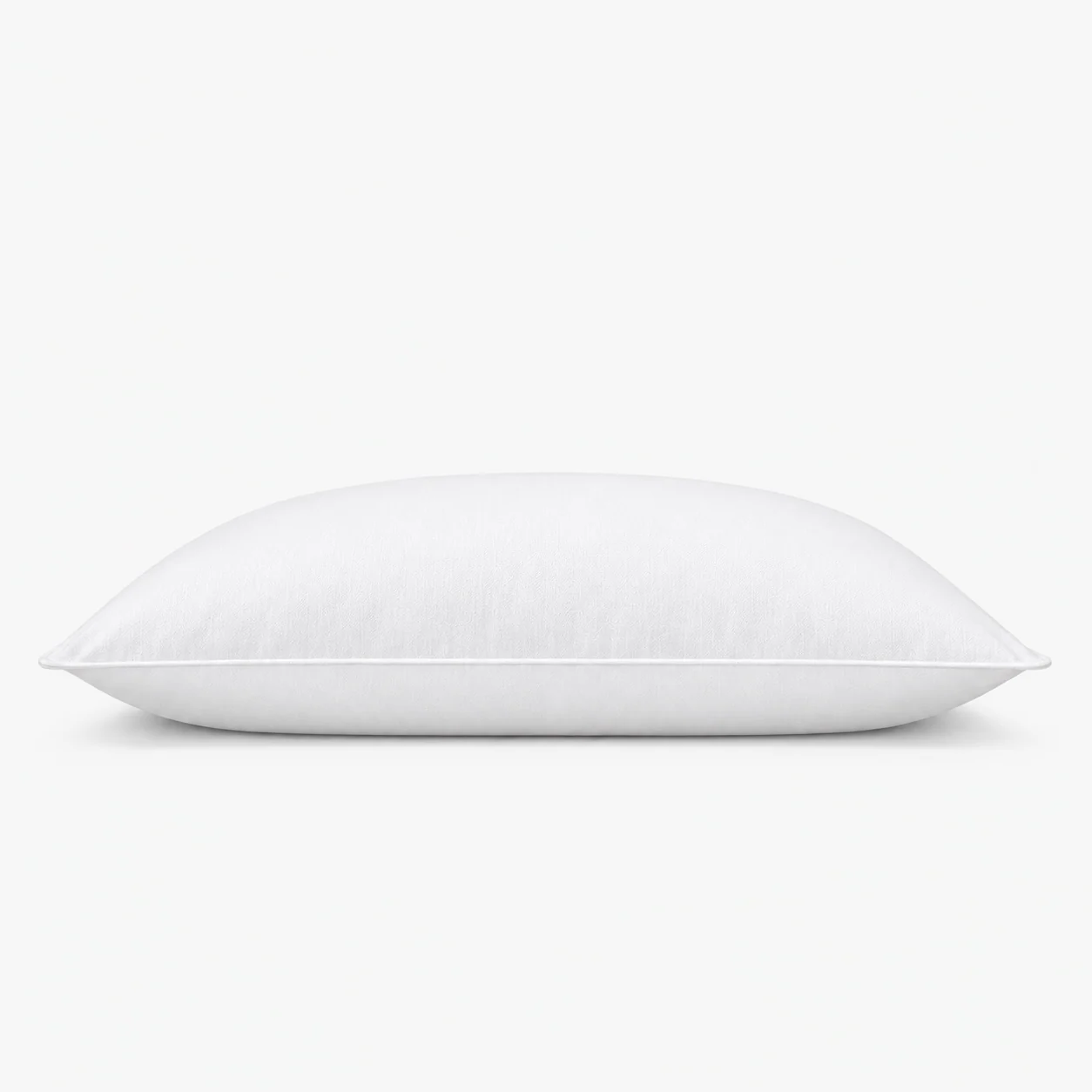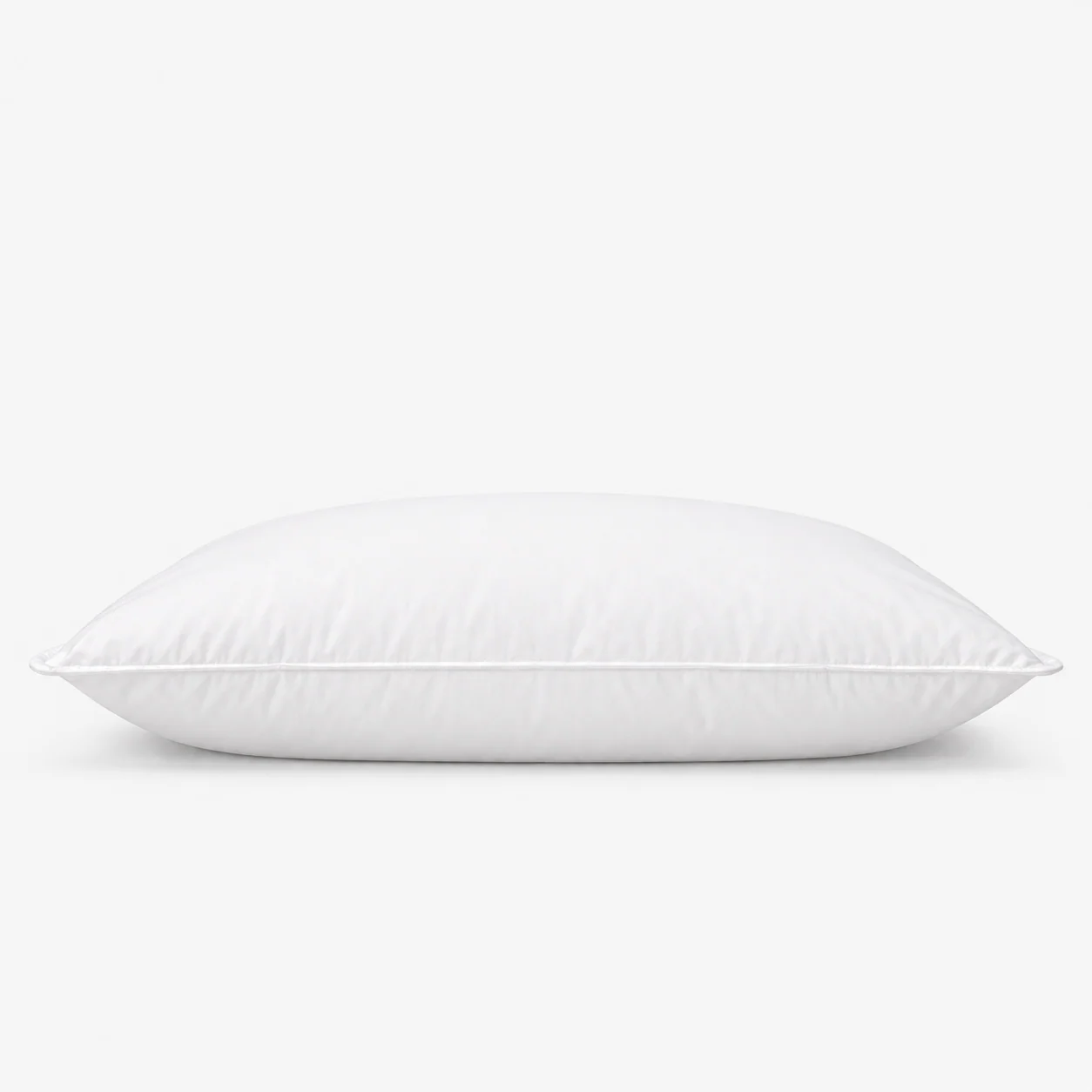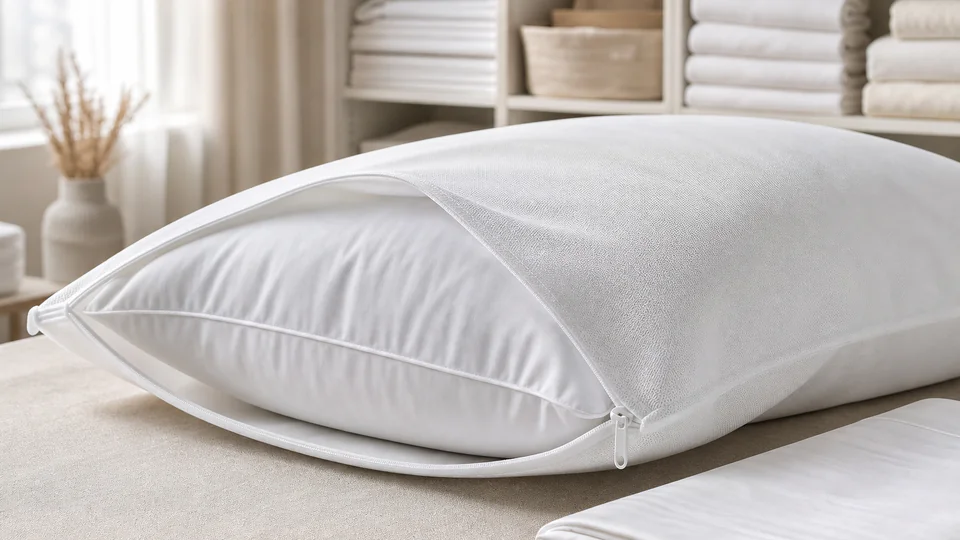
A pillow protector sits between the insert and pillowcase, so small changes in size, closure or fabric can affect comfort, noise, drying and room presentation. Procurement should define its protection role and approve it with the actual pillow, laundering process and housekeeping routine.
Define the protector role for each pillow program
Clarify whether the protector is intended for routine soil management, a qualified barrier function, easier changeover or protection of a higher-value insert. State which pillows receive it and whether decorative, menu or guest-request options use different constructions. Avoid claims that are not supported by matched evidence.
Coordinate the range with the hotel pillow menu guide. Every protector should have a controlled size and item code linked to the correct insert so softer or higher-profile options do not end up compressed inside one universal cover.
Specify fabric and any barrier layer completely
Record face fiber, construction, finished weight, finish, backing or membrane, color, hand and air or moisture-related requirements where relevant. Define which performance applies to base fabric and which must be demonstrated by the finished protector with seams and closure.
Build the evidence request through the bedding product testing plan. A fabric report can support material selection, but it does not automatically confirm the comfort, durability or barrier continuity of the assembled protector.
Approve fit, closure and edge details
Specify finished length and width after care, opening direction, zipper or envelope construction, seam type, piping if used and label placement. Install the protector on each nominated pillow and check closure effort, corner fill, surface wrinkles and whether the protector changes loft or firmness noticeably.
Set tolerances with the dimension and shrinkage method. Review protector, insert and pillowcase together because layered size differences can create empty corners, a strained zipper or an oversized package that looks untidy on the bed.
Validate laundering, drying and guest comfort
Run production samples through the intended wash and dry cycles. Inspect dimensions, closure operation, seam integrity, delamination, noise, hand, odor, drying time and visible wrinkles. If special sorting or temperature limits are required, confirm that the property can apply them consistently.
Align the final instruction with the hotel linen care route. Trial the cared-for protector in a made room and ask housekeeping to change it under normal conditions, including how used pieces are isolated from clean stock.
Set par levels and replacement controls
Calculate opening stock from pillows in service, change frequency, laundry turnaround, rejects and reserve. Keep sizes identifiable after care with durable labels and consistent shelf codes. Packaging should support room or property allocation without hiding the product label.
Track zipper damage, shrinkage, stains, seam failure, delamination and loss by size. Use the SKU quantity planning approach to set reorder points and prevent one protector size from becoming an uncontrolled substitute for several pillows.
Approve pillow protectors after repeated care on the actual pillow and under the final pillowcase. Freeze the role, fabric, closure, dimensions, label and replacement criteria as one controlled SKU.