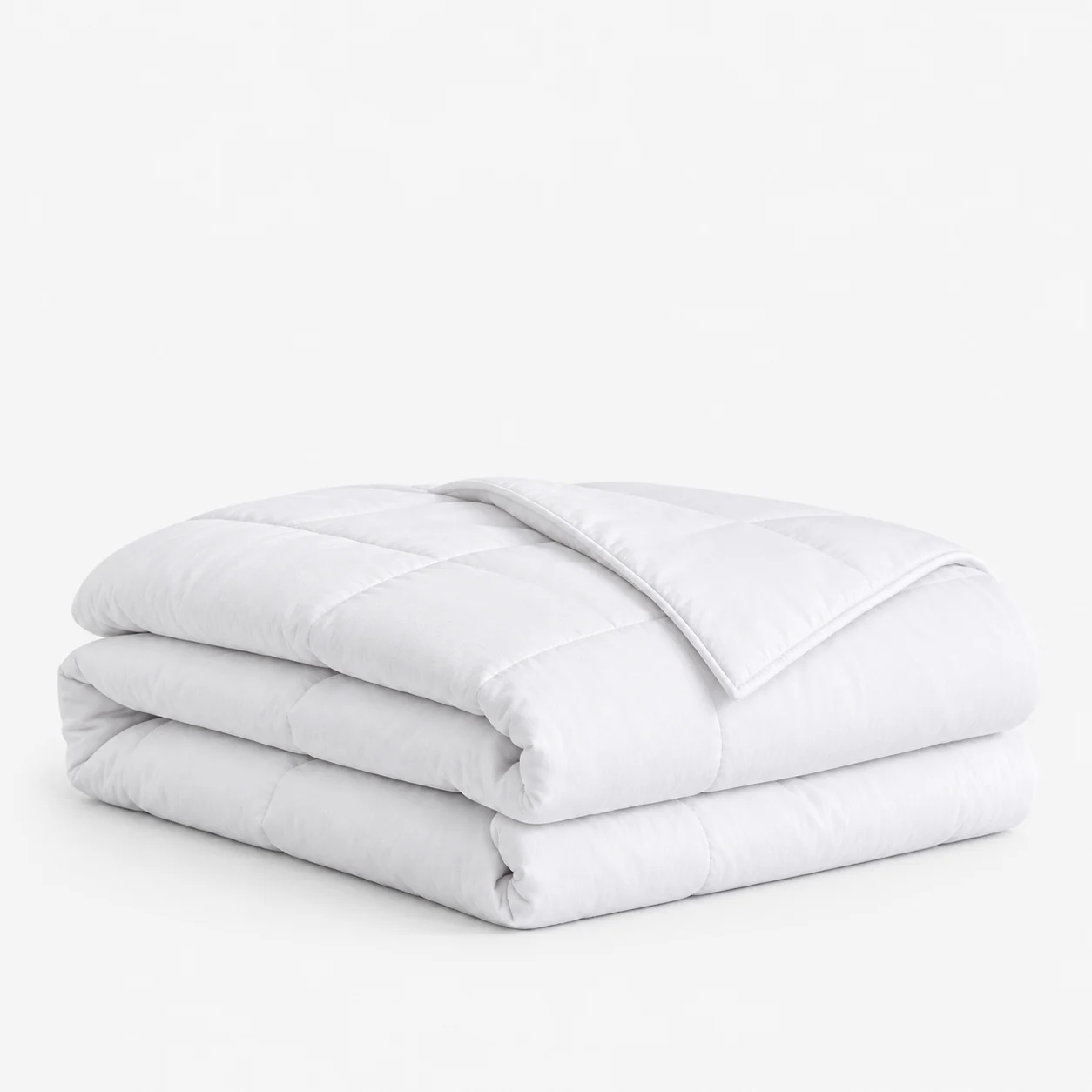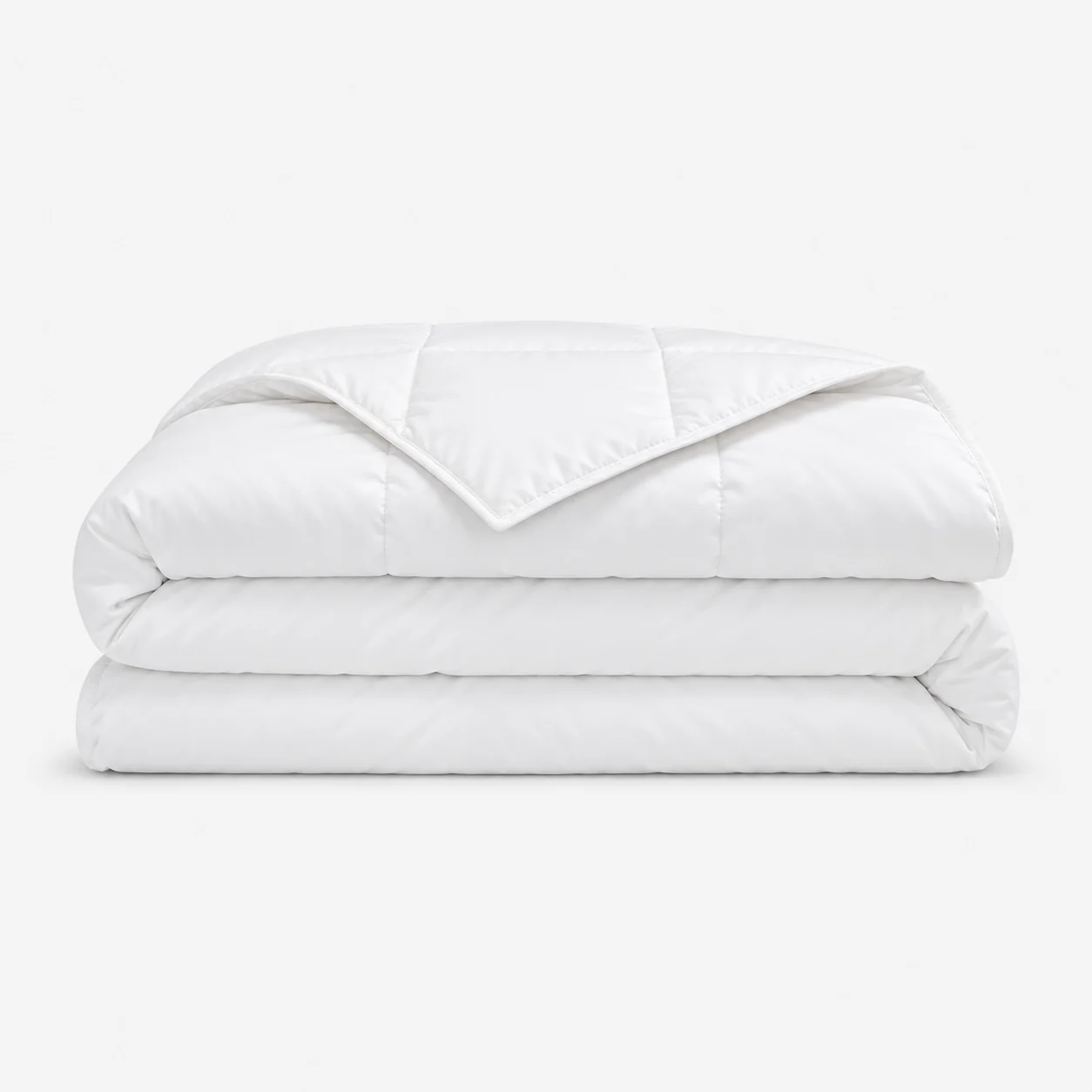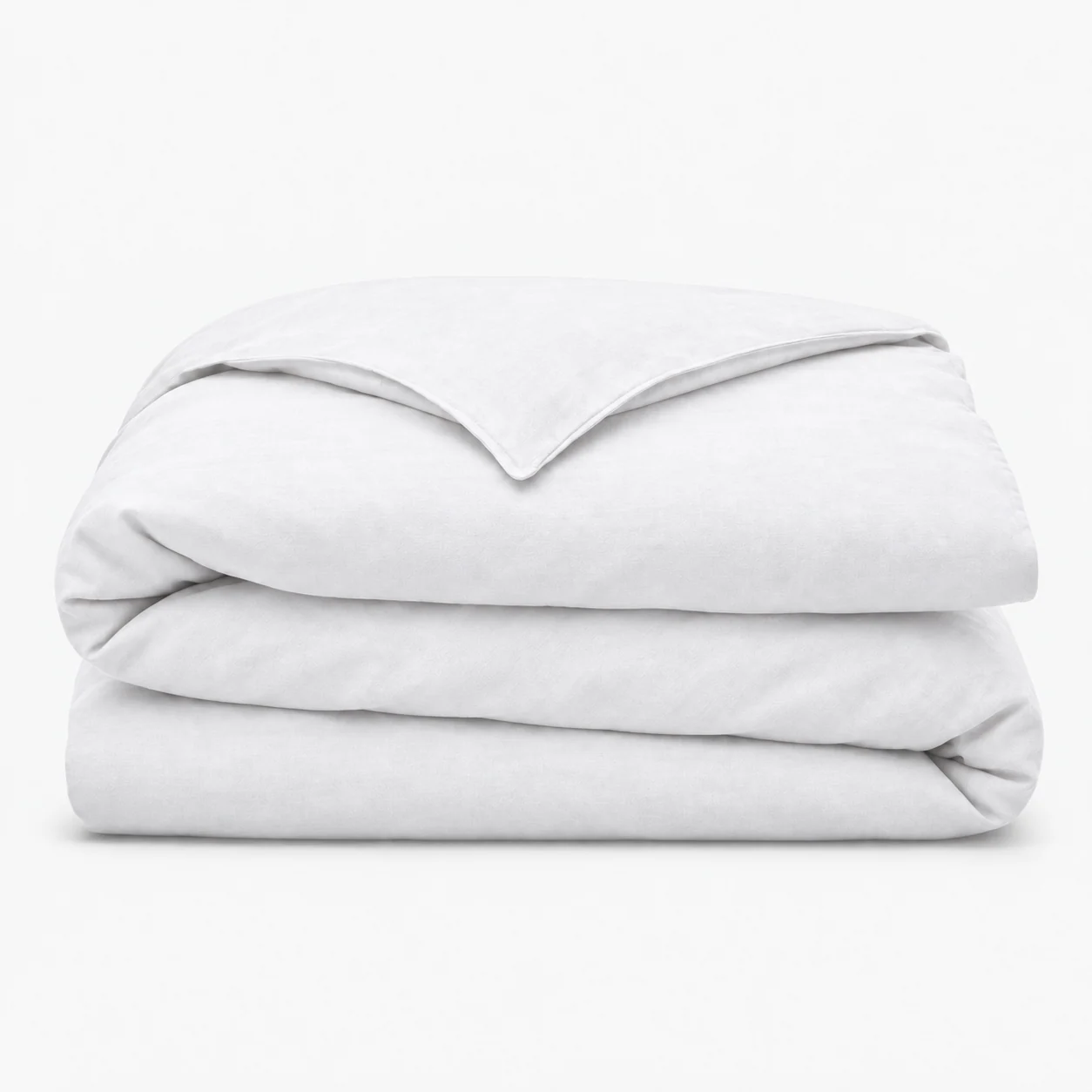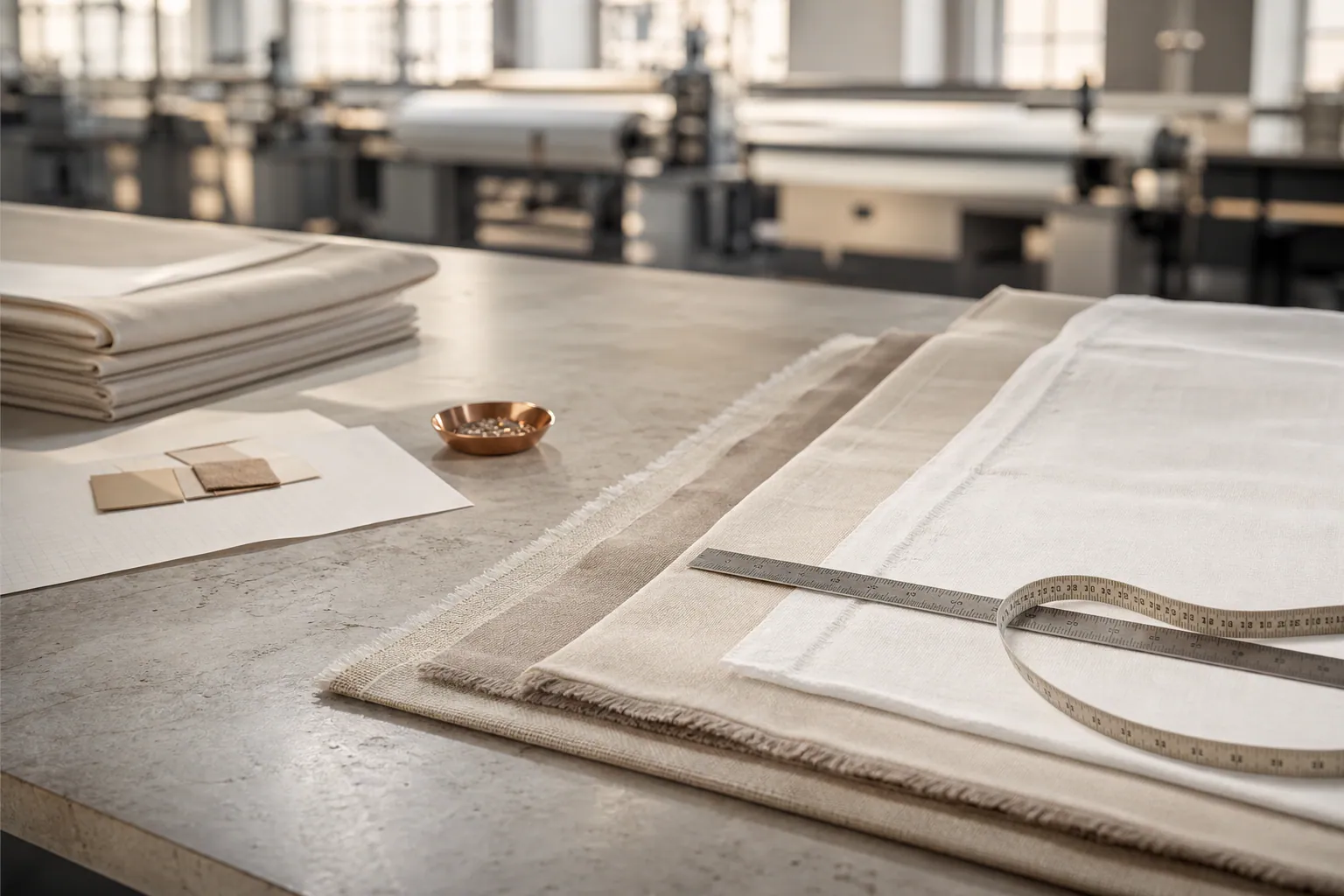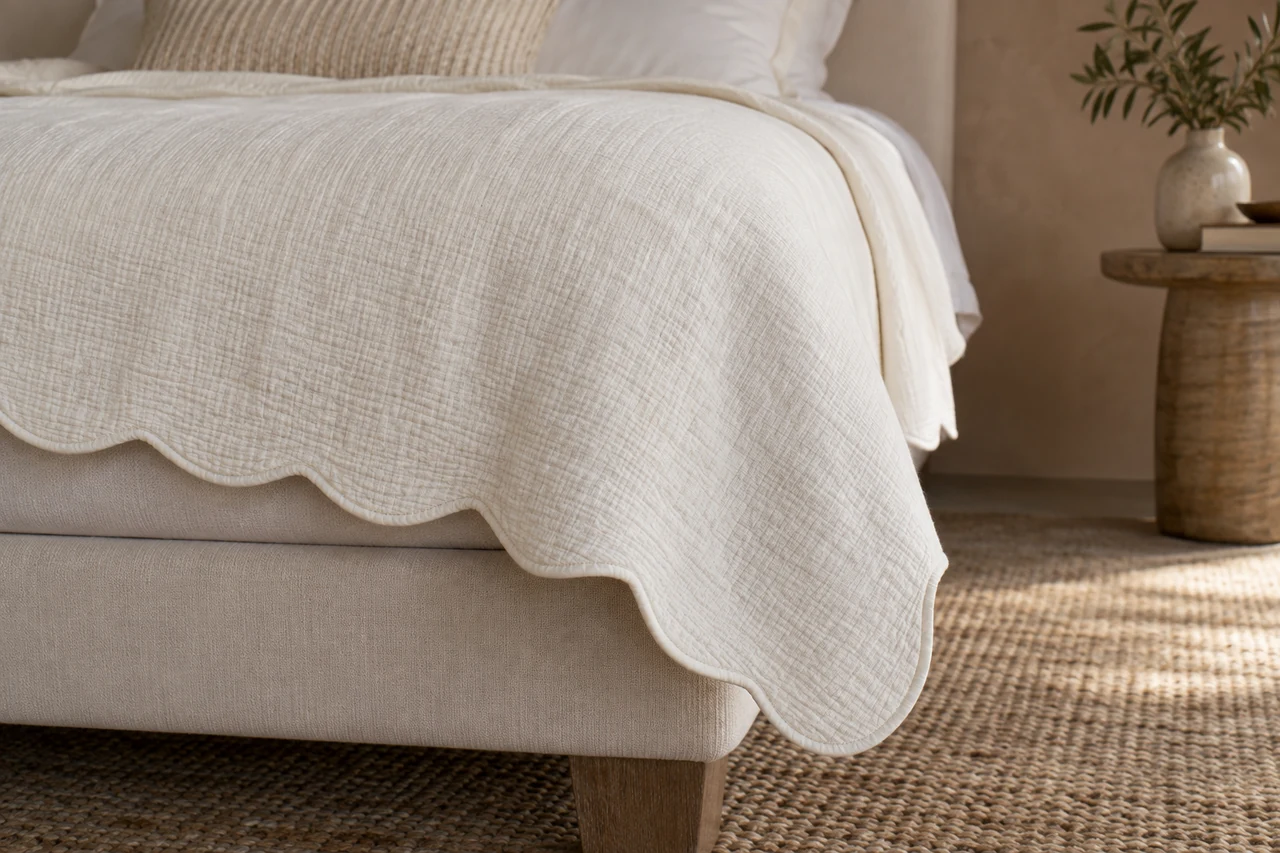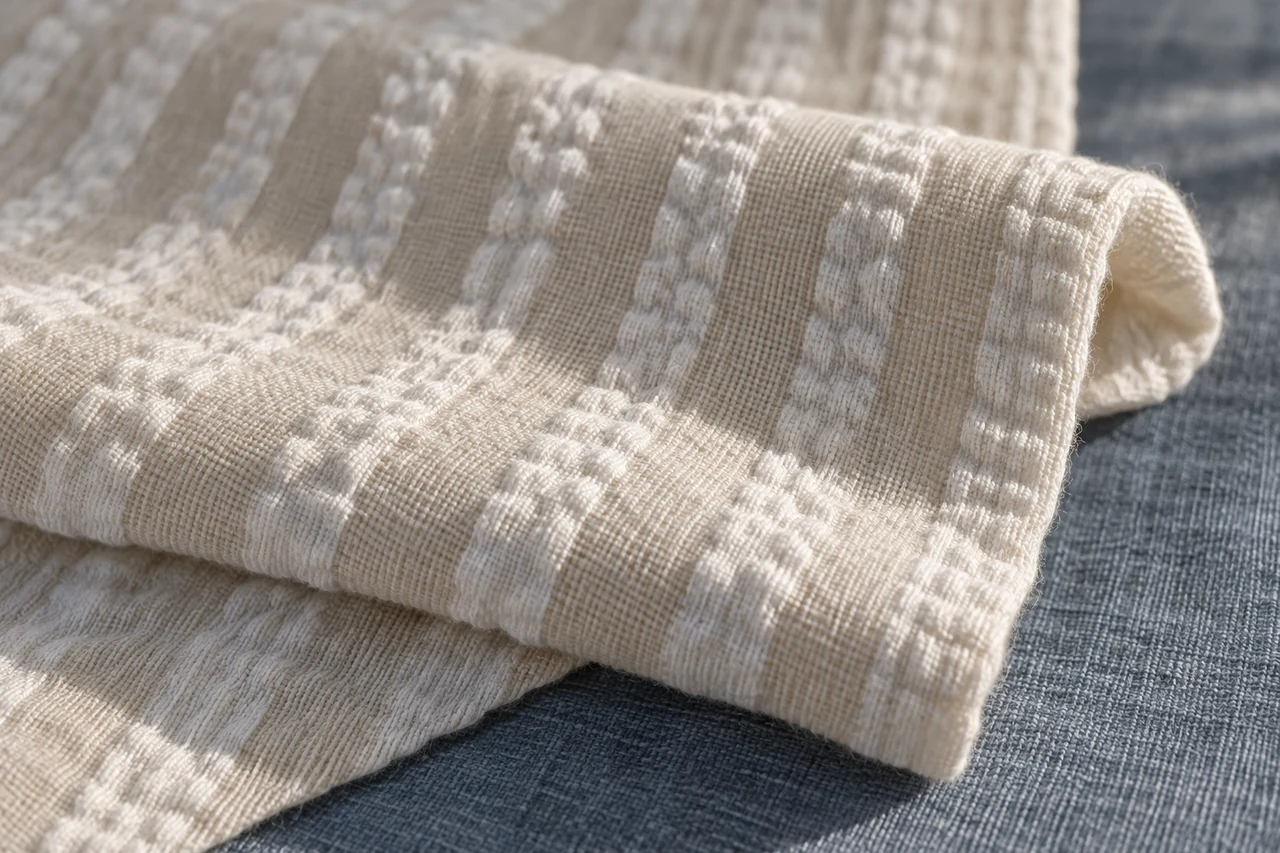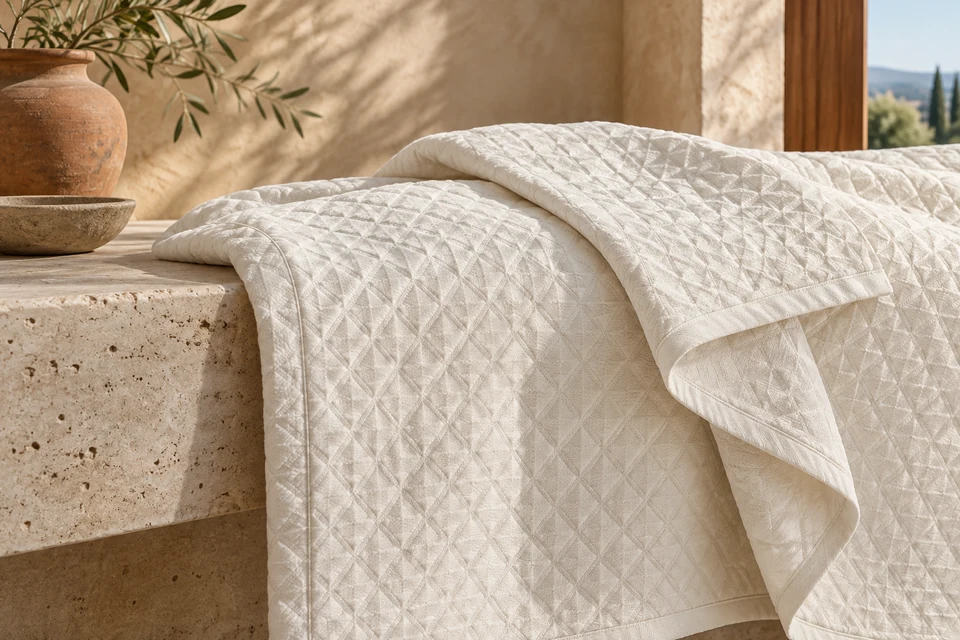
Matelasse is a useful starting description for a textured coverlet, but it is not a complete purchasing specification. Buyers still need to identify the offered fabric, its construction, finishing state and the appearance expected after sewing and care. The approval question is whether a specific material and finished product reproduce an agreed surface relief. It is not whether a product name alone proves fiber content, durability, warmth or suitability for a hotel's laundering route. Those characteristics need their own project information and evidence.
Ask what the offered fabric actually is
Separate the name from the specification
Request the supplier's material reference, declared fiber composition, construction description and finishing information for the offered article. Ask whether the product includes any separate backing or filling rather than inferring its layers from a raised surface photograph. Record unresolved details in the technical pack. A purchasing team should be able to explain what it is buying without relying entirely on a commercial style name that another supplier may use for a different construction.
As a market example, ANICHINI describes its Marissa matelasse as a prewashed cotton-and-linen fabric. That specific example illustrates why neither fiber composition nor finishing state should be guessed from the name; it is not evidence about an FY offering or a proposed substitute. Ask each bidder to identify its own sample and supporting records. Use the specification toolkit to keep the offered composition, construction and finish separate from the aesthetic reference supplied by the buyer.
- Obtain the offered material reference.
- Confirm composition and construction separately.
- Identify backing or filling where present.
- Record the sample's finishing state.
Establish the surface reference
Compare relief under useful lighting
Review the sample flat and gently draped, using lighting that reveals the surface without exaggerating it through extreme shadow. Identify the pattern repeat, raised areas and flatter surrounding regions in the approved reference. Keep a physical cutting large enough to show the relevant repeat, not only a small corner that omits the main feature. The physical approval workflow should connect the cutting to the offered material code and the finished coverlet sample that will be assessed later.
Photographs can describe the visual target but cannot fully communicate handfeel or the way relief changes when the fabric is bent. Record the viewing conditions and identify any image that is intended only as inspiration. Do not turn a dramatic macro photograph into a numerical acceptance standard without a defined measurement method. Ask the technical owner how observable differences will be judged and who can approve them, especially where the buyer's reference and the offered material are not the same construction.
- Retain enough material to show the repeat.
- Review flat and draped appearances.
- Identify inspiration images as non-controlling.
- Agree how differences will be assessed.
Review relief through the sewn product
Include seams and finished edges
Request a production-intent sewn sample with the selected edge treatment. Compare the body surface with areas near hems, seams and any joined panels, noting where the visual relief changes. A fabric cutting may look convincing while a completed coverlet presents an unexpectedly flat or bulky perimeter. The edge-finish review provides a related workmanship framework, but the accepted surface transition must be recorded for this offered material rather than borrowed from an unrelated quilt construction.
Place the coverlet in the intended bed arrangement and inspect useful room viewpoints. Keep the relief decision separate from motif centering or overall drop, which need their own references. Where the design owner accepts a different appearance at an edge, show that explicitly. If a proposed seam or finish is revised, identify the changed sample and compare the affected areas again. Do not approve a loose cutting and assume the factory can choose any edge treatment while preserving the same finished presentation.
- Use production-intent seams and edges.
- Compare body and perimeter relief.
- Record accepted surface transitions.
- Recheck revised sewing treatments.
Keep care-state comparisons controlled
Do not mix unlike reference conditions
Identify whether the supplied sample is in its delivery state, prewashed by the supplier or processed through a project care trial. Review the product under the agreed care instructions and technical plan rather than applying a generic wash recommendation to every material sold as matelasse. The hotel wash-trial guide supports a controlled operational review. Results should remain tied to the actual sample, procedure and observation conditions instead of becoming an unsupported universal performance statement.
Compare the surface, edge presentation and dimensions before and after the defined trial. Keep observations about appearance distinct from the dimensional acceptance criteria in the dimensional-stability record. If the reference has already been processed while a new sample has not, explain the mismatch before judging them side by side. The buyer may need a common comparison state or a clearly limited decision rather than asking a fresh sample to reproduce an undocumented treatment history.
- Identify delivery and processed states.
- Follow the actual approved care route.
- Record appearance and dimensions separately.
- Avoid comparing undocumented treatment histories.
Release a reproducible material decision
Carry the reference into the order
The release should identify the material code, declared composition, offered construction, finishing state, sewn configuration and accepted surface reference. Preserve both the useful cutting and the approved finished sample where the project requires them. State which observations support the decision and which performance requirements remain open. If a supplier proposes another material under the same commercial description, require review of the changed construction rather than treating the shared name as sufficient evidence that the products are interchangeable.
For quotation and repeat purchasing, send the controlled material brief with the intended use and relevant care route. Ask the sourcing team to identify differences openly when comparing offers, including differences that may affect sampling or production planning. A clear brief makes it easier to decide whether an alternative deserves a trial, but does not remove the need for that trial. Release the chosen coverlet only when the aesthetic, construction and care-state records describe the same offered product and its accepted limits.
- Link cutting and finished-sample identities.
- Preserve the accepted comparison state.
- Keep unsupported performance requirements open.
- Review substitutions even when names match.
Buy an identified matelasse construction and accepted sewn surface, not a name alone; keep fiber, finishing, care-state and performance evidence separately traceable.
Method references: ANICHINI Marissa: specific market example, not evidence for an FY offering.