A piano cover should be developed around an identified instrument and its permitted stored condition. The purchase is not simply a rectangle of attractive cloth. In a hotel or shared music room, the case outline, closed keyboard projection, finish contact and staff removal routine determine whether a proposed textile cover is practical.
Identify the instrument before requesting a template
Keep upright and grand profiles separate
Record the instrument maker, model and the configuration approved by the instrument owner or qualified technician for covering. Obtain the relevant care and storage instructions rather than assuming a cover is appropriate in every setting. A closed upright profile, a curved grand body and a digital keyboard on a stand are different templates. Do not advertise broad compatibility from a single width measurement or an unrelated photograph.
Create an exterior measurement drawing without placing marking materials or sharp measuring tools against a delicate finish. Show height changes, projections and the intended lower edge. The technical pack checklist helps record the agreed reference points. Keep the bench, pedal area and other accessories outside the scope unless they are explicitly included. No template should be derived by opening or adjusting instrument mechanisms without the responsible person's approval.
- Use an identified instrument and approved closed configuration.
- Separate the cover's scope from bench and accessory covers.
Review the route onto and off the instrument
Do not make staff drag fabric across projections
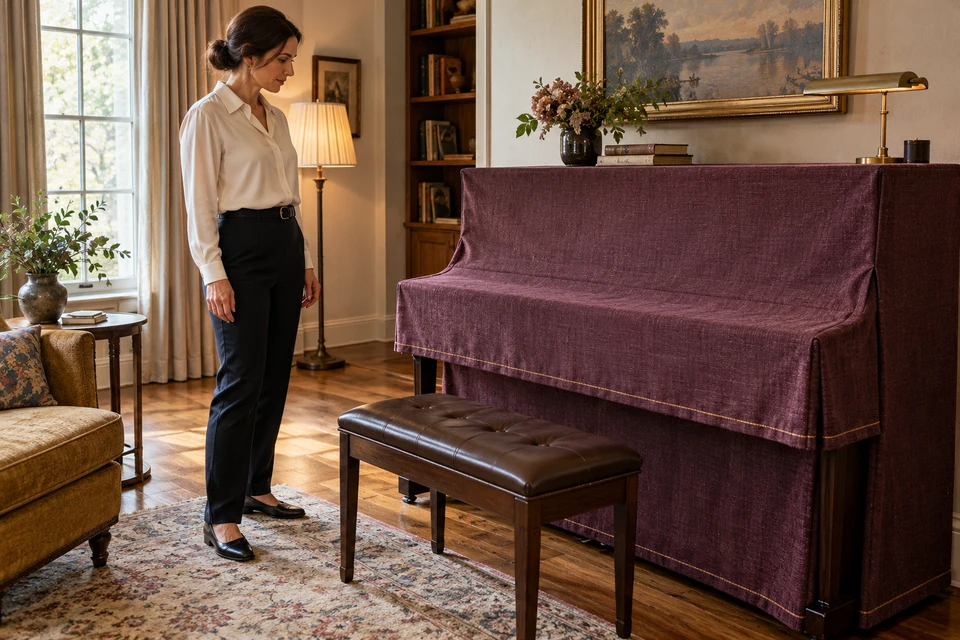
Try the prototype using the owner's approved handling routine. Observe where it first contacts the case, how it passes the closed keyboard projection and whether the hem catches during removal. Decide whether a shaped front, side opening or another construction makes the route more manageable. Avoid treating a tight photographic silhouette as the main criterion if it makes ordinary removal awkward or requires pulling on fragile features.
Record the sequence in the room-trial record, including how many staff are needed and where the removed cover is placed. This is a handling observation, not an instrument-protection guarantee. The cover should be removed before playing unless the instrument's responsible guidance specifically establishes a different intended arrangement. Do not photograph a player reaching through a cover or using a dust cover as an operating enclosure.
- Check the closed keyboard projection and lower corners.
- Document a practical removal and storage sequence.
Approve the inside against the actual finish
Decorative face and contact face have different roles
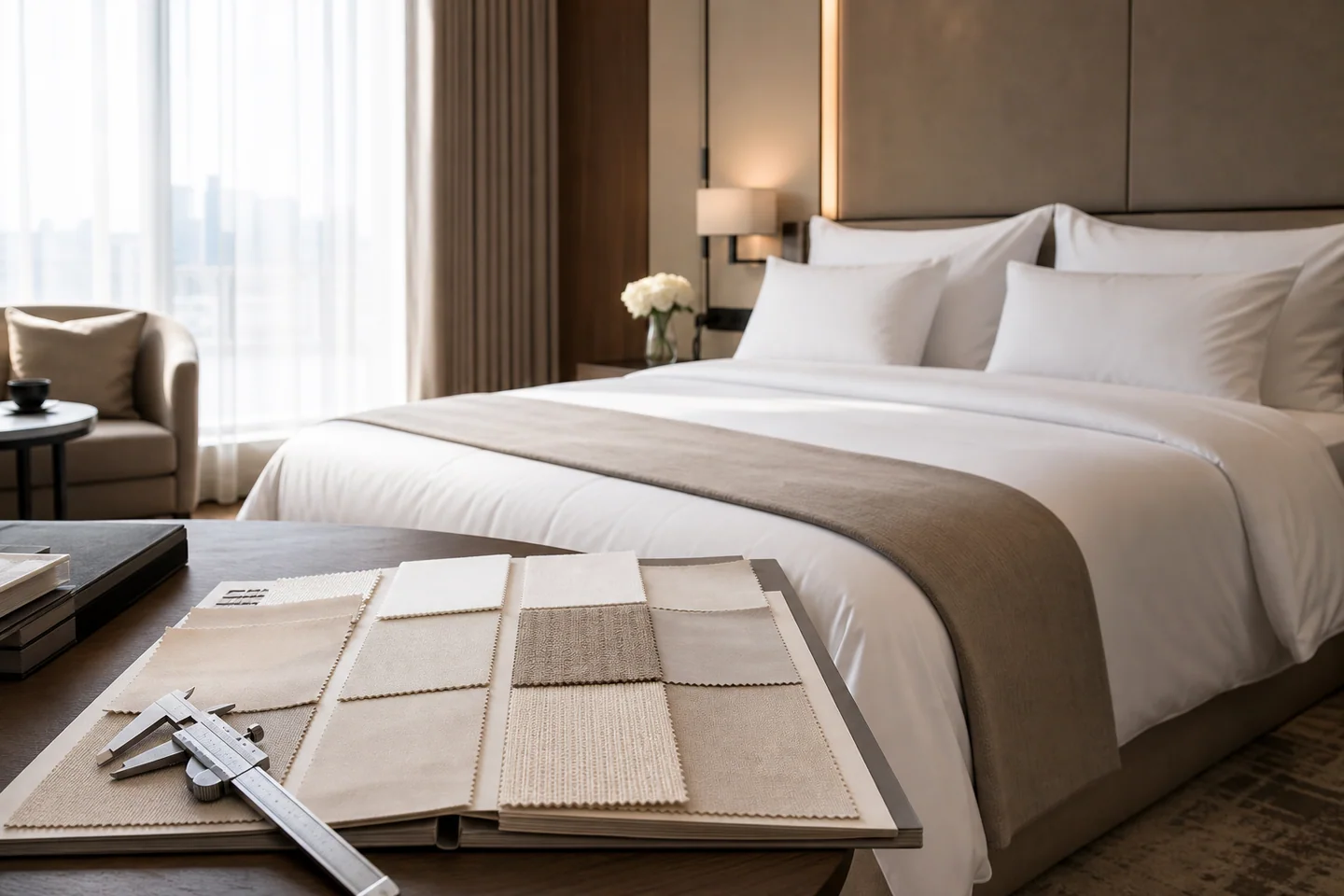
Identify the outer cloth, lining, interlining if any, seams, binding and labels. Ask which surfaces will contact the instrument and inspect those areas for exposed threads, rough attachments or unsupported decorative hardware. A plush handfeel or a soft-looking photograph does not prove suitability for a particular piano finish. Have the instrument owner or qualified adviser review the proposed contact materials and any relevant evaluation before a full-use trial.
Use the component list to keep the approved lining tied to the outer fabric. Do not allow a lining substitution to pass as a cosmetic change. If colour transfer, abrasion or other contact behaviour needs evidence, agree an appropriate method and acceptance decision for the actual materials. Do not claim moisture control, acoustic improvement, waterproofing or climate protection from a basic textile dust-cover brief.
- Identify every instrument-contact surface.
- Reopen approval when the lining or exposed seam changes.
Review the cleaned cover on the same template
Dimensional change matters at the keyboard step
Confirm the proposed care instructions for the complete cover, including lining and trims. The property should assess whether it can actually follow those instructions with its available process. After the agreed sample-care procedure, allow the item to reach the documented review condition and recheck the original template. Compare front drop, side profile, lower opening and the route over the closed keyboard projection rather than measuring only overall length.
The dimensional stability guide supports a consistent record but does not supply an automatic tolerance for an instrument cover. Record visible changes, handling difficulty and the decision for that sample. Store the removed clean cover according to the property's process and the instrument owner's guidance; do not pack a damp textile onto the instrument or describe ordinary storage observations as evidence of mould prevention.
- Approve a care route the property can follow.
- Repeat the removal trial after the agreed care assessment.
Buy by instrument group and controlled pattern revision
Make replacement stock traceable to the fitted sample
For multiple properties, build a matrix of instrument models, approved cover references, colours and required quantities. Two instruments that look alike in room photographs may have different projections. Do not combine them into one stock item until compatibility has been checked. Specify the purchased unit, including whether the cover has a separate storage bag, and make it clear that the instrument and bench in styling photographs are not supplied.
The reorder control process should retain the instrument reference, pattern revision, lining and approved handling record together. Ask suppliers to separate development work from repeat quantities and confirm the sample sequence before planning installation. Send FY Bedding the instrument drawings, permitted covering configuration and desired textile finish to discuss a project; specialist instrument suitability and any production or delivery commitment require confirmation, not inference from this guide.
- Link each stock reference to verified instrument compatibility.
- Keep the approved pattern and lining revision with replacements.
Approve a piano cover with the instrument's responsible owner: correct closed template, acceptable contact materials, practical removal and reviewed post-care fit.