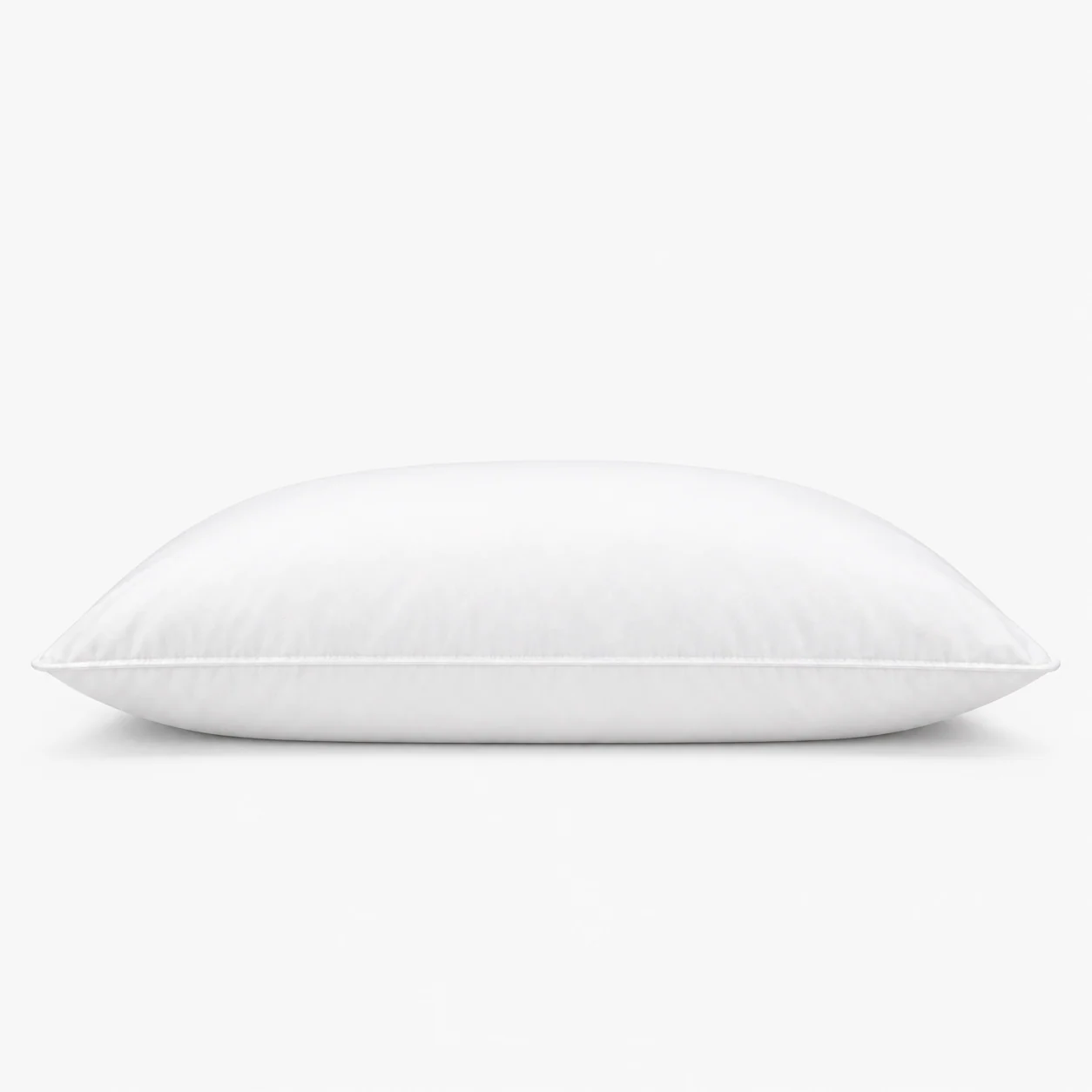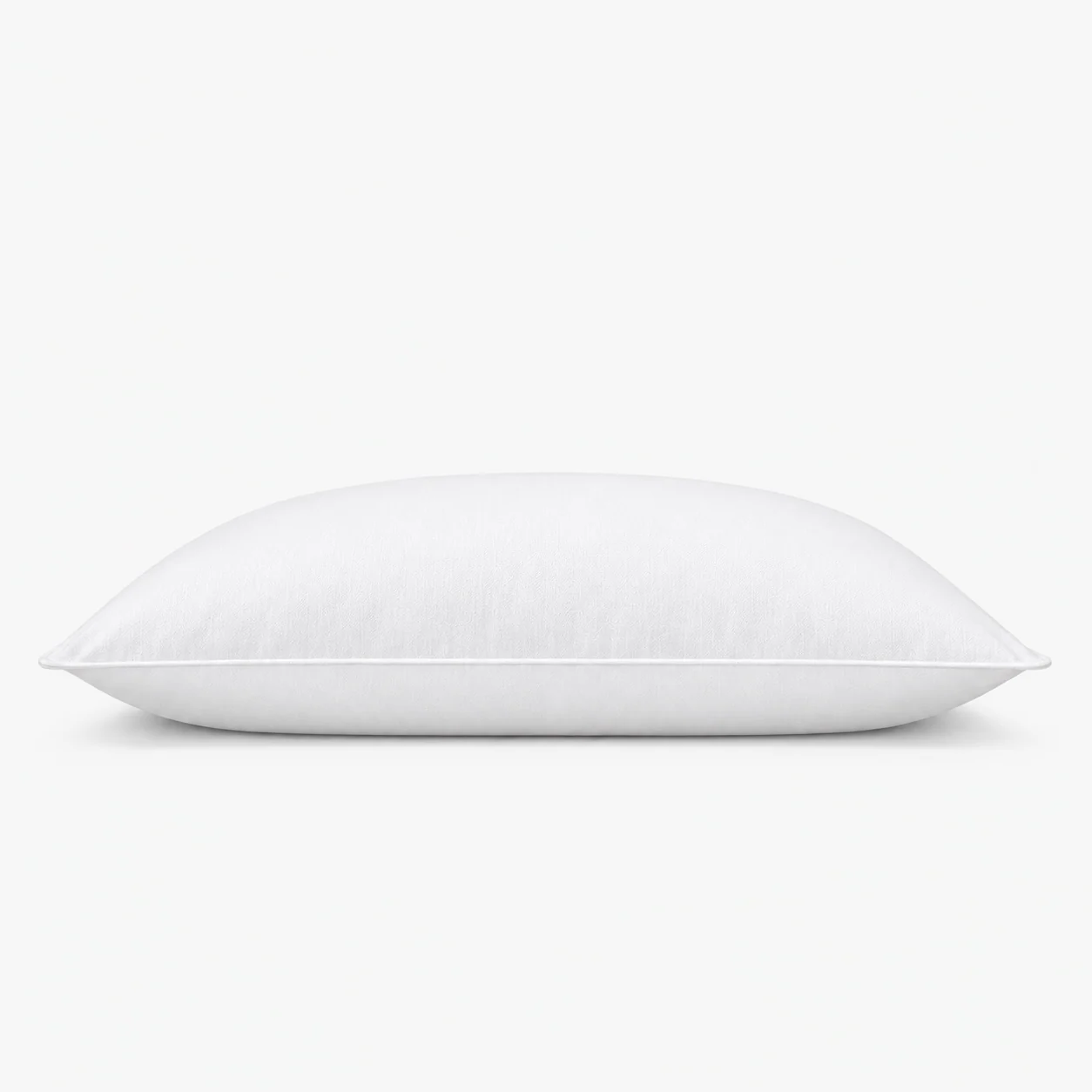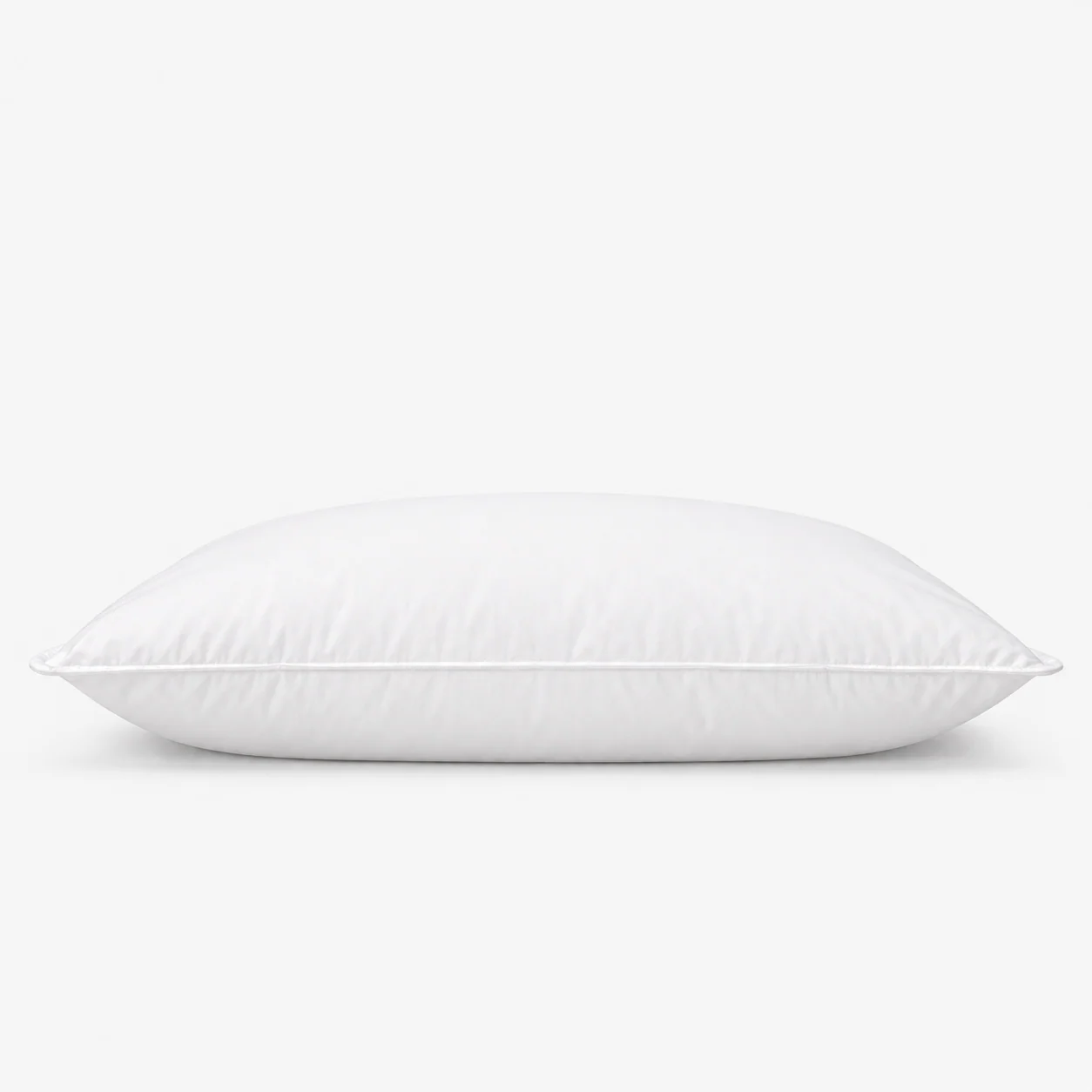
A gusset turns a pillow from a simple filled shell into a three-dimensional product, but the drawing often describes only width and length. Without a defined gusset height, seam position and conditioned shape, two samples can use similar materials and still present very differently on the bed. This guide gives buyers a practical approval route for geometry, fill interaction and repeatable production evidence without confusing gusset shape with pillow firmness or fill resilience.
Define the three-dimensional product before requesting a sample
Connect shell dimensions, gusset construction and intended profile
Start with the finished pillow width and length, then add the nominal visible gusset height and a tolerance that reflects the intended appearance. State whether the gusset is one continuous strip, multiple joined panels or a shaped side wall. A firmness matrix such as the one in the hotel pillow procurement guide answers a different question; the gusset drawing must still define the shell geometry that contains the selected fill.
Show the face, reverse, zipper or closing seam, piping if used, and every gusset joint. Identify whether the measured gusset height is the cut-panel width, the seam-to-seam finished distance or the visible side wall after filling. Those values are not interchangeable. Include the intended bed presentation so the supplier understands whether a crisp rectangular profile or a softer rounded corner is the approved design outcome.
- Finished width and length
- Visible gusset height and tolerance
- Panel joins, piping and closing-seam position
- Target rectangular or rounded profile
Control pattern balance and seam symmetry
Measure opposing sides from consistent reference points
A gusset can look twisted even when its average height is correct. Define measurement points at the center of all four sides and near each corner, then compare opposing values. The top and bottom panels should not rotate relative to each other, and piping or seam lines should remain visually parallel. The broader bedding seam and stitch specification guide can supply stitch terminology, while this approval record concentrates on three-dimensional alignment.
Corner construction deserves a separate detail. Record the seam intersection, permitted bulk, curve or mitre shape and how the fill should occupy the corner. If a decorative woven pattern must match at the gusset, mark the face and direction on the pattern pieces. Do not use a photograph alone as the dimensional standard; pair approved images with actual values and a controlled drawing revision.
- Center and near-corner measurement points
- Opposing-side difference limit
- Seam or piping parallelism
- Corner shape and bulk criteria
Condition the filled pillow before reviewing shape
Separate packing effects from construction variation
Compression during transport can temporarily flatten the gusset or shift fill away from the corners. Agree how the sample is unpacked, manually fluffed and rested before measurement, including the surface, temperature and minimum conditioning time. The pillow fill recovery guide explains recovery as a performance characteristic; the gusset review uses a stable conditioned state so geometry can be compared fairly.
Record gross and net fill information only as supplied program data, not as proof of shape by itself. A high fill quantity can mask an uneven shell, while a low quantity can make a correct gusset appear collapsed. Review the empty shell when useful, then review the conditioned filled product from front, side and corner viewpoints. Avoid pulling the pillow into shape immediately before photographing it.
- Unpacking and fluffing procedure
- Resting time and support surface
- Empty-shell check where practical
- Front, side and corner photographs
Approve fit with the intended pillowcase and bed presentation
Check that a three-dimensional pillow still works in the full program
Trial the conditioned pillow in the intended case. A deeper gusset changes the occupied length and width and may place more stress on an envelope overlap or opening. Use the pillowcase opening and overlap guide to define that separate component, then document the combined fit without forcing the pillow through an undersized opening.
Place the complete combination on the target bed or a dimensionally equivalent fixture. Review corner fill, side-wall visibility, stacking stability and whether the case distorts the approved shape. If retail packaging compresses the pillow, also confirm that the recovery method presented to the buyer is realistic. Sample approval should identify the shell material, fill reference, case reference and date so a later substitution is not judged against the wrong configuration.
- Approved pillowcase reference
- Insertion and removal without damage
- Bed-profile and stacking review
- Complete sample identity record
Inspect production with measurable evidence
Use actual values alongside visual defect decisions
The inspection sheet should repeat the approved conditioning method and reference points. Record actual gusset heights for sampled units, opposing-side differences, seam position and corner observations. Sampling quantity and acceptance rules should be agreed before inspection; the AQL sampling guide explains why a sampled result is not a promise that every piece is identical.
Classify functional issues separately from cosmetic variation. A seam opening, twisted shell or corner that cannot hold fill may affect use, while a small visual difference may be handled under an appearance limit. Keep a retained approved sample protected from compression and contamination. Buyers can share a pillow development brief with the drawing, measurement method and approval route before requesting production timing.
- Actual gusset values by sampled unit
- Twist, seam and corner observations
- Approved defect classification
- Retained sample and drawing revision
Before approving a gusseted pillow, confirm the finished reference points, conditioning method, opposing-side symmetry, corner profile, related pillowcase fit and the exact sample identity that production must follow.