Seersucker bedding needs an appearance reference that captures surface relief, not only stripe color or a soft-hand description. Buyers comparing samples should identify the proposed construction and define how raised and flatter areas will be assessed on the finished item. Cotton Incorporated's technical discussion of woven cotton seersucker describes fabric engineering and tension control as relevant production considerations. That background is not a specification for every offered fabric. The purchasing task is to approve the identified material and assembled product without assuming that a textured appearance establishes cooling, durability or other performance.
Identify the proposed construction
Ask what produces the submitted surface
Request the supplier's material reference, composition and construction description, including whether the proposed appearance comes from the identified woven structure or another process. Avoid accepting seersucker as a complete technical specification. Connect the material to the bill of materials so that a later substitute cannot be introduced solely because it has a similar stripe photograph. The supplier should explain the offered construction in terms that can be linked to a repeat sample and production reference.
Record the intended product and which faces will use the material. A small swatch may not show how a large cover panel presents on a bed or interacts with a flatter reverse fabric. Keep those assembly decisions in the technical pack, alongside the dimensions and seam arrangement. Do not infer that approval of one textured face authorizes a matching pillowcase, sheet or different material combination that has not been represented in the reviewed sample set.
- Identify composition and construction reference.
- Describe the source of the proposed texture.
- Record the intended faces and components.
- Keep related products separately represented.
Set a fair viewing method
Separate relief from lighting effects
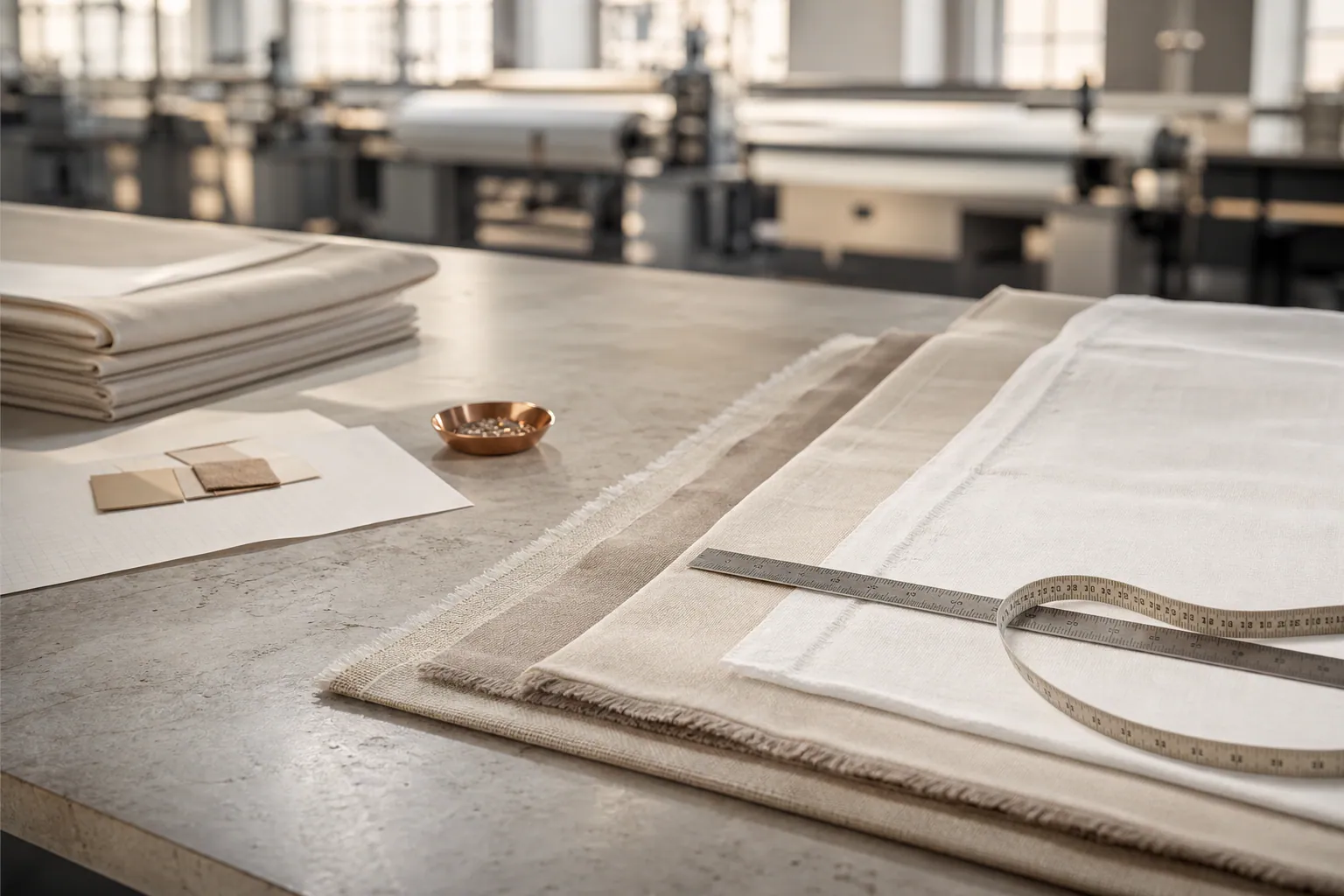
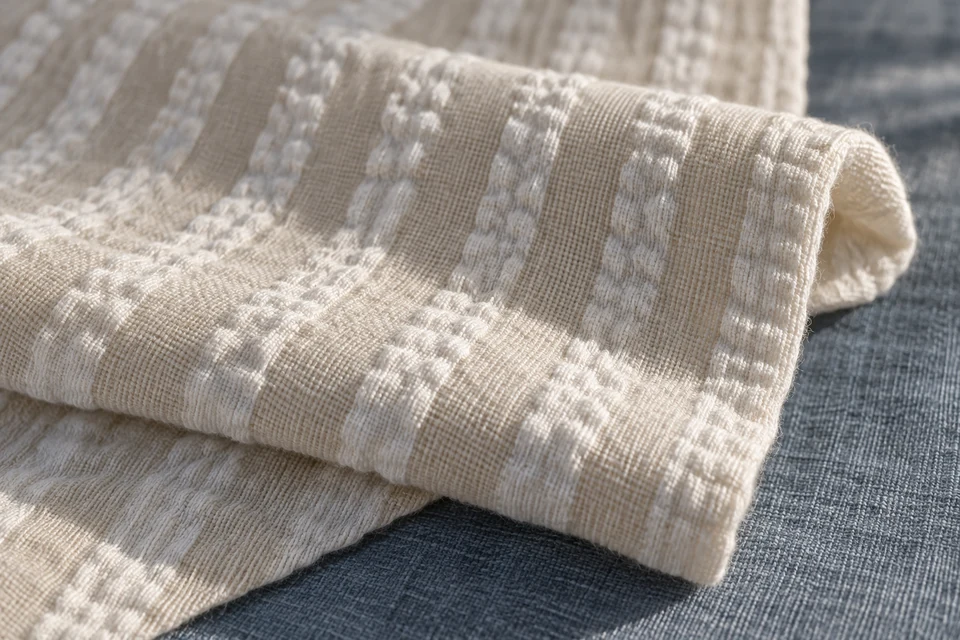
Compare identified samples in the same condition, orientation and viewing setup. Use both an overall view and a closer view that makes the surface structure visible without exaggerating it through a different lighting angle. The handfeel approval framework can organize tactile comments, but surface relief needs its own visual reference. A dramatic side-lit image and a flat-lit catalog image should not be treated as comparable evidence of the materials' actual difference.
Agree which features matter to the buyer: the visual rhythm of raised areas, transitions into flatter areas, overall consistency and the relationship to the finished item. Record findings descriptively rather than inventing a universal relief measurement or acceptable variation. If a numerical requirement is needed, have the responsible technical parties define a suitable method and scope. The photographic record should supplement the physical reference, not replace it with an image that cannot communicate the sample's real three-dimensional surface.
- Keep viewing conditions consistent.
- Include overall and close surface views.
- Separate tactile and visual comments.
- Define technical methods before assigning numerical limits.
Review a sewn product
Observe texture at seams and presentation boundaries
Request a production-intent assembly showing the proposed material, seams and closures. Examine how the surface presents near hems, joins and the transition to another fabric, using the accepted design as the reference. The seam specification should identify construction decisions without prescribing an improvised workshop treatment to make the texture look uniform. A sewn sample can reveal issues that a loose swatch leaves outside the buyer's review.
View the article in its intended presentation as well as flat on the inspection table. Record whether any apparent inconsistency follows the fabric structure, an assembly detail or the way the sample was arranged. Avoid assigning a cause from appearance alone. Where the supplier proposes a correction, identify the changed input and request the relevant repeat sample. Preserve the earlier reference and comments so that later reviewers can understand why the construction or appearance decision changed during development.
- Review the actual sewn assembly.
- Include seams and material transitions.
- Compare flat and intended presentation states.
- Preserve the reason for each revision.
Compare the agreed care outcome
Do not assume the starting texture is permanent
Include surface presentation in the project's agreed care assessment, identifying the material, sample version and procedure used. The evidence plan should distinguish visual texture observations from dimensional, strength or other requirements. Do not supply a universal laundering or pressing instruction based only on the product name. The responsible technical parties need to establish the appropriate care route for the complete product and support any statement made about its performance.
Compare the starting and reviewed samples under the same viewing method, recording changes without overstating their cause. A different texture after care may require a material, construction or acceptance decision; it should not be concealed by restyling the sample for a photograph. Keep any permitted presentation variation tied to the accepted physical reference. If a revised fabric or finish is proposed, determine which parts of the earlier evidence remain applicable instead of carrying every previous approval forward automatically.
- Identify the care procedure and sample version.
- Repeat the same viewing method.
- Separate texture observations from performance results.
- Review evidence applicability after changes.
Release the material with an appearance boundary
Make reorders comparable
Retain an accepted material reference and a representative finished sample with their identity and care history. The receiving instruction should state what staff compare and when a difference needs technical review. A buyer should not expect inspectors to infer an entire appearance standard from the word textured. Where visual variation is intentionally accepted, document the boundary using the agreed references rather than leaving it to the personal preference of whichever reviewer receives the next shipment.
For a seersucker bedding brief, provide the desired product assembly, sample references, appearance priorities and evidence requirements. Ask the supplier to identify its proposed construction and any unresolved production or MOQ inputs before committing to the assortment. At reorder, confirm the material and finish references as well as color. This preserves the purchasing decision as a controlled product choice, not an unsupported promise that every raised-stripe fabric will perform or present like the first selected swatch.
- Retain identified material and finished references.
- Define inspection and escalation fields.
- Document intentional appearance variation.
- Reconcile construction and finish at reorder.
Approve an identified seersucker construction through consistent surface viewing, sewn-product review and scoped care evidence; do not substitute stripe photographs or cooling claims for that record.
Method references: Cotton Incorporated: Processing Woven Cotton Seersucker Fabrics.