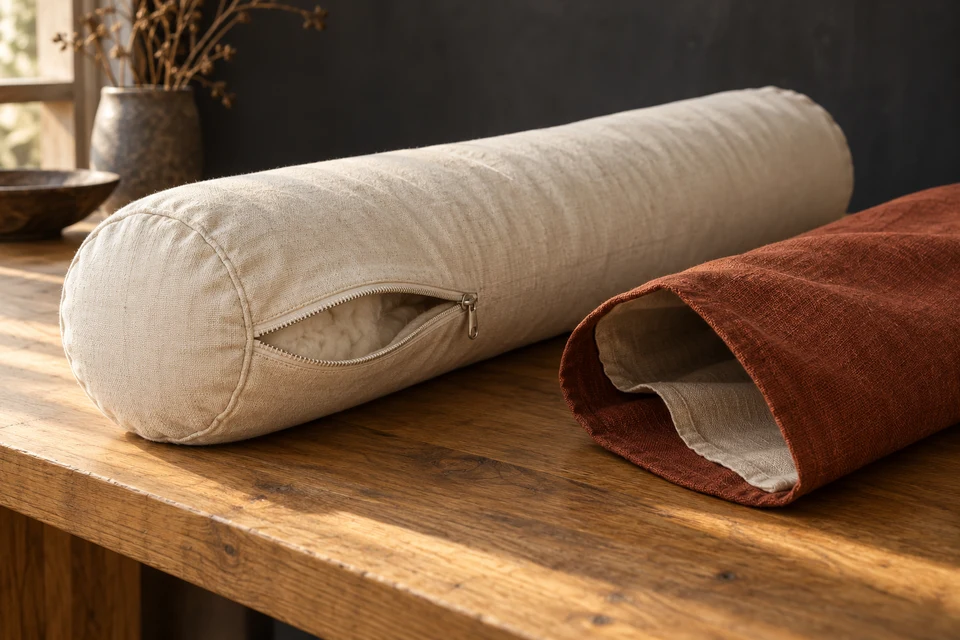
An adjustable decorative bolster has at least two different access questions: how the outer cover is removed and how the inner fill is reached. Combining those questions into one zipper specification can leave the buyer approving the wrong layer. Define the inner liner, fill configuration and intended adjustment process separately, then review the complete assembly. This is a decorative textile procurement brief, not a basis for medical or therapeutic claims.
Name each layer and opening
Separate cover removal from fill adjustment
List the decorative cover, inner liner, fill and any supplied refill or storage accessory. Identify the opening on each textile layer and explain who is intended to use it. A zippered decorative cover does not make the insert adjustable if the liner is permanently closed. Conversely, an accessible liner does not mean the outer cover can be removed conveniently from the assembled bolster.
Draw the relationship between the cylindrical body, end panels and both openings. Record whether the project supplies an insert alone or a complete covered bolster. The cover-only versus insert-included guide helps clarify the retail unit. Keep the component list visible in quotations and packaging so an illustration of a complete bolster does not imply that every layer is included.
- Give the liner and decorative cover separate component references.
- State which opening performs which task.
Define the supplied fill configuration
Adjustable is not a substitute for a starting specification
Ask for the fill description and the quantity basis used for the supplied insert. Identify the starting configuration approved for dimensions, appearance and handling. If the buyer intends to describe an adjustment range, have the responsible team define and assess that range with the actual construction. Do not invent a minimum or maximum fill amount from the appearance of a sample.
Keep alternative fill proposals separate, including any different blend or form that may behave differently during adjustment. The fill-weight verification guide supports a traceable quantity discussion, while fill-blend control addresses material identity. Neither should be treated as a test result for the new bolster. A sample record must identify the actual contents used.
- Record the starting fill configuration on the approved sample.
- Do not reuse one material's approval for a different fill proposal.
Review the liner opening as a controlled route
Inspect the closure without relying on the outer cover
Examine the liner's opening length, zipper ends, surrounding seam and any internal arrangement intended to keep fill away from the closure. Follow the proposed adjustment process using the sample. Observe whether fill catches in the zipper, whether the opening is difficult to manage and whether the liner can be closed cleanly afterward. Record issues rather than hiding loose fibres under the decorative cover.
Have the technical reviewer decide the appropriate closure and containment checks for the proposed contents and intended use. The closure-seam and fill-containment guide can help frame the inspection questions. Do not claim leakproof performance from a neat photograph, and do not assume that a zipper suitable for an outer cushion cover is automatically suitable for controlled access to loose fill.
- Check the liner closure before fitting the decorative cover.
- Record how fill is kept clear during closing.
Compare complete assemblies at the approved configurations
Keep shape approval linked to the contents
Fit the liner into the intended decorative cover and review the cylindrical profile, end panels and closure access. Document the assembly at the supplied configuration and any additional configuration that the project intends to support. Check for empty-looking ends, excessive tension or an opening that becomes inaccessible after assembly. Use the same measurement and settling conditions for comparisons.
Distinguish a preferred appearance from a performance result. A firmer-looking cylinder is not evidence of therapeutic support or a longer service life. The insert-to-cover relationship guide helps keep the dimensions and visual target explicit. If the outer cover changes fabric, size or end construction, review whether the earlier assembly approval remains applicable rather than carrying it forward automatically.
- Photograph both end profiles and the side at each approved configuration.
- Keep the liner and outer-cover sample identities in the same record.
Release the adjustment instructions with the product
Do not leave the user to infer the process
Define the intended user and setting through the appropriate product review. Write instructions that identify the correct opening, handling sequence and what to do with any removed fill. Clarify the care limitations of the liner, fill and decorative cover separately. Do not describe the complete unit as washable based only on the outer fabric, or extend an adult decorative-product brief to children's or medical use without the required assessment.
Approve the supplied contents statement and instructions alongside the assembled sample. Use the care-label checklist to keep revisions synchronized. Confirm whether refill material or a separate storage bag is included rather than showing it as an unexplained prop. FY Bedding can review the intended configuration and component scope for a bolster project; material options, sample feasibility and commercial timing need individual confirmation.
- Identify the inner fill-access route clearly in the instructions.
- Keep unsupported medical, safety and performance statements out of the listing.
Approve the liner, fill configuration, closure route and complete covered shape as connected but separate decisions. An outer-cover zipper is not evidence of adjustability, and a refillable liner is not evidence for a therapeutic or universal comfort claim.