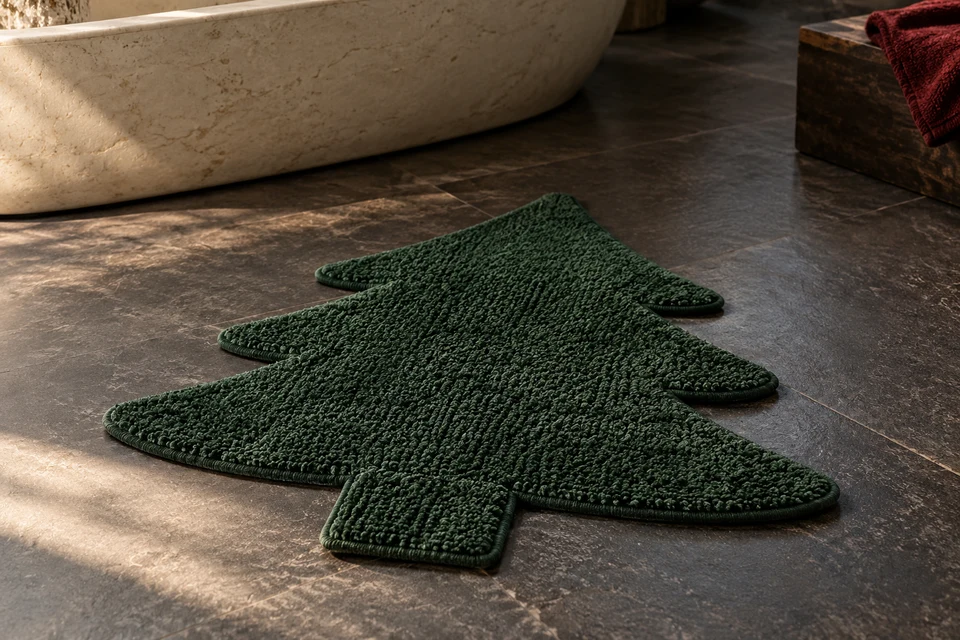
A Christmas tree bath mat is not simply a rectangular mat with a festive print. The stepped outline changes where the pile ends, how the binding turns and how much continuous surface the customer receives. For a retail buying team, the approval question is whether the attractive silhouette remains a usable, well-finished textile after packing and care. Resolve that question with an actual finished mat, not an artwork thumbnail.
Define the tree as a measured outline
Separate the bounding box from the useful centre
A supplier can quote the maximum length and width correctly while delivering a shape that feels much smaller than expected. The widest branch tips determine the outer width, but they do not describe the continuous central area. Ask for a dimensioned finished outline that identifies the trunk, top point, branch levels and the narrowest centre section. Mark which points are reference dimensions and which require an agreed tolerance.
Compare the drawing with the actual bathroom location proposed for your collection photography. A shape that looks balanced alone may place a branch beside a cabinet foot or across a doorway. Use a full-size paper outline for layout discussion, then confirm the decision with the textile sample. The tech-pack checklist provides a place to keep the drawing revision tied to the purchase specification.
- Record overall length, branch-tip width and continuous centre width separately.
- Agree whether measurements include the binding and the pile extending beyond it.
Approve the pile-to-edge relationship
Inspect the inside turns as well as the outer points
The inward corners between branches deserve their own close photographs. Ask how the chosen pile construction, backing and edge finish meet at each turn. Inspect for exposed ground fabric, crowded binding, loose loops and places where a stitched edge pulls the shape out of line. A neat straight section does not establish that the tightest turn is acceptable. Review the front, reverse and side profile under the same lighting.
Choose the outline and edge method together. If a sharp branch point cannot be finished consistently in the proposed construction, a slightly rounded point may be a better approved design than an attractive drawing followed by uncertain production. Keep the accepted revision visible on the retained sample. For the underlying fabric description, use pile and ground-weave specification as a discussion aid, not as evidence that a particular mat meets a performance requirement.
- Photograph every distinct corner type.
- Record unacceptable loose ends and exposed areas against the approved sample.
Review the shape after the intended care process
Do not approve only the freshly pressed sample
Ask the project team to agree the care procedure before arranging a comparison. Record the sample identity, starting dimensions, drying method and the condition in which the mat will be measured again. Lay it freely without stretching the branches into the drawing. Look for a twisting trunk, a pulled-in top point, waviness along the binding and local changes in the visible ground. These observations should lead to a clear accept, revise or retest decision.
Set project-specific limits before examining the result; do not invent a universal acceptable change. If one colour or construction is altered, decide whether the earlier result still applies. The dimensional-stability planning guide helps distinguish a documented procedure from an informal wash. A photograph of a flat dry sample is useful appearance evidence, but it cannot by itself establish wet-floor traction or safety.
- Retain before-and-after outline photographs at the same scale.
- Log the care procedure and the exact material combination tested.
Pack without disguising the branch shape
Check the unpacked product rather than the folded bundle
A seasonal shelf pack may fold the tree through several narrow sections. Request a packed sample using the proposed fold, band or sleeve, then unpack it as a retailer or customer would. Examine whether a branch stays folded under, whether the binding rolls and whether the product settles into the approved outline without force. Do not choose a smaller pack solely from an empty packaging mock-up.
Make the front-of-pack dimensions unambiguous. If the printed width is the maximum tip-to-tip width, the supporting product information should not imply a rectangular coverage area. Match the pack photograph to the approved colour and actual shape. Consult folding and pack-dimension approval when assigning responsibility for the final packed sample. Confirm the commercial order and delivery window separately; a festive design is not evidence of available seasonal stock.
- Approve a real packed mat, an unpacking sequence and its final shelf orientation.
- Keep material, shape and packaging revision numbers linked.
Keep decorative approval separate from performance claims
Build a release decision the buyer can explain
Create separate decisions for the tree silhouette, workmanship, care appearance and any proposed functional statement. A backing description is not a substitute for evidence supporting a slip-resistance claim. If the retail brief asks for such a claim, have the responsible technical team define the intended surfaces, conditions and evidence required for the destination market before any wording is printed. Leave unsupported claims out of the sales copy.
The commercial release file should identify the accepted mat, unresolved issues, approved packaging and who may authorize a change. A minor-looking change to the backing or edge can require a fresh review, so do not permit silent substitutions. Use the claim substantiation matrix to keep appearance approval separate from evidence. Send FY Bedding the intended outline, retail format and care brief to discuss a sample scope; feasibility and timing require project confirmation.
- Release only the documented construction and artwork revision.
- Keep unconfirmed traction, stock and delivery statements out of the listing.
Before committing to a tree-shaped mat, the buyer should be able to point to one approved outline, one finished edge standard, one recorded care comparison and one real packed sample. If those four references describe different revisions, stop the release and reconcile them.