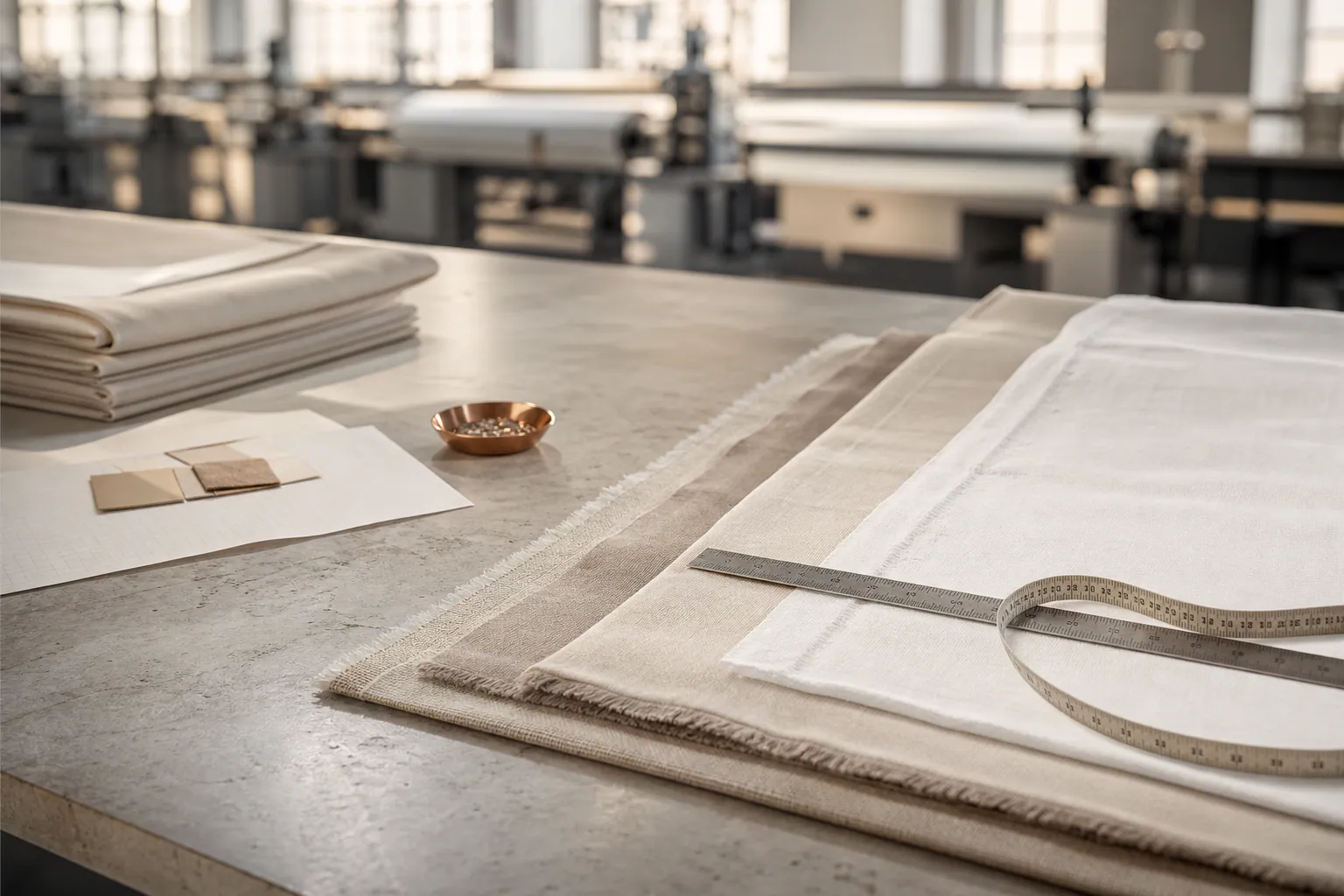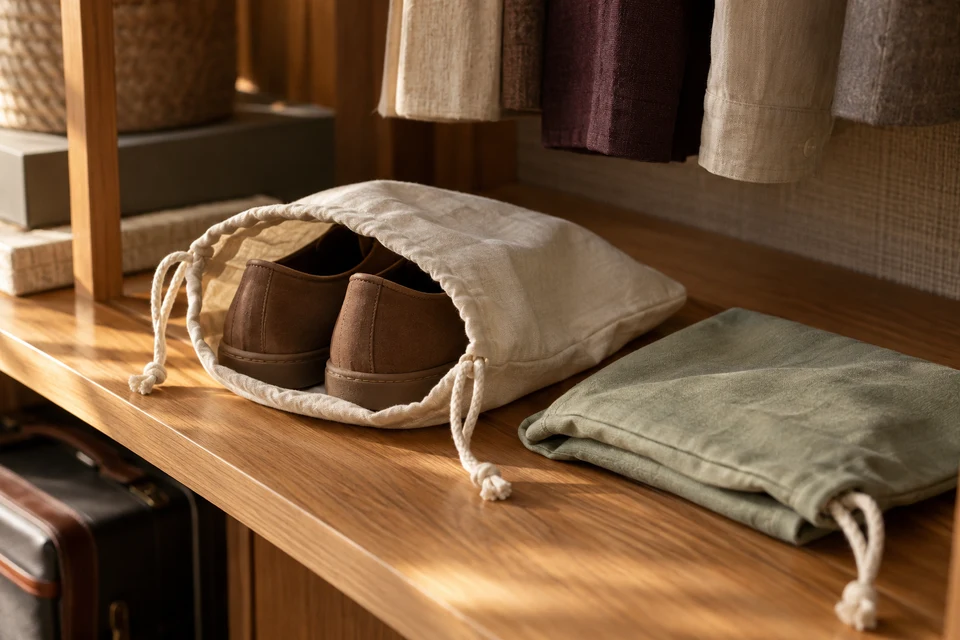
A flat shoe-bag measurement does not establish room for a complete pair. The usable mouth, internal depth and closure channel must work with the intended footwear together. For a hotel accessory or retail storage range, approve a loaded production-intent sample and make the purchasing unit explicit before ordering.
Start with the actual contents
Use representative pairs rather than a size label alone
Fabric shoe bags can be developed as hotel wardrobe accessories, retail storage pouches or reusable travel organisers. The same nominal shoe size may cover very different shapes. Specify the intended type of footwear and obtain representative pairs for sample approval. A low-profile pair and a bulky pair need different internal room even when their labelled size is identical. Record whether one bag holds one shoe or a complete pair.
Show the proposed packing orientation in the enquiry. Soles together, shoes side by side and individually separated shoes create different loaded shapes. If the buyer wants a divider, lining or second pouch, include it in the quotation rather than assuming it will be added after the first sample. Avoid calling the bag universal-fit without a defined and supported coverage range. The technical pack should show that actual loading configuration.
- Identify the intended footwear and a representative largest profile.
- Record the number of shoes per bag.
- Photograph the proposed loading orientation.
Distinguish outside dimensions from usable space
Measure below the closure channel
The flat outside length includes seams and may include the closure channel. It is not the same as the usable internal length. Define the measuring points on a drawing and record finished dimensions on the actual sample. Where a gusset is present, show how it opens under load instead of adding its flat width to a capacity claim. Check the corners and seam allowances that can reduce useful space.
Load and remove the chosen footwear without forcing the mouth or pulling against the channel seam. Record whether the opening is genuinely wide enough at the narrowest point. An oversized body does not solve an undersized opening. If approval depends on inserting the shoes in a particular order, make that sequence part of the review and decide whether it is realistic for the intended user. Use the dimension and tolerance record to retain the measuring points.
- List finished outside and usable internal measurements separately.
- Check the narrowest opening in the loaded sequence.
- Keep the approved measurement method with the sample.
Review closure operation independently
Check the cord route and the remaining open area
For a drawcord bag, identify the cord material, exit points, channel construction and end finishing. Show the open and closed states. The closed mouth may gather without forming a complete seal; describe the result accurately. A textile storage pouch should not be presented as waterproof, odour-proof or contamination-proof merely because it has a drawcord. Any such claim needs appropriate evidence for the complete product.
Operate the closure after loading the representative pair and inspect where the cord bears against the fabric. Review access, loose ends and the intended storage setting with the responsible product reviewer. Do not invent a general safe cord length or an attachment strength. Record any use-related restrictions and make sure the packaging and sales copy match the approved construction. Record the proposed channel in the seam specification.
- Approve the complete closure, not a separate cord sample.
- Describe the actual closed mouth without implying a seal.
- Resolve use-related evidence requirements before labelling.
Select materials by the intended service
Keep appearance separate from performance evidence
Ask for fibre composition and construction details for the shell and any lining. Compare handle, opacity, seam appearance and contact with the chosen footwear. A soft-looking fabric is not by itself proof that it will not transfer colour or mark a particular finish. Where that risk matters, agree a relevant evaluation with the responsible supplier or laboratory and keep the specific sample identity attached to the result.
Decide whether the pouch will be cleaned, replaced or supplied as an occasional-use accessory. If washing is intended, approve care instructions and review the finished sample after the proposed procedure. Recheck the usable opening, loaded fit and closure operation. Do not transfer care claims from a similar bag or from the unsewn fabric to a construction with different cords, lining or decoration. Reconcile the instructions through the care-label approval process.
- Identify all materials, including the cord and lining.
- Keep contact and colour observations tied to the tested samples.
- Recheck fit after the agreed care review.
Make the purchasing unit unambiguous
Approve assortment and packing before release
A supplier may quote a single pouch while a buyer imagines a pair of pouches in a presentation sleeve. List the contents of one sold unit, its size reference and any optional personalisation. For a hotel project, agree how the bag is presented in the wardrobe and how replacement stock is identified. For retail, make the photographed contents and the pack description consistent; shoes used as styling props should not appear to be included.
Separate the requested finished quantity from material, colour and decoration minimums. Obtain a sample schedule and confirm packaging responsibilities before deciding a delivery plan. Keep the approved fit photographs, component details and pack list together. Send FY Bedding the intended footwear profiles, use setting, quantity split and packaging concept to discuss whether the proposed programme can be supported before committing to an order. Use the reorder record to preserve the approved unit and fit basis.
- Confirm single bag, pair or set at every quotation stage.
- Approve the packed unit and its item reference.
- Retain a representative loaded-fit record for repeat orders.
Specify the representative pair, usable opening and closure independently, then approve the packed sales unit and post-care fit.