Decorative panels around a four-poster bed need a plan for the entire frame, not four unrelated curtain measurements. Corner overlap, attachment positions and opening routes influence how the canopy looks and how the bed remains accessible. This buying brief concerns decorative textile panels on an identified freestanding bed frame. It does not claim insect protection, fire performance or suitability for an unreviewed installation. The furniture maker's instructions and the property's responsible safety review remain separate requirements.
Draw a plan of the top frame and posts
Identify each side before assigning panel widths
Record the clear rail lengths, rail shape, post positions and height of the intended attachment line. Show the head, foot and both long sides on one drawing. Note any decorative finials, joints or fittings that interrupt the available rail. A dimension taken across the outside of the posts may not equal the length on which the textile can actually move or be attached.
Use the actual frame reference and confirm the permitted attachment arrangement with its responsible supplier or owner. Do not assume the top rails can carry an unspecified textile assembly, and do not add ceiling or wall fixings as an undocumented workaround. If the project includes more than one bed model, prepare a separate compatibility review before calling the panels a common size for the property.
- Identify the rail segment used by every panel.
- Keep textile supply separate from the approval of structural supports and fixings.
Allocate overlap at the corners
Avoid buying four widths that leave the junction unresolved
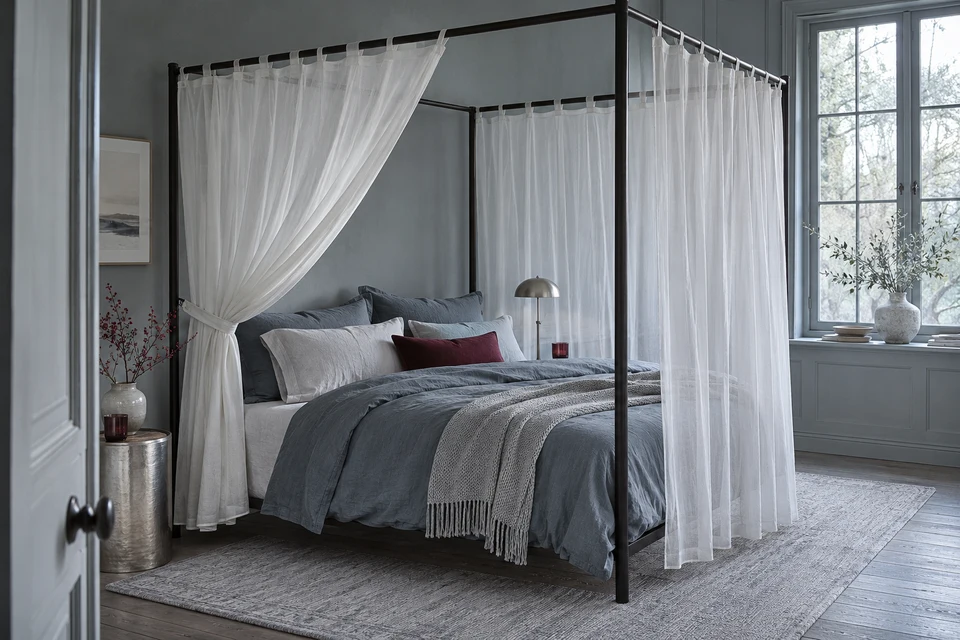
Choose how the adjacent panels will meet: overlap, deliberate separation or another approved visual arrangement. Mark the intended relationship at each corner and identify which panel lies in front when the canopy is closed for display. A continuous look in a rendering can conceal a real gap around a post or a bulky stack where several fabric edges meet. Review the physical corner at full scale.
If panels are paired on a long side, show their center meeting point separately from the corner overlap. Decide how much of the rail is reserved for the gathered stack when the side is open. The buyer should approve the open and closed appearances as distinct views. Increasing total fabric width may improve fullness in one view while creating an inconvenient stack in the other, so settle the arrangement through a sample rather than one generic fullness factor.
- Record corner and center meeting positions separately.
- Approve the gathered stack without concealing it behind a photographed post.
Review the normal opening routes
Keep bed entry, service and room equipment in the discussion
Install the proposed sample using the approved attachment method and review normal access to the bed. Identify the side guests will use, the way housekeeping will make the bed and the route used to remove the textile for care. Observe the actual room, including bedside furniture, controls and any equipment requiring clearance. The property team should decide the acceptable installation rather than relying on an attractive room photograph.
Check the panel length in the actual installed position and record the intended clearance from the floor and bedding. Do not hide excessive length by temporarily tucking the cloth out of view. Any ties, loops or accessories belong in the installation review, with use and placement agreed by the responsible team. This guide does not replace a safety assessment or justify installing decorative cloth near heat sources or required building equipment.
- Photograph the normal entry side with the canopy open.
- Confirm removal and resetting can follow the approved room procedure.
Approve transparency and drape on a complete panel
Judge the actual layers where the corners overlap
Review the proposed fabric in the room's daylight and evening lighting. Compare a single layer with the overlapped corner because the visual density will differ. Ask for the actual fiber composition, finishing and care proposal; the name voile or sheer does not establish a performance claim. If the design requires a particular degree of privacy or light control, define and substantiate that separately rather than assuming it from a sample image.
Sew the heading and hem in the trial panel, then review how they hang along the rail. A light fabric can still have a visibly bulky edge or a heading that interrupts the intended soft line. Check each offered color rather than applying one color approval to all variants. Retain the panel orientation and the approved room photographs with the fabric reference so later substitutions are assessed in the same setting.
- Inspect the heading, hem and overlapped corner together.
- Keep insect, flame and blackout claims out of decorative copy unless separately evidenced.
Order an identified panel set
Make removal, labeling and replacement part of the brief
Agree a care trial for the complete panels and then reinstall the sample set on the same frame. Compare length, corner relationship and gathered appearance with the original installation. Identify panels discreetly by side or position if their dimensions differ. The identifier must remain practical for housekeeping without becoming an unwanted visible mark on the sheer face.
The purchase schedule should list the frame model, panel positions, dimensions, attachment scope, fabric and pack count. Ask whether the quotation includes ties or other textile accessories and how minimums apply by fabric color and pattern size. Send FY Bedding the frame plan and room references for a scoped development review. A verified textile sample can support the purchasing decision, but installation suitability and delivery commitments must still be confirmed for the particular project.
- Define one set as a stated list of panels, not an assumed four-piece bundle.
- Keep replacement panels linked to the installed frame and textile revision.
Approve the complete canopy arrangement in the actual frame: corners, open access, heading, hem and post-care refit. A decorative fabric approval is not structural, fire or insect-protection evidence for the installation.