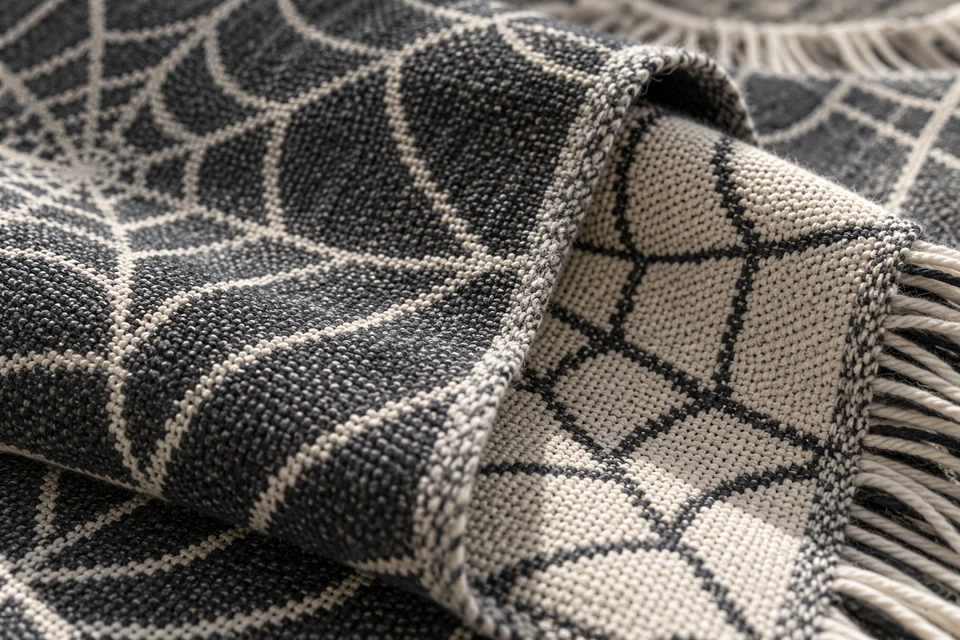
A jacquard spiderweb throw can express a seasonal motif through the weave rather than through printed lines or open lace. That distinction matters when purchasing: the visible web is only one surface of a yarn arrangement that also appears on the reverse. The buyer should review how the pattern transitions between dense lines and open-looking fields, then decide which surfaces are offered for use and display. An editorial macro photograph cannot establish yarn composition, float measurements or a tested resistance to snagging.
Confirm that the proposal is a woven web
Artwork appearance does not identify construction
Ask the supplier to state whether the motif is woven, printed, embroidered or created by an open construction. These alternatives may resemble one another in a small image while requiring different development decisions. For the jacquard proposal, request the offered yarn information, weave development reference and a physical swatch large enough to show a complete web junction and adjacent field. Keep any unconfirmed material description out of the retail copy.
Connect the request to the jacquard development and minimum-order discussion. A digital pattern preview is useful for selecting the visual direction, but it is not the final woven surface. Ask what changes when the design is translated into the proposed construction. Price the accepted woven version and its finishing scope, rather than comparing it directly with a printed mock-up that has not been made in cloth.
- State the actual motif construction in the quotation.
- Request a swatch containing both a web junction and its surrounding field.
Trace the motif on the face and reverse
The reverse is not merely a negative photograph
Place the swatch face up, then turn the same area over and retain the orientation. Examine the web lines, crossings and background areas on both surfaces. Ask the maker to explain the yarn paths where the pattern changes. Record the approved face convention and the reverse appearance. A contrasting reverse can be visually appealing without being equivalent to the face in construction or intended use.
Put matched photographs in the technical specification pack. Identify the areas requiring closer assessment rather than assigning a universal allowable float length from a generic guide. The appropriate construction and verification depend on the actual yarns, weave and intended product. If the buyer wants both surfaces promoted as usable display faces, make that an explicit requirement and obtain the corresponding sample review before using the word reversible.
- Keep face and reverse views aligned to the same motif area.
- Distinguish an attractive reverse from an approved reversible offer.
Concentrate on transitions, not only straight lines
Web crossings can hide a different surface arrangement
Review the center of a web, the curved rings, radial lines and the areas where the motif meets the edge. These locations may not share the same yarn arrangement. Ask for representative close views and inspect the physical sample under ordinary light. Avoid stretching the throw or flattening its surface in a way that conceals the normal texture. Record what is observed and what still needs a defined assessment.
The construction specification method provides a place to connect the woven body with its edge finish. If a revision changes the motif scale, yarn selection or construction, repeat the face-and-reverse review at the affected transitions. Do not assume that a previously accepted straight section also approves a newly enlarged crossing. Any test method, sampling plan and acceptance criteria should be agreed for the actual product, not inferred from its seasonal appearance.
- Include centers, rings, radial lines and edge transitions.
- Revisit the yarn-path review after motif or material changes.
Move from the swatch to a complete throw
Drape changes how both surfaces are seen
Place the finished throw over the intended display furniture and include a naturally turned-back corner. Check motif scale at the full product size and how the reverse appears when the throw is folded or draped. Decide whether the web should have a clear top direction. A swatch that looks balanced may create an awkwardly cropped center or a dense visual band at the finished edge.
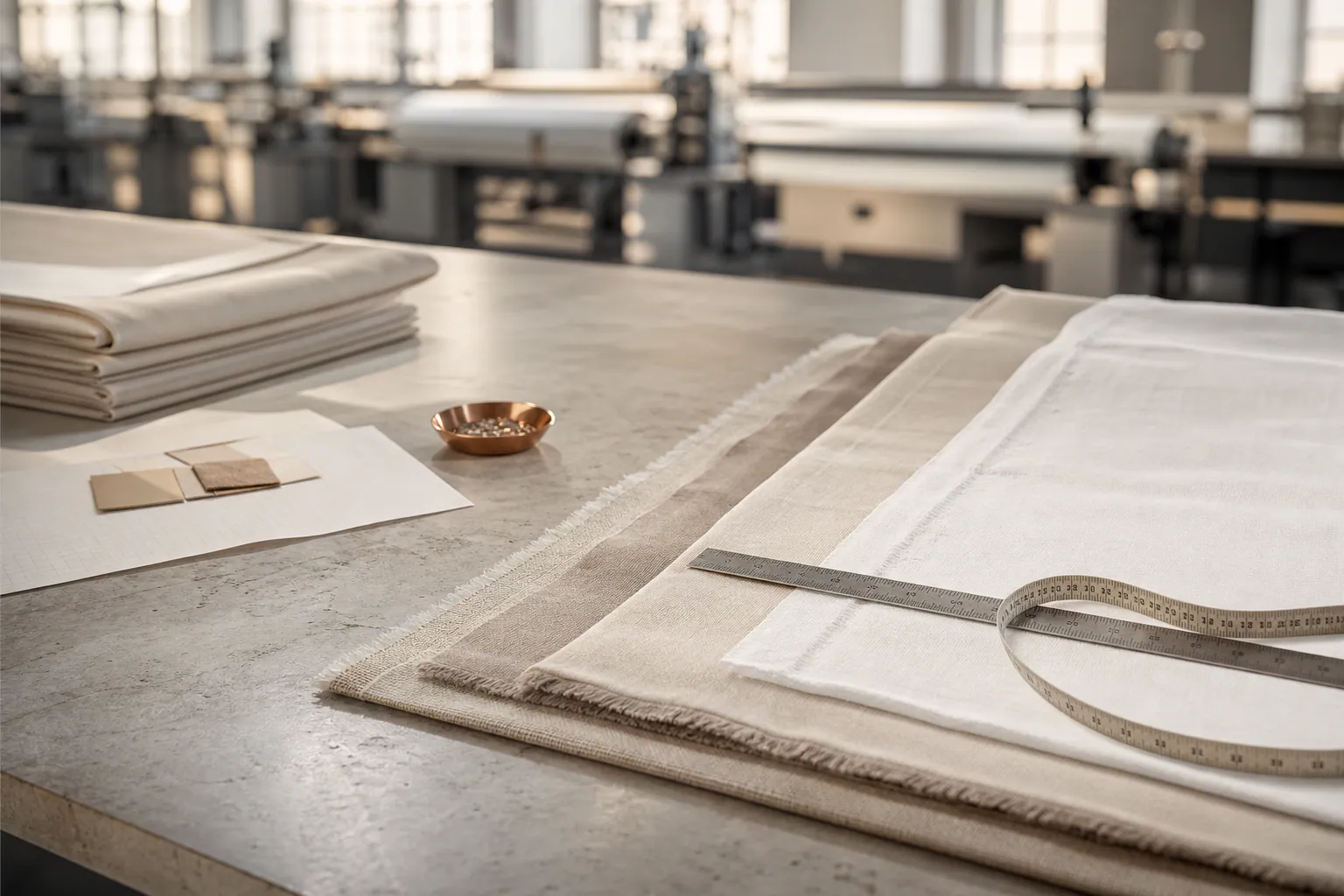
Keep the accepted display and detail views in the retail photography record. Show the real surface texture instead of smoothing the yarns into a printed-looking graphic. Confirm the label location and fringe or hem description without letting those details redefine which side is the front. Generated editorial imagery can explain the review topic, but actual sample photographs should govern the product-specific listing and approval.
- Approve a full-size drape with a visible reverse corner.
- Record the motif direction and edge cropping for each size.
Link the finished surface to its packing proposal
Folding should not conceal unresolved differences
Fold and pack the complete sample using the proposed retail arrangement. Open it and compare the displayed panel with the approved face convention. Observe how fringes, hems and turned corners settle, and identify any setup action needed for a shop display. Keep this observation separate from claims about recovery time or resistance to surface damage, which require their own agreed evidence.
Use the packing comparison framework to retain the before-and-after views. Confirm minimum quantities for the chosen yarn and color combination, development approvals and realistic dispatch planning before a holiday sales commitment. If a lower-cost alternative changes the weave or yarn paths, treat it as a new construction proposal rather than approving it solely because the web artwork remains recognizable.
- Check which surface becomes the retail-facing folded panel.
- Reapprove construction changes even when the artwork is unchanged.
Ask FY Bedding for the proposed woven construction, aligned face-and-reverse swatches and a complete throw with its intended edge finish. Mark the web transitions requiring review, agree any necessary verification and approve the actual packed display before releasing the jacquard program.