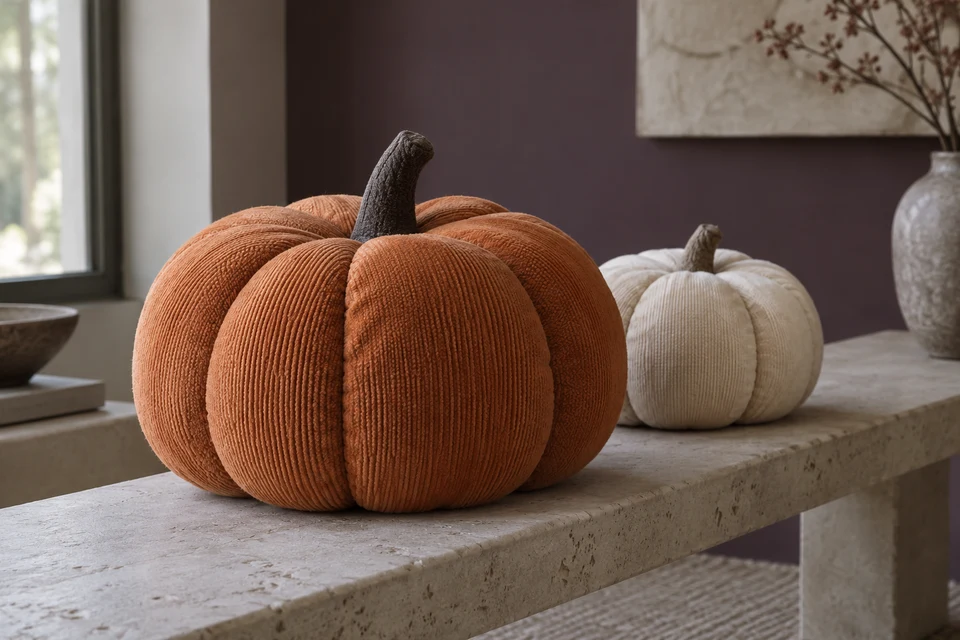
A pumpkin cushion is bought for its recognizable rounded silhouette, yet that silhouette can come from several quite different assemblies. Curved sewn panels, external shaping ties and a printed pumpkin face do not describe the same product. A buyer comparing Halloween samples should first identify which construction the quotation covers. This guide addresses decorative cushions for adult interiors, not toys, infant products or seating. The useful approval is a repeatable three-dimensional shape, with a documented stem and base, that can be delivered and displayed without hidden styling supports.
Choose how the lobes are formed
A photograph does not identify the assembly
Ask the maker to explain whether separate curved panels create the lobes or whether a filled body is shaped after sewing. Record the number of visible segments, seam positions and any internal shaping component in the bill of materials. A smooth mock-up with deep grooves should not silently become a different construction in bulk. Request an unfilled shell or inside photograph where the method is otherwise difficult to understand.
Compare like constructions before comparing prices. Additional panels, turning work or shaping steps may affect the development route, but do not assume their cost without a quotation. Decide whether the range needs one recognizable profile across colors or intentionally different tall and flattened pumpkins. Those are separate shape references, not simply different fill weights.
- Name the shaping method in the purchase brief.
- Keep tall and flattened profiles separately identified.
Measure the object without flattening it
Use silhouette landmarks and a consistent resting condition
Set the sample on the intended flat display surface and let it rest normally. Record overall body width, body height excluding the stem, stem height and the apparent depth of the grooves. Specify where each measurement begins and ends. Do not squeeze the cushion to achieve the quoted dimension. Add front, side and top photographs to the technical pack so the dimensions describe the same profile that the buyer approved.
Inspect whether the base sits consistently or whether the object rolls toward one lobe. An intentional tilted stem is different from a leaning body caused by uneven distribution. Review a small group together: differences that seem minor in an isolated photograph can be conspicuous on a shelf. Establish acceptable shape references with the supplier rather than inventing universal numerical tolerances.
- Measure the resting body separately from its stem.
- Review several units as a shelf group.
Control fabric direction across curved panels
Corduroy ribs and pile create visible boundaries
An apricot corduroy pumpkin and a cream plain-woven pumpkin can share a pattern while looking very different at the seams. Show the intended rib or pile direction on each curved panel. Ask whether adjacent panels should read continuously or whether the segmented contrast is deliberate. The corduroy direction guide supports this material discussion, but the full rounded sample remains the deciding reference.
View the cushion from more than one side under ordinary room light. A shaded groove is part of the shape; a reversed pile panel may produce a different kind of contrast. Keep those observations separate. If a fabric alternative is proposed to meet a minimum or schedule, review another shaped sample before transferring approval from a flat swatch.
- Mark direction on every panel, not only one swatch.
- Separate intentional groove shadows from mismatched fabric orientation.
Approve the stem and closing area
Decorative details still need a defined attachment
Record whether the stem is a sewn fabric tube, a separately filled piece or another declared component. Inspect where it joins the body and how the final opening is closed. Do not use the stem as a carrying handle during the display review unless that function has actually been designed and assessed. Check that shaping components and loose ends are contained within the approved assembly, without assuming that a decorative appearance proves attachment performance.
Use the seam specification to describe the accepted joins. Any required attachment or use-safety evaluation belongs in a project-specific test plan agreed with the responsible specialist. Keep adult decorative positioning explicit in the brief, imagery and packaging rather than treating the seasonal character as permission to market the item for children.
- Identify stem materials and the body closing method.
- Do not imply a carrying or toy function from appearance.
Open the actual retail pack before release
The display shape must survive its delivery format
Trial the proposed bag or carton with the approved sample, then unpack it according to the intended customer instructions. Record any agreed settling time and allowed reshaping. Inspect the stem, base and lobe definition again. The compression-pack review is relevant if compression is proposed, but a successful photograph of an unpacked development sample is not evidence that a packed batch will recover identically.
Request quantities by profile, size and color, identifying which materials can genuinely be shared. Keep packaging dimensions linked to the selected profile rather than one average pumpkin size. Send FY Bedding the construction reference, shelf grouping, order mix and intended pack format for a feasibility and sample discussion. Confirm the production route and timing in the project quotation; Halloween imagery alone does not establish stock or a holiday delivery commitment.
- Approve the unpacked stem and lobes, not just carton fit.
- Quote each profile and color under its correct sample revision.
Release a named pumpkin shape and construction, supported by resting measurements, panel-direction references and a real unpacking review. Do not buy a silhouette photograph as though it were a complete specification.