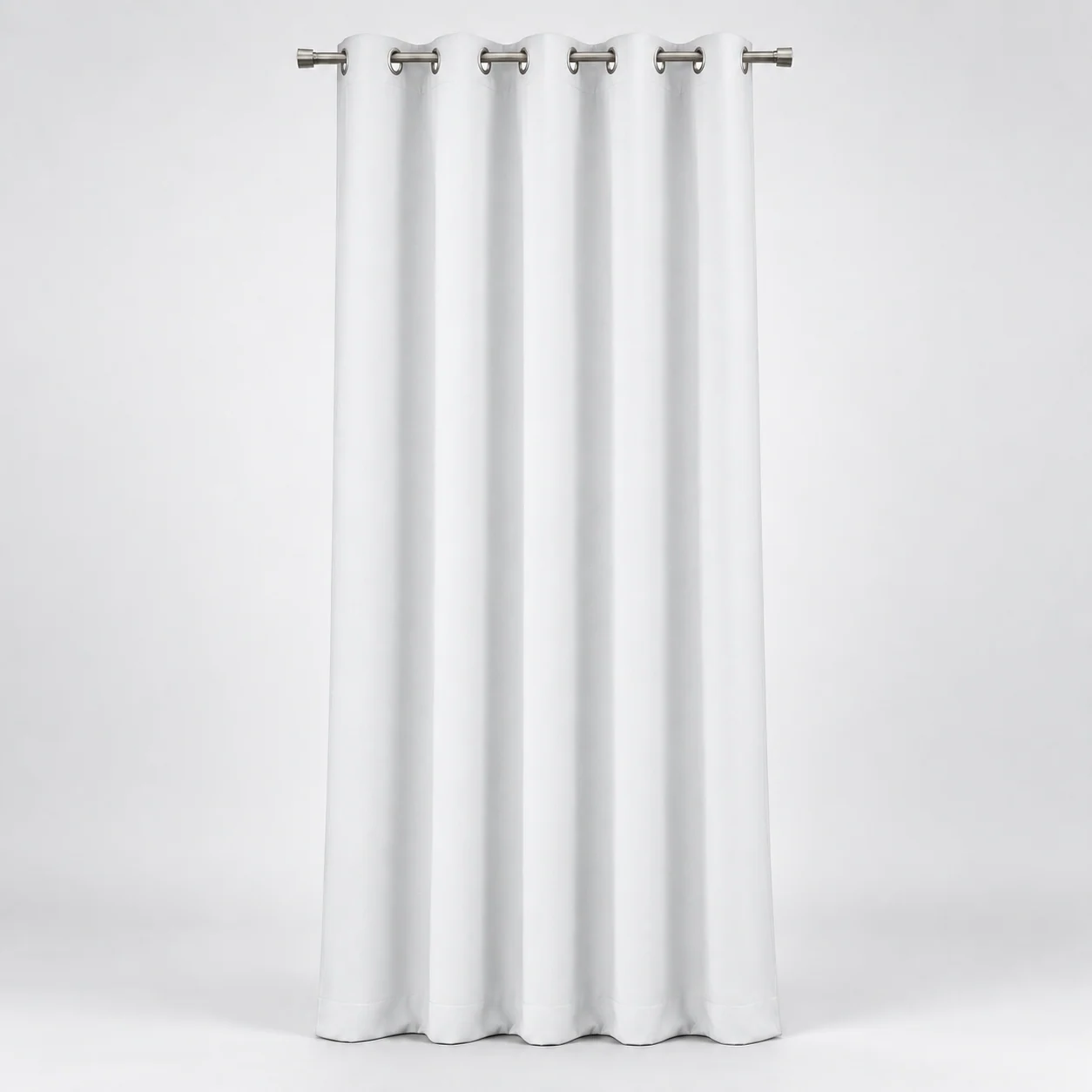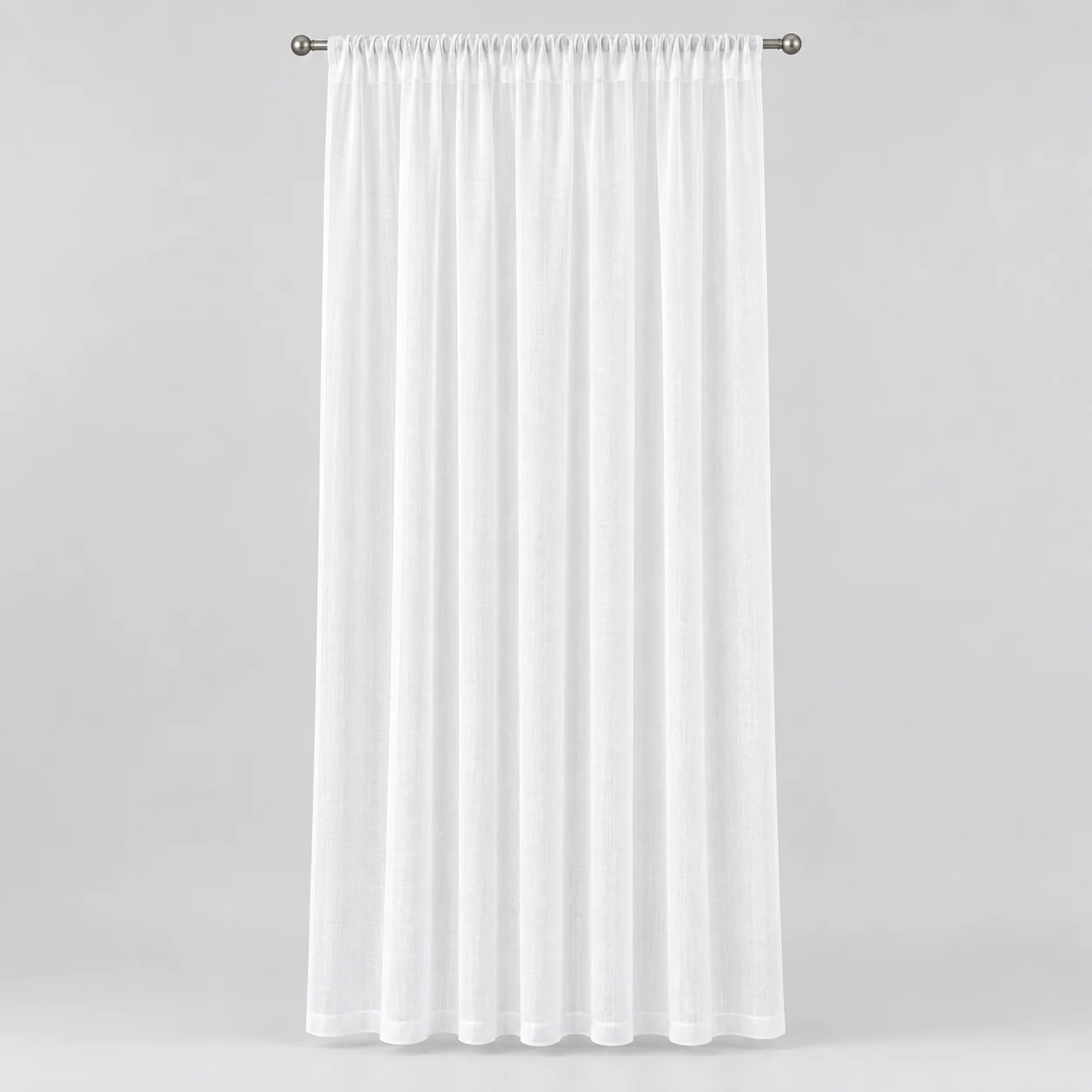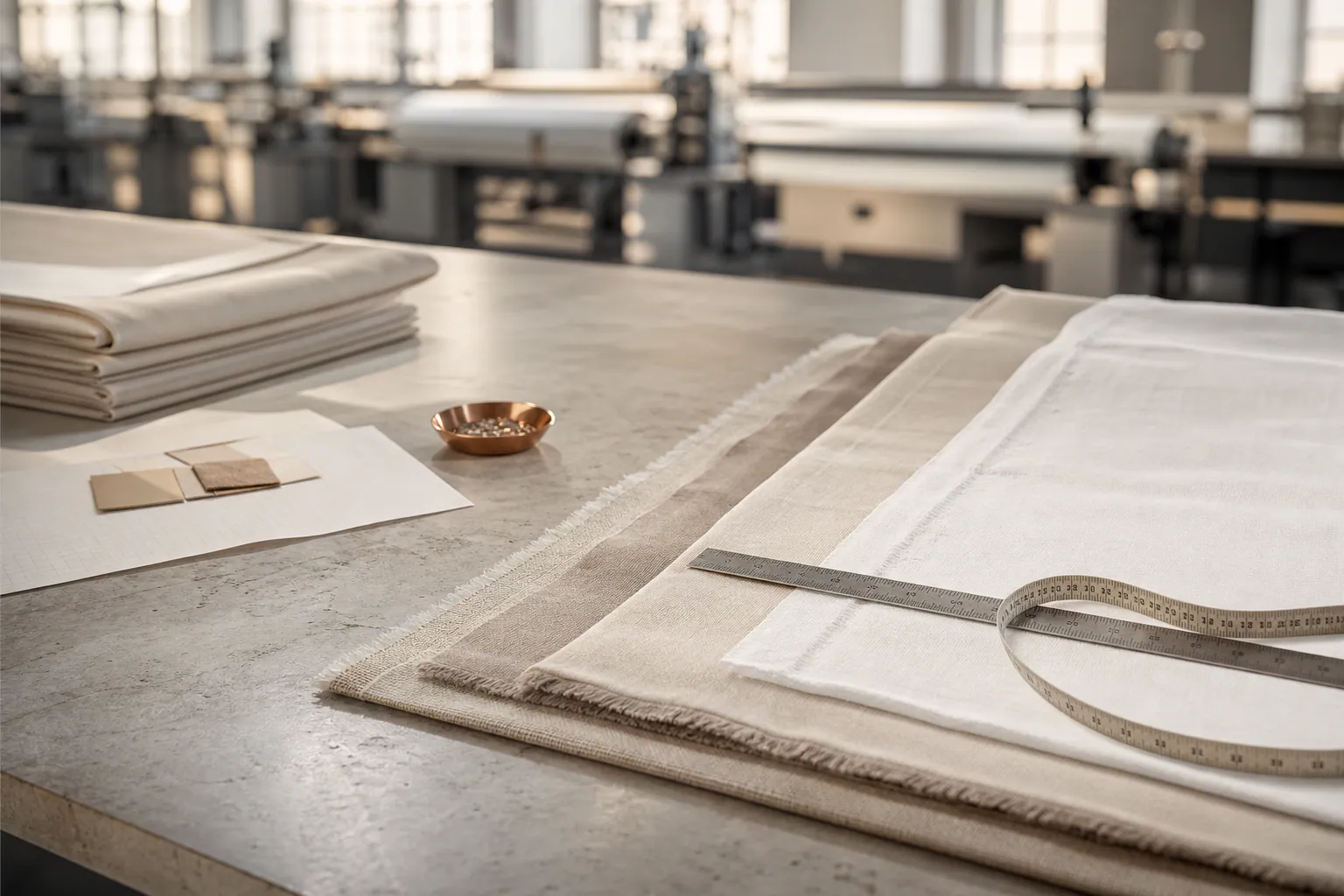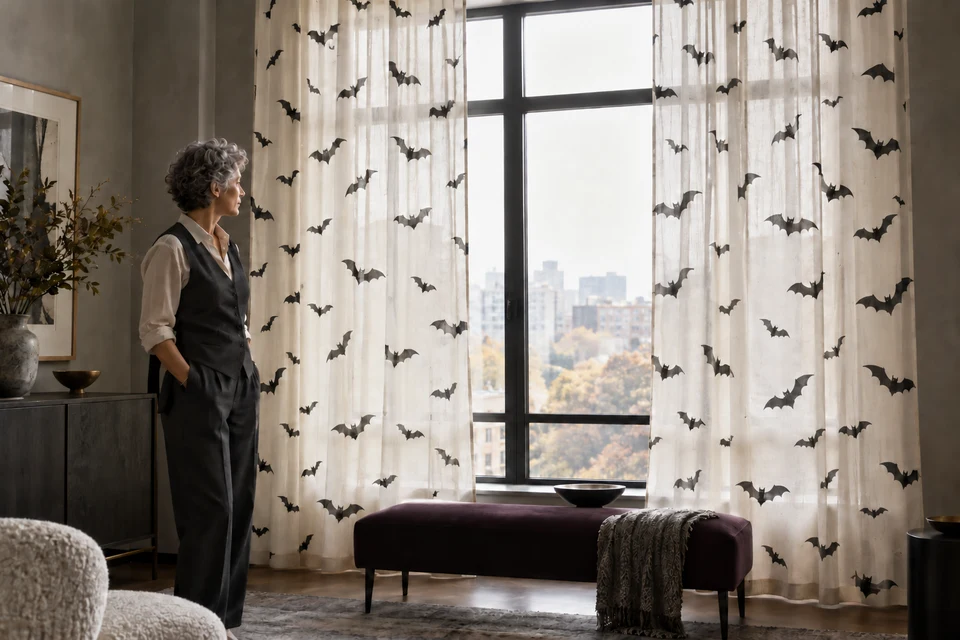
A black bat motif on a pale curtain can be bold in a flat sample and much less distinct when the panel gathers beside a bright window. For Halloween retail and temporary interior schemes, the purchasing question is how the complete silhouette pattern reads in its installed position. That is different from choosing a generic sheer by hand feel. This guide concerns decorative seasonal curtain panels, not blackout, thermal, fire-performance or child-safety claims. Those requirements must be identified independently and supported for the proposed product and installation.
Choose the viewing situation first
Window decoration and privacy screening are different briefs
Record whether the curtain is primarily viewed from inside the room, from outside a shop window or from both directions. Note the expected installation and the existing window treatment behind it. A seasonal decorative panel might sit in front of an established curtain without replacing that curtain's function. State this distinction in the product brief so a visual motif approval does not become an unintended privacy claim.
Ask the buyer to provide photographs of the intended window in ordinary daylight and evening conditions. These references guide the mock-up but do not replace a physical trial. Keep the seasonal panel and any permanent lining or blind separately identified. If the design depends on a pale background layer, show that layer in the proposed product description and quotation scope.
- Identify the inside and outside viewing directions.
- Separate seasonal decoration from functional window treatment.
Test the silhouette in two lighting states
Do not judge only the most flattering photograph
Hang a production-intent sample at the proposed window or a representative mock-up. Review it in daylight and again with the room's normal evening lighting. Record the lighting conditions with the image, rather than editing the photograph until the motif looks uniformly black. The photography reference guide helps connect marketing images with an approved physical sample.
Compare the bat outline, pale ground and visible reverse from normal viewing distance. A panel that reads clearly against a shaded courtyard may behave differently against a bright sky. The objective is not to declare one fabric universally opaque, but to document what the offered sample does in the intended presentation. Escalate functional privacy or light-blocking requirements instead of treating motif visibility as evidence for them.
- Record daylight and ordinary evening views.
- Do not use image editing to conceal weak contrast.
Approve motifs after gathering
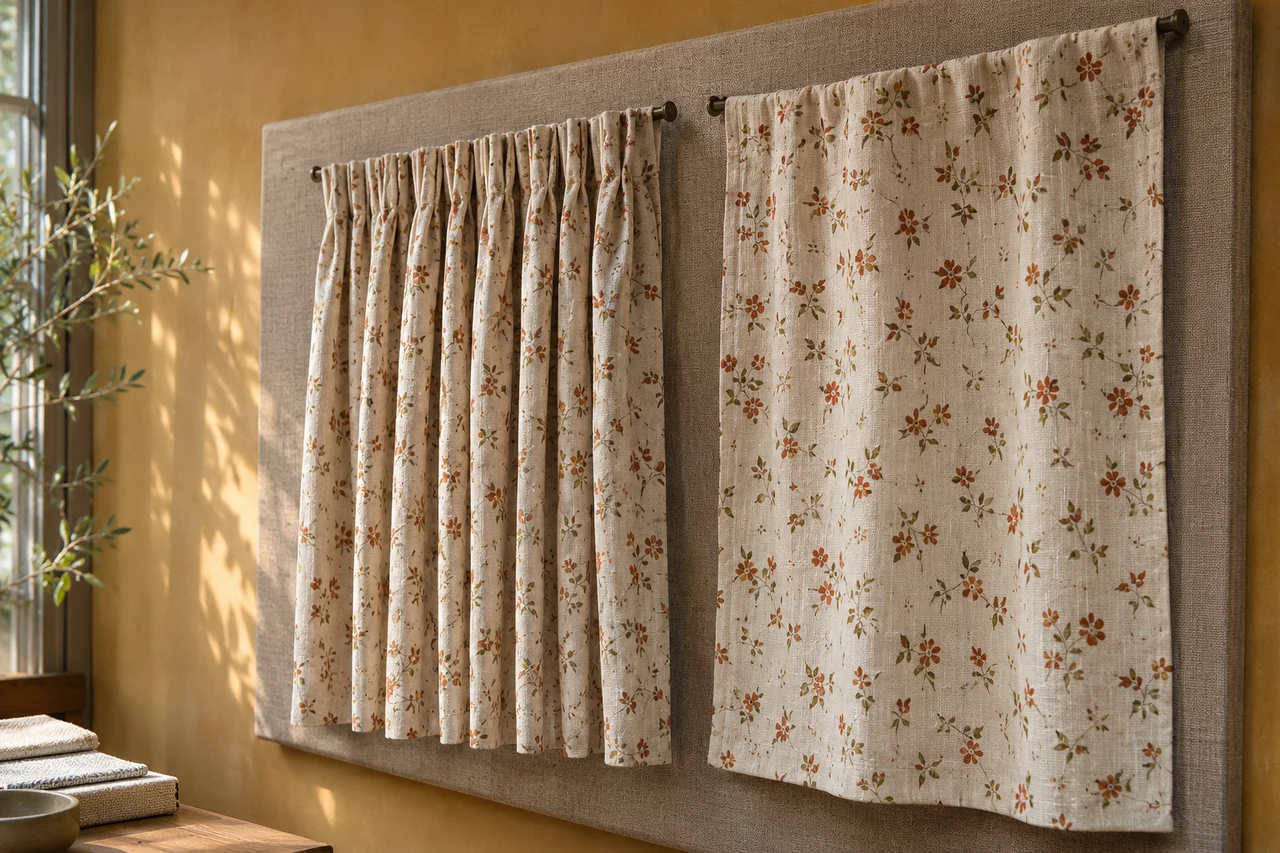
The flat repeat is not the installed rhythm
Set the intended heading and fullness, then inspect how folds hide or divide the bat shapes. Check whether a central overlap or a side stack leaves a conspicuously cropped motif. Use the repeat-placement guide to record where the pattern should sit on each finished panel, not simply where it begins on the fabric roll.
Decide whether the pair should mirror, match or deliberately vary. For a one-way motif, confirm that both panels face the intended direction when hung. Keep left and right references clear in packing and photography. If the buyer offers multiple widths, ask whether the same motif layout remains workable or whether another placement sample is needed. More fabric width does not automatically preserve the same visual rhythm.
- Review the gathered pair, not just a flat swatch.
- Name left and right orientations where they differ.
Make the temporary installation practical
Use existing approved hardware without improvising a system
Provide the supplier with the intended heading interface and the relevant dimensions from the installation owner. Ask the responsible installer to confirm the hardware and location. The seasonal textile should not be assumed to provide or validate a complete fixing system. Review the finished lower edge, nearby furniture and ordinary opening route with the site team before accepting the display arrangement.
The curtain-hem review offers a useful way to record lower-edge presentation. Check whether the temporary panel can be removed without disturbing the permanent treatment. Keep supplied accessories and buyer-provided hardware separate in the item list. A photograph with an attractive rail should not imply that the rail is included, or that any location is suitable without installation review.
- Confirm hardware scope with the installation owner.
- Review removal as well as the finished display.
Plan pack orientation and seasonal storage
The next installation should remain identifiable
Fold and pack the approved pair in a way that keeps its orientation understandable. Reopen the pack and hang the panels using only the intended instructions. Record pressing or other preparation actually required; do not show a professionally steamed result as if it were the immediate unpacked condition. Agree the care process and review the motif, seams and heading afterward as part of the sampled product.
Use the storage and repacking guide if a reusable seasonal pack is proposed. Identify the pair, window size and revision so a later campaign does not mix incompatible panels. Send FY Bedding the viewing directions, lighting references, heading interface and proposed size mix for development discussion. Confirm feasible quantities and delivery planning after the real artwork and material gates, without assuming an unverified Halloween arrival date.
- Rehang from the retail pack without undocumented styling.
- Keep each approved pair and size identifiable for storage.
Approve the Halloween motif on the gathered, installed pair in daylight and evening conditions. Keep decorative appearance, installation responsibility and any functional window claims separate.