A decorative sofa-arm caddy must work as an organizer before its pumpkin embroidery becomes useful. The buyer needs to know which armrest it fits, what each pocket holds and how the textile sits when those pockets are occupied. An attractive flat sample cannot answer all three. Treat this as an adult living-room accessory development brief, with furniture fit and intended contents defined before seasonal artwork is released.
Draw the armrest profile
Flat width alone does not describe fit
Measure and sketch the actual furniture section that the caddy will cross. Identify the top width, curvature, inner tuck area and outer drop available above the seat or floor. Note upholstery features that affect placement, such as a loose cushion or a rounded edge. Keep the drawing with the product development pack so the supplier sees the intended fit instead of only an overall fabric rectangle.
Decide whether the range targets one defined armrest or several stated profiles. If several are intended, nominate representative furniture samples and review each. Avoid calling a caddy universal simply because its fabric can bend. A longer tuck panel may solve one fit problem while hiding the artwork or obstructing access on another sofa.
- Record top shape, tuck space and usable outer drop.
- Name the furniture profiles included in the proposed offer.
Build a pocket map from real objects
Usable openings matter more than decorative stitch lines
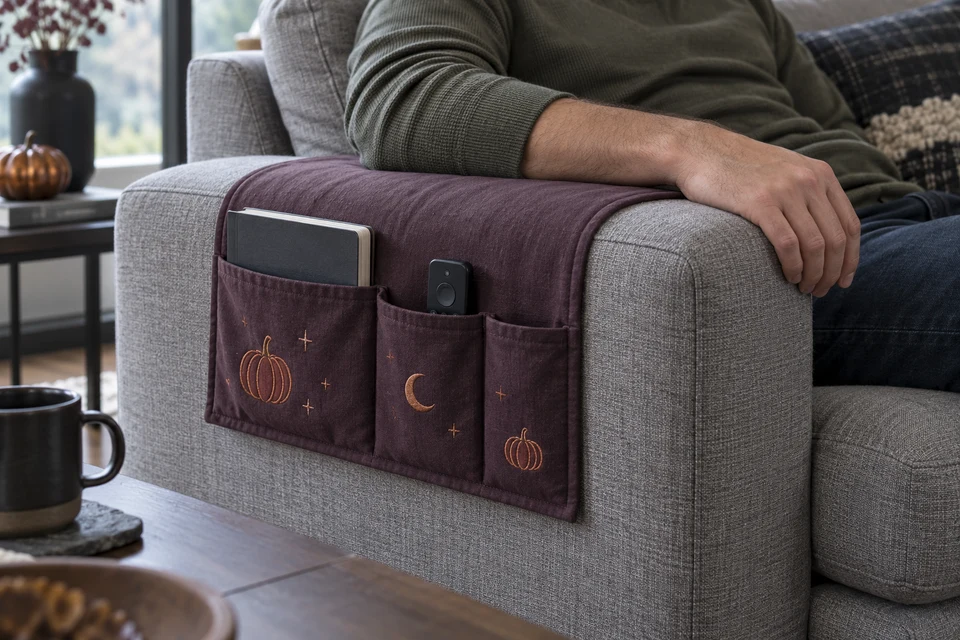
List the intended contents, such as a remote, reading glasses case or small notebook, and record their actual dimensions. Assign each item to a pocket on the sketch. Distinguish the visible pocket width from the opening and internal usable space after seams are sewn. Check whether a tall object can be reached comfortably without pulling the whole caddy upward.
Use a plain fabric prototype before decorating the face. The finished sample review can document pocket dimensions and their reference points. Keep the intended use modest and explicit; do not illustrate hot drinks, sharp tools, charging cables or heavy items unless those uses have been separately considered and supported. A pocket photograph is not a load-rating certificate.
- Trial each named object in its assigned finished pocket.
- Record opening access and retrieval, not only the pocket outline.
Review the occupied caddy on the sofa
Observe movement in the intended arrangement
Place the prototype on the nominated armrest, load only the specified contents and follow an agreed sequence of normal retrieval and replacement. Record any shift, curling edge or movement toward the seat. Inspect the surface in contact with the upholstery and ask the technical owner to assess any proposed backing or retention treatment. Do not assume that a textured backing is suitable for every upholstery material.
Use the testing-plan framework to define additional evidence appropriate to the product, rather than publishing a grip or abrasion claim from an informal trial. If the shape needs adjustment, repeat the fitted review with the changed pocket load. Keep photographs of the setup so a later sample is not judged on a different sofa by accident.
- Record the furniture, contents and placement used in each trial.
- Recheck fit after changing pocket depth or retention construction.
Place Halloween motifs around the function
Do not bury the design inside an occupied pocket
Map the pumpkin, moon or leaf decoration on the fitted prototype. View it with the pockets both empty and occupied. Decide whether the artwork belongs on the pocket faces, the top panel or an exposed border. A motif centered on the flat pattern can disappear around the armrest curve or behind a notebook. Approve the visible result from the ordinary seated and room viewpoints.
For a printed version, follow the print approval sequence; for another decoration route, request its own representative sample. Keep decorative additions away from functional openings unless their effect has been reviewed. Confirm the intended reverse and edge finish so seasonal design changes do not silently alter how the organizer sits on the furniture.
- Approve artwork on a loaded, fitted sample.
- Keep decoration and pocket-opening revisions linked.
Release a fit-specific commercial offer
The size name needs a corresponding drawing
Give each accepted fit version a clear identifier and list its materials, pocket arrangement, decoration and packing scope. Ask which parts of the range can share components and which require separate minimum quantities. Use the quotation comparison guide to distinguish a plain prototype, decorated sample and bulk caddy rather than assuming they are the same development task.
Prepare customer-facing fit information from the approved furniture envelope and sample observations. Retain the nominated objects and drawing for repeat orders. Reopen review after changes to fabric, pocket layout or backing. Confirm the actual production and transport schedule before promising Halloween availability; a finished development sample does not demonstrate ready stock.
- Tie each fit name to a measured drawing and retained sample.
- Confirm component substitutions before approving repeat production.
Share an armrest sketch, intended pocket contents and seasonal artwork with FY Bedding. Request a plain fit prototype first, then approve the decorated, occupied caddy and its evidence before discussing bulk quantities.