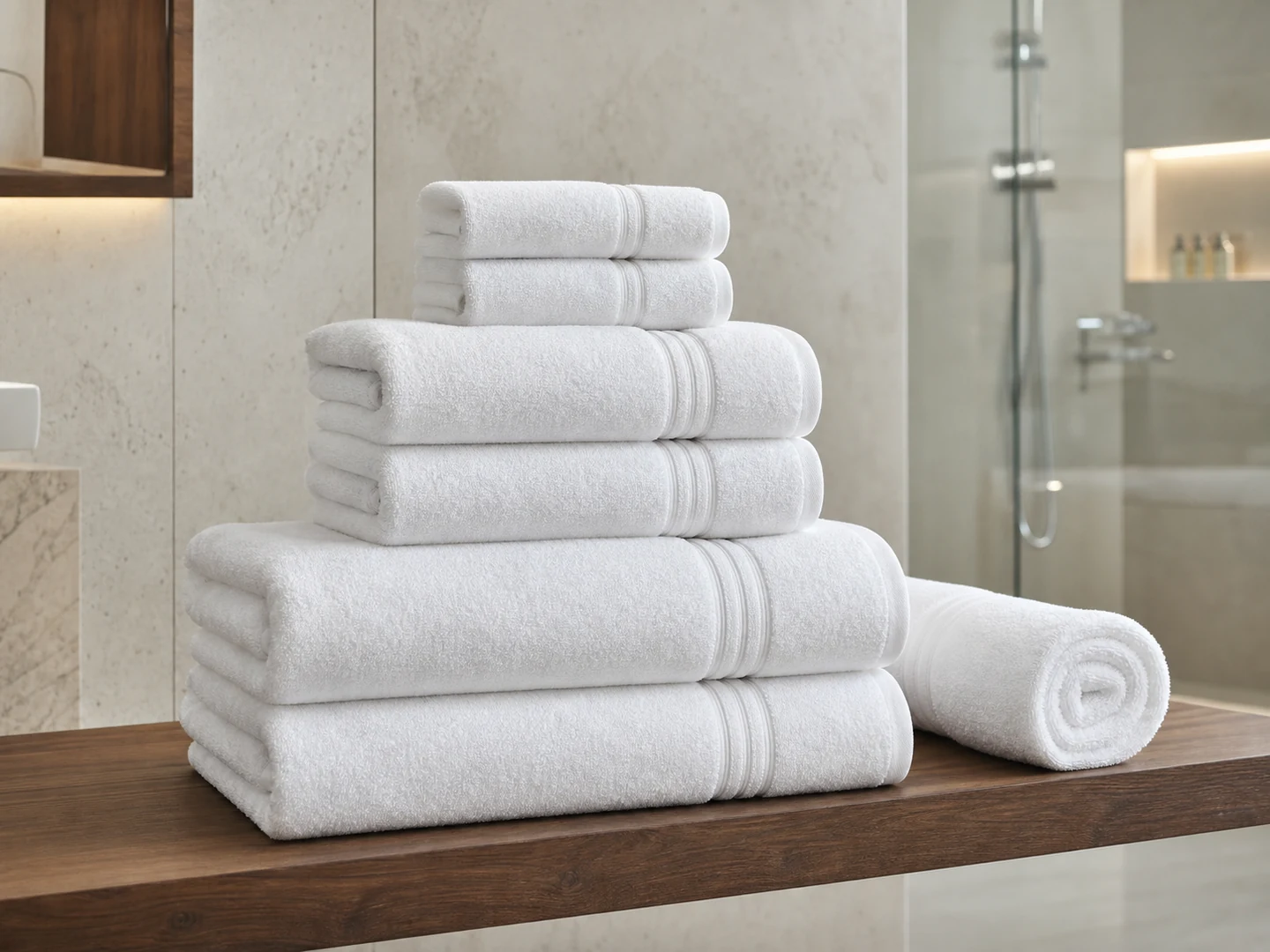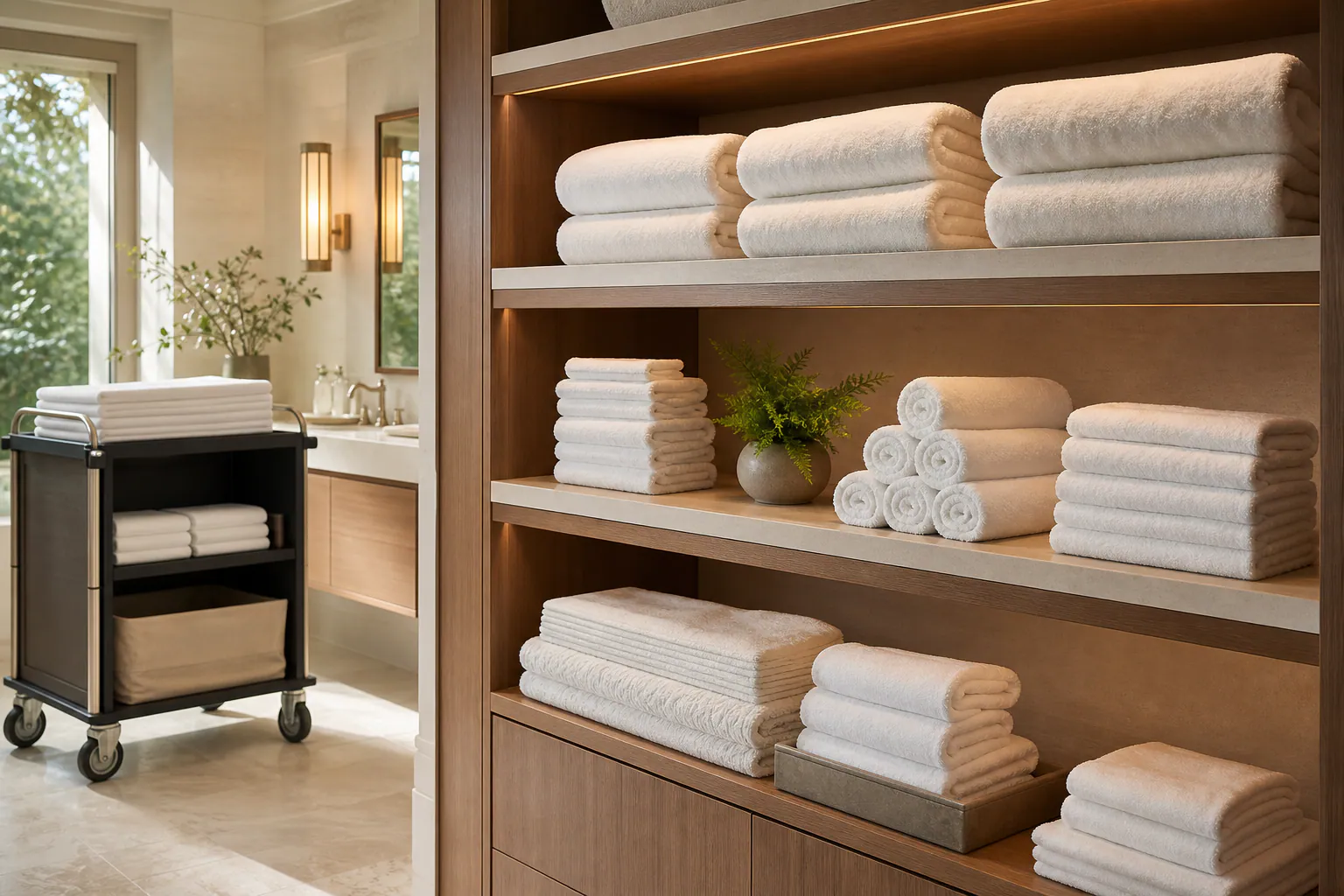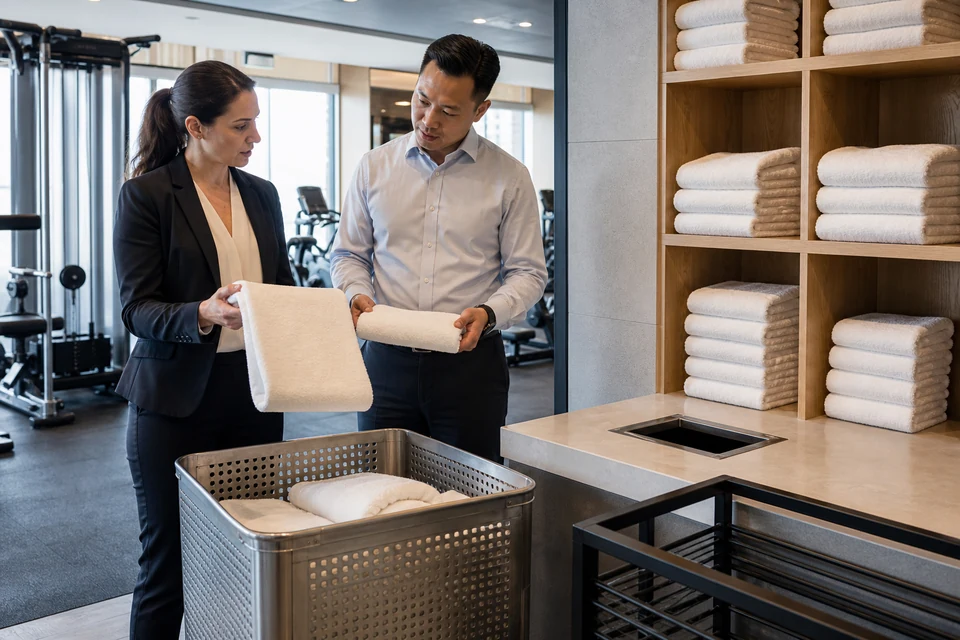
A hotel gym towel is not simply a smaller bath towel. It moves through a high-frequency operating loop: clean storage, guest pickup, equipment or personal use, return collection, internal transport, washing, drying, folding and restocking. Size affects coverage, folding, shelf capacity and wash load; identification affects whether towels migrate into guestrooms, spa areas or housekeeping stock; and the pickup and return design affects both presentation and replenishment. A buyer who specifies only color and weight leaves these operating decisions to assumptions. The project brief should map where the towel is used, how it is presented, the care route, replenishment timing and the way staff distinguish it from similar white textiles. Physical trials matter because a nominal dimension may fold poorly on the intended shelf or overwhelm a return opening. This guide does not prescribe a universal towel size, GSM, par level or hygiene rule. Those decisions depend on the property, guest use, laundry system and applicable operating requirements. It provides a way to link product specification to the named workflow and to preserve evidence for bulk and reorders.
1. Map use zones and guest handling
Define the job before selecting the towel construction
List every location where the towel may be picked up or used: fitness floor, yoga or stretching area, pool connection, locker room, refreshment station or treatment zone. Record the intended use, clean presentation, available shelf or dispenser, return point and accessibility constraints. Avoid asking one towel to cover unrelated spa, pool and gym functions without testing. The hotel spa linen guide and pool towel guide help keep those search intents and specifications separate.
Observe representative guest and staff handling during a controlled trial. Note whether guests carry the towel folded, drape it over equipment, use it at a mat, or take it toward another zone. Record replenishment route, peak intervals and return handling. The goal is not to monitor individuals; it is to identify size, presentation and circulation requirements that the textile and storage system must support.
- Name pickup, use, transfer and return locations.
- Separate gym, spa, pool and guestroom towel roles.
- Record shelf, dispenser, trolley and return-opening dimensions.
- Observe representative handling without inventing universal use.
2. Approve size, fold and construction together
The towel must fit both the guest use and the presentation hardware
Specify finished dimensions, measurement condition, fabric construction, pile or surface design, border and hem route. Use an approved fold and state the folded dimensions and orientation. Test the fold in the actual cubby, basket or dispenser at realistic stocking quantity. A towel that fits individually may compress or catch when a full stack is loaded. Link measurement controls to the towel edge inspection guide when hem behavior can affect folding presentation.
Evaluate hand, coverage and handling in the intended use without claiming clinical or performance outcomes. If the project compares absorbency or drying time, use controlled methods described in the towel absorbency guide and drying-time trial. Keep the gym workflow decision distinct from those material measurements.
- Freeze finished and folded dimensions with conditioning method.
- Trial a realistic stack in the actual storage hardware.
- Define border, hem and face orientation for presentation.
- Use separate controlled methods for absorbency or drying claims.
3. Design discreet, durable identification
Sorting cues should remain useful without confusing the guest
Choose an identification route appropriate to the property: size distinction, woven or printed label, colored loop, border variation, embroidery, thread cue, barcode or RFID where the operating system supports it. Define location, color, dimensions, artwork revision and guest-facing visibility. Do not claim an identifier prevents loss; it supports sorting and inventory only when the property uses it consistently.
Review identification after the planned care sequence for legibility, attachment, color change, hard edges and folding interference. The linen size-marker and sorting guide provides a related framework, while the RFID and barcode commissioning checklist applies if digital identity is part of the actual system. Keep device, software and integration evidence separate from the towel sample itself.
- Specify identification type, location, visibility and revision.
- Check sorting usefulness with housekeeping and laundry staff.
- Repeat attachment and legibility review after care.
- Validate digital identity only within the commissioned system.
4. Trial the clean-to-soiled laundry flow
Product, container and staff route must work as one loop
Run a controlled circulation trial from clean delivery to restocking. Record stack count, shelf capacity, replenishment interval, return-container fit, transfer method and mix-ups with other linen. Review whether damp items remain bunched, whether return openings catch the fabric and whether identification is visible at sorting. Follow property hygiene and safety procedures; the trial should never compromise normal clean and soiled segregation.
Process representative towels in the planned laundry route, documenting load identity, formula, extraction, drying and finishing. Evaluate dimensions, hand, lint, borders, identification and fold consistency. Use the receiving and laundry handover checklist to preserve responsibility and records. Report the evaluated sequence without projecting an unsupported service life or cycle count.
- Trace clean issue, guest pickup, return, transport and restocking.
- Verify container and shelf fit at realistic stock quantities.
- Maintain property clean and soiled segregation procedures.
- Repeat size, edge, ID and fold checks after the care route.
5. Plan stock and inspect bulk by operating zone
Par decisions need actual circulation inputs, not a copied ratio
Build stock planning from the number of use positions, peak demand, collection and wash turnaround, replenishment schedule, emergency allowance and replacement policy. Use the bath-linen par planning guide as a calculation framework but populate it with gym-specific observations. Keep assumptions visible and update them after opening rather than presenting one par level as universal.
Inspect bulk for size, weight or construction fields in the specification, hem and border quality, shade, identification, folded dimensions and count. Stratify by lot and delivery phase. Retain a cared-for reference and circulation record for reorders. Buyers can review bath textile directions, request a gym-towel trial set and submit facilities, care route and opening date in the buying brief.
- Calculate stock from observed circulation and turnaround inputs.
- Keep peak demand and emergency assumptions visible.
- Inspect folded presentation and identification as well as product.
- Retain cared-for references for replacement and reorder review.
Specify gym towels around the operating loop: map use zones, approve size and fold in real storage, design durable identification, trial laundry flow and calculate stock from property-specific circulation data.