When gathers occupy the cushion face, the procurement drawing must describe the completed gathered panel rather than only the fabric before shaping. A supplier can show an attractive folded texture while leaving the usable cover size, the extent of the gathered area and the back opening unresolved. This guide deals with a decorative front built around an offered smocked or gathered construction, not a ruffle attached around the outer edge. It also does not assume that the front stretches or recovers elastically. The purchasing task is to make the design, finished dimensions and insertion route understandable before the buyer approves a full-face decorative cover.
Resolve the proposed gathered construction
A design word must not conceal several different offers
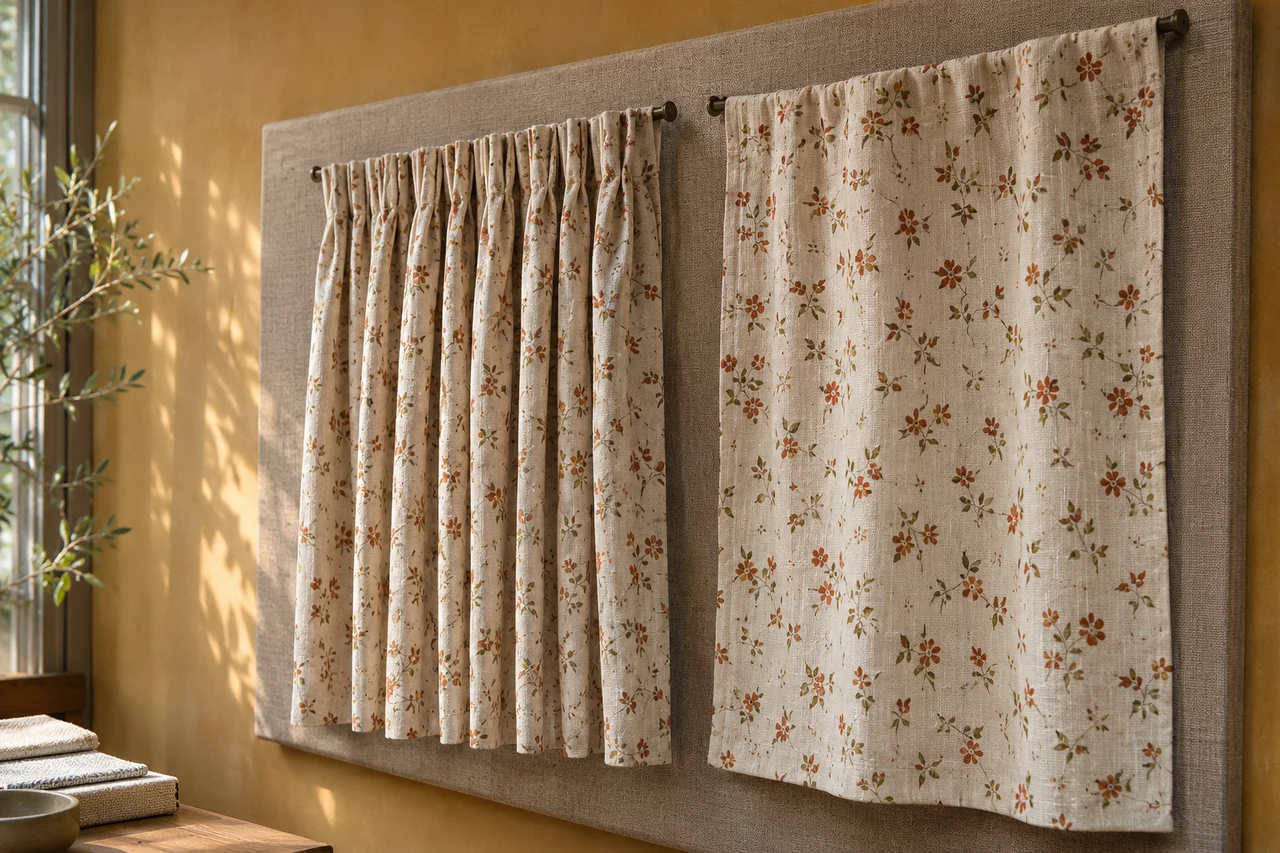
Give the supplier the intended design reference and ask for a description of the actual method proposed. Establish whether the appearance comes from a shaped fabric panel, decorative stitching, a retained internal arrangement or an alternative interpretation. Request a plain-language explanation with views of both sides. Do not infer hand work, elasticity or a particular manufacturing route from the word smocked. The maker should identify what the sample demonstrates and what still requires development, allowing the buyer to compare the proposal with the intended effect rather than with a loosely shared decorative name.
Mark which part of the front carries the gathers and which parts remain plain. An all-over gathered face, a centered gathered inset and an edge-only decoration are different scope decisions. The ruffled-cover guide deals with fullness around the perimeter; keep that subject separate instead of borrowing its trim dimensions for the whole front. Record the proposed front construction in the technical pack, including what connects it to the back panel. If the maker offers a simpler surface treatment, review it as a new option rather than a silent equivalent.
- Ask for the actual construction, not a style label.
- Identify gathered and plain front regions.
- Keep an edge ruffle outside the full-face brief.
Measure the completed front
Separate the sewing blank from the purchased panel
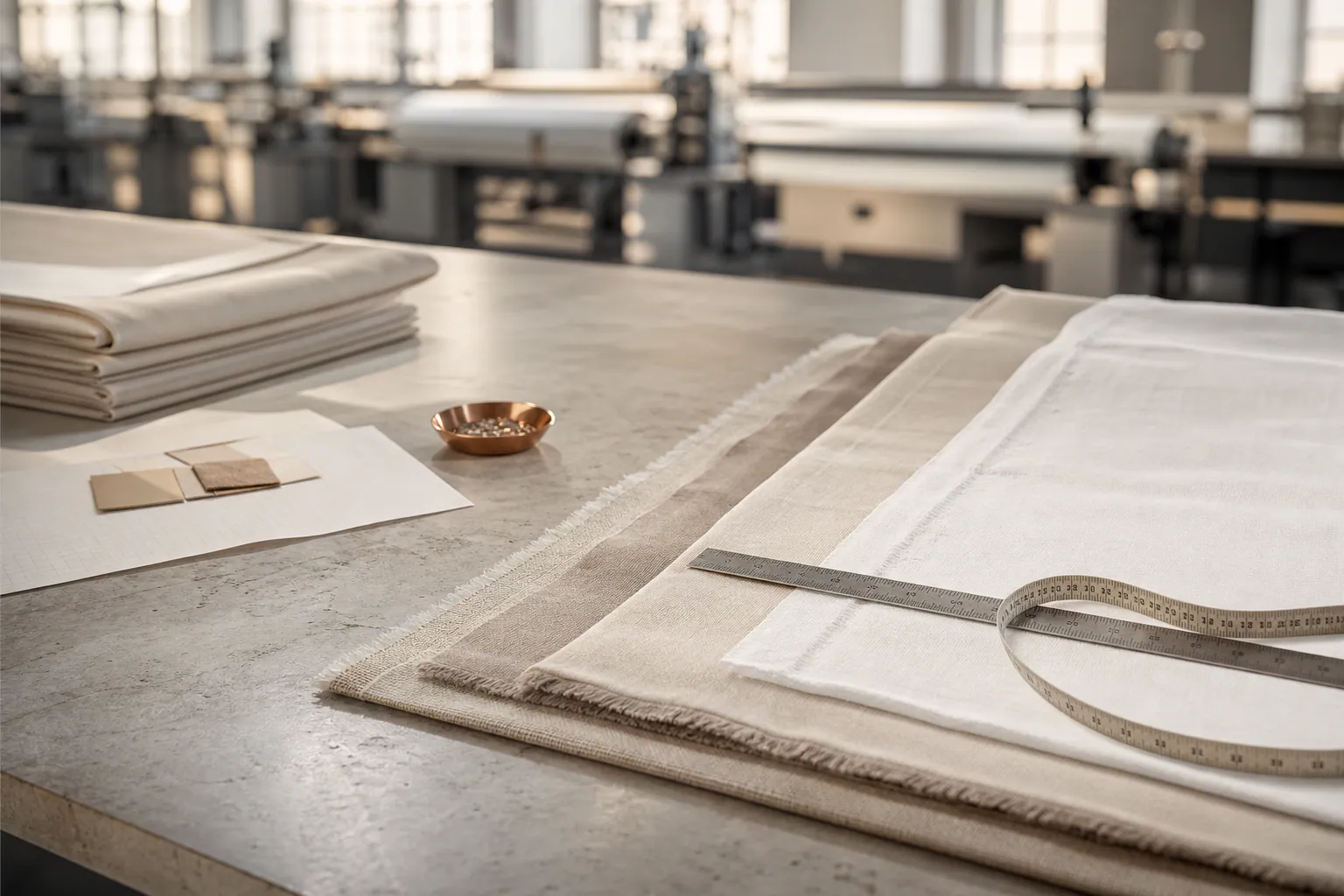
State the condition in which finished measurements will be taken: the empty sewn cover laid without deliberate stretching or another method agreed with the technical owner. Show the outside seam landmarks and record the resulting front width and height. Ask the maker to keep any pre-shaping fabric dimensions in its production record, not in place of the buyer's finished-cover dimensions. A quotation should be understandable in terms of the article received. Otherwise a nominal size can refer to unworked fabric in one offer and the complete gathered face in another.
Add measurements for any plain border, central gathered field and transitions between them. Show whether corresponding sides are intended to be equal or deliberately different. Do not flatten every fold forcefully to obtain a preferred dimension and then return the sample to a soft presentation for photography without documenting those states. The conditioned-measurement guide helps keep preparation consistent, but it does not prescribe a universal measuring tension for this construction. Obtain a method the buyer and supplier can both repeat, and show it with the identified completed panel.
- Use finished seam landmarks for the purchased size.
- Keep pre-shaping fabric consumption separate.
- Document the measurement state and handling method.
Make a gather-field reference
Describe rhythm and transitions without writing a sewing recipe
Divide the face into useful review regions, such as the center, each side transition and the areas beside the corners. Identify the intended direction and visual rhythm of the gathered structure in each region. Include a front view broad enough to show the complete arrangement, plus labeled details of difficult junctions. The purpose is not to tell the maker which stitch sequence to use. It is to give the design owner and inspector the same language for discussing an unexpectedly flat region, a crowded junction or a change in the planned pattern.
Ask the design owner to distinguish purposeful irregularity from a departure needing correction. A soft sculpted face may not be intended to form a perfectly regular geometric grid, but its allowed character still needs a usable reference. Review the face without redistributing the gathers before every photograph unless that handling is part of the intended customer presentation. Keep comments tied to named regions so a revised sample can answer them directly. When a correction changes the center field, also compare the surrounding transitions; accepting one improved close-up should not automatically release the whole revised front.
- Name the center and transition regions.
- Record the intended rhythm at an appropriate viewing distance.
- Check adjoining regions when a gather correction is made.
Connect the front to the back and opening
The concealed half can change the useful cover
Inspect the back panel, front-to-back seam and closure on the empty cover. Ask whether the back is intentionally plain and identify its material separately from the gathered face. Review how the front ends at the perimeter and whether any retained layer or construction crosses into the opening route. The component list should explain the complete offered cover. Avoid accepting an unusually clean showroom reverse if the proposed production sample will use another internal finish that has not been seen or described.
Follow the ordinary insert-access route and note the usable opening, corner access and any snagging observation. A zipper component review may be useful where a zipper is offered, but the buyer should first decide whether the selected opening is workable with this front construction. An opening that suits a plain flat panel need not settle the gathered-cover decision. If the closure location changes, recheck the adjoining gather field and the completed dimensions. Do not treat a closure revision as a purely invisible change when it affects the way the decorated front meets the back.
- Record back material and inside finish separately.
- Observe the usable opening on the complete cover.
- Revisit the gather transition after an opening change.
Run a controlled insert and presentation review
A stretched demonstration is not the normal display state
Use one identified insert choice while comparing front revisions. Fit it through the intended opening, position the corners normally and let the cover take its intended display shape without repeated pulling at individual folds. View the face upright and from the side. Record which regions open out, which remain gathered and whether the motif stays where the buyer expects. The cover-to-insert decision addresses general loft and fit; here the question is how the chosen assembly presents a particular full-face gather map.
Remove the insert and compare the cover in its agreed empty measurement state again. This gives the buyer separate references for the empty article and the filled presentation, rather than one photograph expected to prove both. Where care assessment is required, repeat those same states using the identified processed sample and the supplier's agreed care instructions. Record changed gather regions, perimeter relationships and access without implying a universal recovery property. If the desired shape depends on exceptional pressing or manual rearrangement, identify that dependency before selecting the product for a retail range.
- Keep the insert fixed while evaluating front changes.
- Retain empty and filled views as different references.
- Disclose any handling needed to restore the intended face.
Release a size-specific gathered cover
Confirm how the design changes instead of scaling a photograph
For each proposed size family, ask how the gathered field will be adapted. The maker may propose more design regions, different plain margins or a revised relationship between front and back. Review the proposed finished layout rather than assuming every larger cover is a proportional enlargement. Compare offers with the front method, completed dimensions, back, opening and inside finish all stated. Ask which changes affect sampling or minimums, and keep development work distinguishable from the agreed sellable article. No generic gathering ratio or quantity promise belongs in place of the actual supplier offer.
Before choosing the final photography, compare the packed and unpacked sample with the released filled reference. Record whether the consumer receives a cover or a named filled cushion, and make the gather appearance consistent with normal preparation rather than a specially styled studio exception. Buyers can request a gathered-front sample discussion using a full-face map and the intended insert, then share the size-specific cover brief once the opening and completed panel are defined. This establishes questions for supply confirmation, not a claim that every decorative interpretation is available or production-ready.
- Approve the front map for each relevant size family.
- Compare complete covers rather than unworked fabric dimensions.
- Keep the sold-unit description consistent with the photographs.
Release the completed gathered front, not an unworked fabric size or a carefully arranged texture crop. The front map, plain regions, back, opening and identified insert must support one ordinary empty and filled presentation.