An enclosed seam can give the inside of a pillowcase a considered finish, but the name French seam does not by itself define an acceptable product. Buyers still need to review the enclosed edge, the thickness at intersections and the usable dimensions after sewing. A construction that looks tidy on a flat swatch may be awkward to turn or visibly bulky at a finished corner. This guide addresses the procurement approval of that seam configuration, not a claim that it is always stronger or more luxurious than another finish.
Define the construction being quoted
Use a section reference alongside the seam name
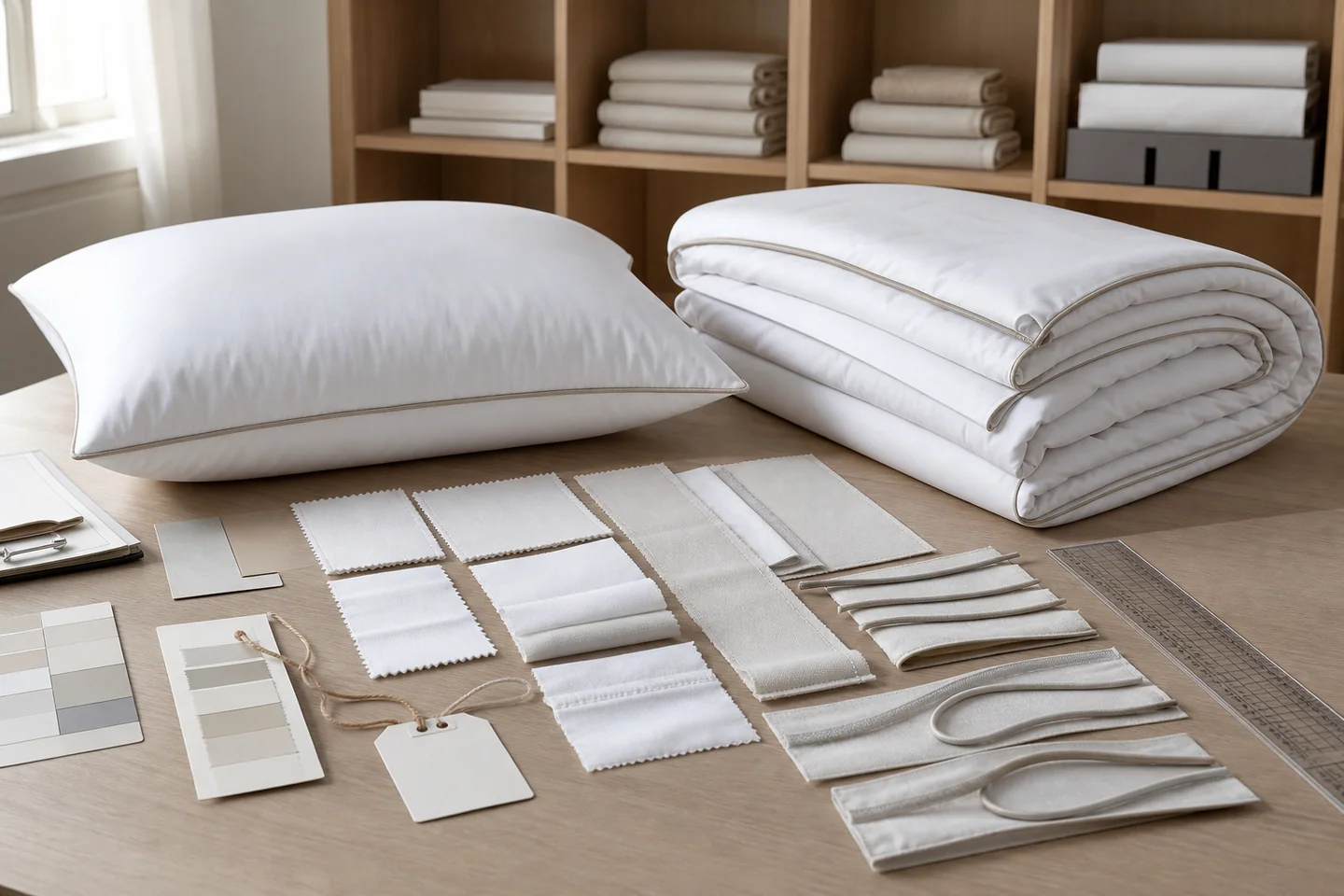
Ask the development team to show the intended seam in a physical sample and a simple construction drawing. French-seam terminology describes a folded, multi-operation construction, but suppliers may use informal names differently. The approval should therefore identify what is enclosed, which stitching remains visible and how the seam is positioned inside the case. Link this reference to the tech pack so purchasing does not substitute a general seam description for the actual approved construction.
Keep stitch and thread choices in their own fields, using the sewing-thread specification guide where needed. A seam name does not establish thread identity, stitch formation or performance. Ask whether the quoted construction applies to every joined edge or only selected locations. At the opening, envelope or closure, a different detail may be intentional; it should be drawn and approved rather than discovered when the buyer turns the first finished case inside out.
- Retain a physical section reference.
- Identify visible stitching and enclosed edges.
- Specify thread and stitch details separately.
- Mark where a different seam detail is permitted.
Confirm the usable pillow compartment
Include the folded construction in size approval
Measure the finished pillow compartment according to the agreed method, without treating cut-panel dimensions as the delivered size. The material taken into the enclosed seam is part of the construction, and the pattern must accommodate it. The seam-allowance inspection guide provides related controls, but this review asks whether the finished enclosed detail and the intended pillow space can both be achieved consistently in the proposed product.
Fit the case to the identified insert used for approval, recording its size and condition. Inspect whether the seam ridge changes the way corners fill or the case lies around the pillow. Use the insert-to-cover comparison guide to keep that relationship clear. An appearance issue with an oversized insert should not automatically be blamed on the seam, while a correct nominal case size should not excuse an obviously crowded corner in the agreed combination.
- Measure the finished usable compartment.
- Keep panel size distinct from delivered size.
- Identify the insert used in the trial.
- Examine the filled corner, not only the flat seam.
Review enclosure along the whole route
Do not approve from one neat section
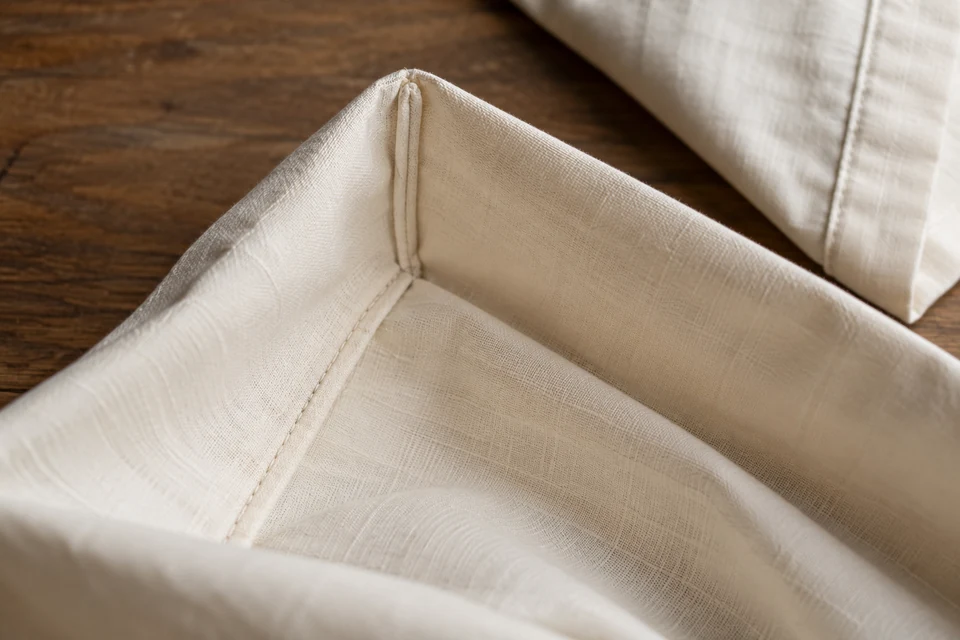
Turn the sample as intended for inspection and follow the seam from its beginning through straight runs, corners and intersections. Look for exposed raw edges, inconsistent folded width or incomplete enclosure against the approved reference. Record the exact location of an exception before repair. A photograph of the best straight section cannot establish that the turning point or seam junction meets the same construction requirement, especially where several layers converge in a small area.
Ask the factory how the enclosed edge will be checked without damaging the finished item. Destructive section review, if needed, should use an agreed sample and remain distinguishable from ordinary visual inspection. The final-inspection framework can identify the inspection characteristic and sample scope. Do not infer hidden construction solely from an attractive outside stitch line. If the enclosed edge cannot be confirmed by the agreed method, record the limitation and request appropriate evidence before release.
- Follow the seam through junctions and corners.
- Record exposed-edge locations precisely.
- Agree any destructive sample examination in advance.
- Separate visible appearance from hidden construction evidence.
Assess turning and care together
Observe bulk in the intended finished state
Evaluate how the empty case turns, how the corner settles and whether the seam creates an unwanted ridge in the intended presentation. Use normal handling rather than sharp tools to force the corner into shape. If the development team proposes reducing bulk, ask it to document the changed construction and maintain the required enclosure. The buyer should not issue an improvised trimming instruction that removes the very margin needed to contain the edge.
Include the seam in the product's agreed care trial. Examine the same identified locations after the documented process and recovery condition. The post-laundry seam appearance guide addresses a related observation, but puckering, enclosure and corner bulk should remain separate entries. A tidy result before laundering does not establish the later condition, and a single trial should not be converted into an unsupported lifetime claim or a guarantee for every care route.
- Assess turning without forcing the corner.
- Record unwanted ridges in the finished presentation.
- Document any proposed bulk-reduction revision.
- Reinspect identified locations after the agreed care trial.
Release a repeatable detail
Connect the sample to workstation checks
The approval record should bring together the section reference, finished size, insert comparison and any care observations. If a particular corner construction is accepted with a visible ridge, retain the agreed example so later inspections do not apply an inconsistent standard. Name the reviewer who can accept a construction deviation and the work that remains held until a revised sample is examined. This makes the release usable for both production and purchasing.
Send the intended pillowcase construction, insert reference and inside-corner photographs in a sample development inquiry. Ask for a finished-case comparison rather than only a price for French seams. The appropriate choice may depend on the fabric and presentation requirements, so evaluate alternatives without assuming the more elaborate seam is automatically the better purchase. A controlled approval specifies the result the buyer needs and the evidence used to accept it.
- Combine section, size and appearance evidence.
- Retain an accepted corner reference.
- Assign authority for construction deviations.
- Request complete-case samples for comparison.
Approve an enclosed pillowcase seam only when edge containment, usable size, corner bulk and the relevant care observations agree with one controlled construction reference.
Method references: Coats seam types reference.