
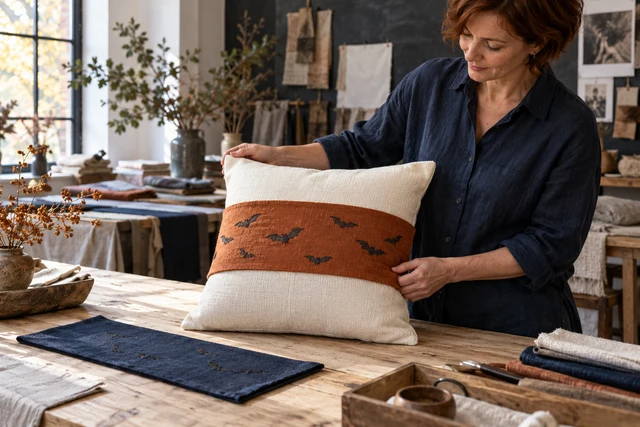
Halloween Cushion Overlays: Fit a Decorative Sleeve Over the Existing Cover
A narrow seasonal overlay changes part of an existing cushion's face. It is not a replacement cover, and its dimensions …
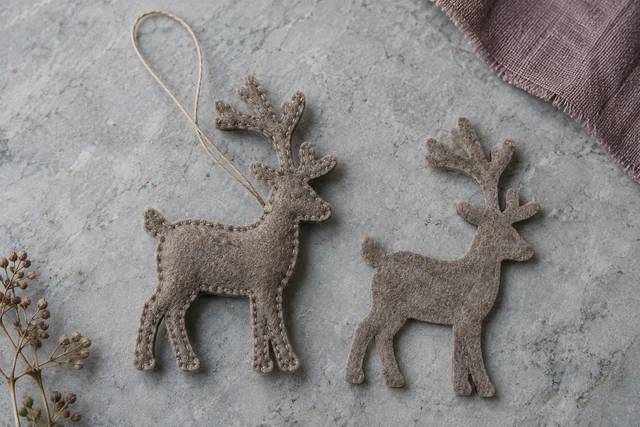
Christmas Felt Reindeer Ornaments: Preserve the Antler Branches
The antlers are small branching features, not just another perimeter edge. Their visible shape needs approval in the act…
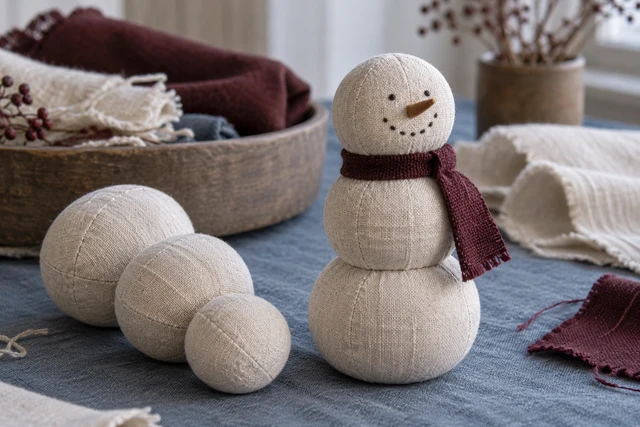
Christmas Fabric Snowmen: Approve the Stacked Body Junctions
Three soft sections create a snowman silhouette only when their proportions, junctions and natural resting position are …

Christmas Textile Gnomes: Set the Hat, Beard and Visible Face
A gnome's hidden eyes can be intentional, but the hat overlap, visible nose and beard outline still need a controlled re…
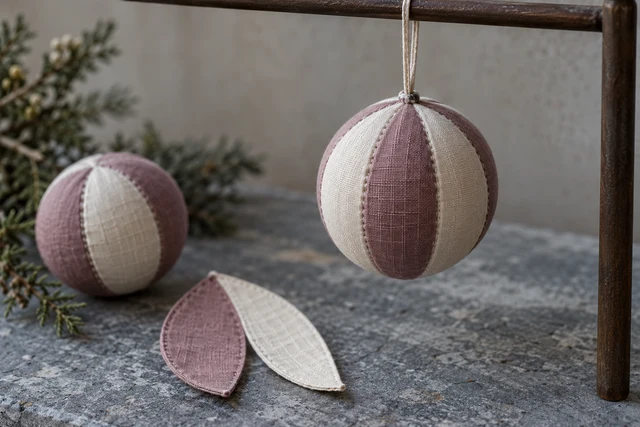
Christmas Fabric-Covered Baubles: Align Panel Seams with the Hanging Axis
A round textile-covered ornament needs more than a diameter: curved panels must meet consistently at both poles while th…
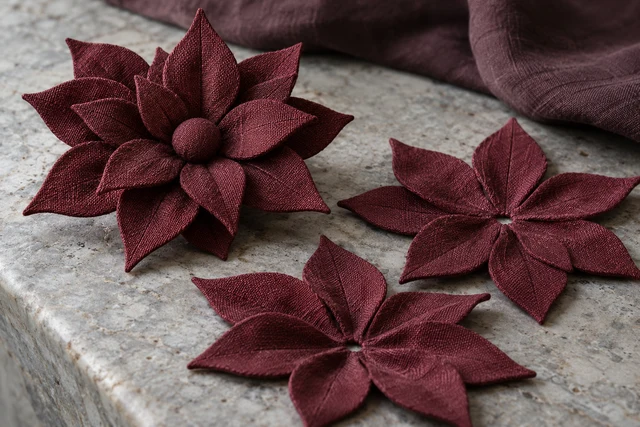
Christmas Fabric Poinsettias: Align Petal Layers Around the Center
A layered textile poinsettia needs a repeatable assembly map: petal size, rotational offset, center connection and the i…
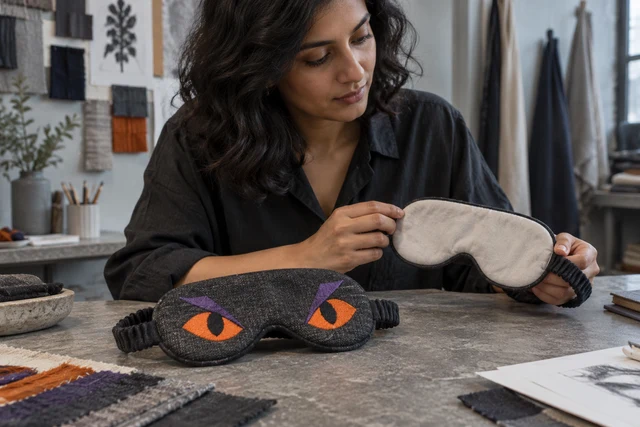
Halloween Textile Eye Masks: Separate Printed Eyes from the Nose-Bridge Fit
The two eyes on a decorated mask are artwork. The nose contour, lining and strap determine the physical product that a b…
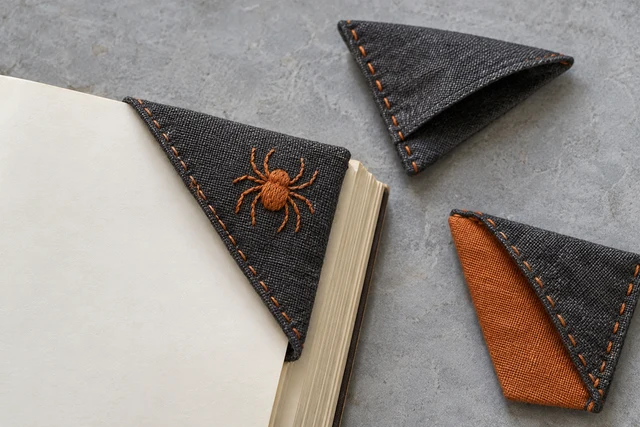
Halloween Fabric Corner Bookmarks: Keep the Triangle Open to the Page
A corner bookmark is a small textile sleeve with a deliberate open edge, not simply a padded triangle decorated with a s…

Halloween Bat Curtain Ties: Read the Wings Around the Curtain Bundle
A bat cut flat on a table can lose its wings when wrapped around a curtain: the visible silhouette and hidden closing le…